Malware Devil

Thursday, November 5, 2020

Westcon Signs Distribution Agreement with Breach & Attack Simulation Leader AttackIQ

Westcon has signed an agreement with AttackIQ, the leader in Breach and Attack Simulation (BAS), to distribute its solutions with immediate effect in the EMEA and APAC regions. Carl Wright, Chief Commercial Officer at Attack IQ, comments: “Breach damage is worse than ever. In 2021, cyber damage on the global economy is expected to reach $6..

The post Westcon Signs Distribution Agreement with Breach & Attack Simulation Leader AttackIQ appeared first on Security Boulevard.

Read More

The post Westcon Signs Distribution Agreement with Breach & Attack Simulation Leader AttackIQ appeared first on Malware Devil.


https://malwaredevil.com/2020/11/05/westcon-signs-distribution-agreement-with-breach-attack-simulation-leader-attackiq/?utm_source=rss&utm_medium=rss&utm_campaign=westcon-signs-distribution-agreement-with-breach-attack-simulation-leader-attackiq

23% of Windows in Use is Old, Insecure Win7 or XP

Windows

Windows 7 and XP are obsolete, but that hasn’t stopped almost a quarter of Windows users using them. It’s a security nightmare waiting to happen.

The post 23% of Windows in Use is Old, Insecure Win7 or XP appeared first on Security Boulevard.

Read More

The post 23% of Windows in Use is Old, Insecure Win7 or XP appeared first on Malware Devil.


https://malwaredevil.com/2020/11/05/23-of-windows-in-use-is-old-insecure-win7-or-xp/?utm_source=rss&utm_medium=rss&utm_campaign=23-of-windows-in-use-is-old-insecure-win7-or-xp

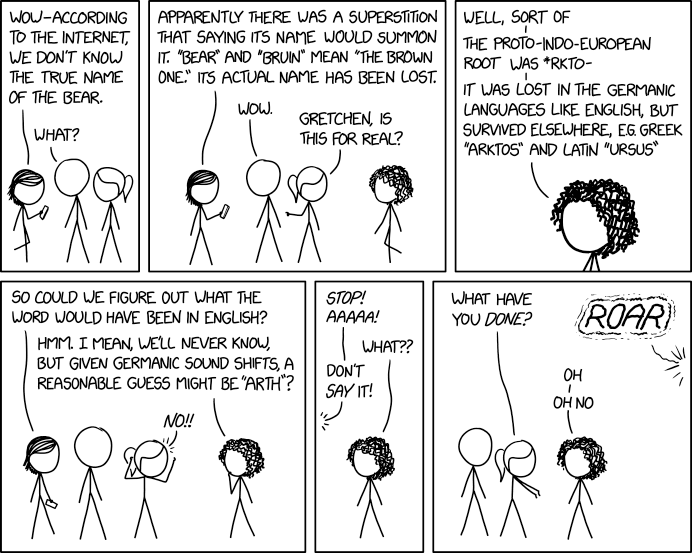
XKCD ‘The True Name Of The Bear’

via the comic delivery system monikered Randall Munroe resident at XKCD !

via the comic delivery system monikered Randall Munroe resident at XKCD!

Permalink

The post XKCD ‘The True Name Of The Bear’ appeared first on Security Boulevard.

Read More

The post XKCD ‘The True Name Of The Bear’ appeared first on Malware Devil.


https://malwaredevil.com/2020/11/05/xkcd-the-true-name-of-the-bear/?utm_source=rss&utm_medium=rss&utm_campaign=xkcd-the-true-name-of-the-bear

Wednesday, November 4, 2020

Memory buffers for… initiated

Early Visual Basic program crackers knew that if you put a breakpoint in a right place, you can intercept strings entered into a text/input box. Once you do that, finding the key verification routine is easy as it will refer the memory buffer we can track after data is copied to it.

Around 13 years ago I was asked by an analyst on my team to help him with a WinBatch-compiled malicious sample. At that time there were not many options for analyzing these types of programs and of course, reading producers’ web site one would be discouraged to reverse engineer such executables as they are ‘close to impossible to crack’. After poking around I realized that the code of the ‘compiled’ batch file was actually available in plain text during run-time! It was decrypted and then stored in a memory block on a heap.

I was experimenting a lot with API hooking at that time and this particular experience led me to write a tool that was intercepting calls to a RtlFreeHeap function (HeapFree was forwarded to it), then dumping the content of a memory block the API referenced to a file before releasing the memory. You see, if you are a coder that is taught to free memory buffers after use, it’s only natural you will call these APIs. Even if you don’t really need to, because after process is killed these memory buffer will be killed anyway…

That tool I wrote back in 2008 was essential in handling many ‘script hidden by obfuscation more than anything else’ – it dealt with executables created by perl2exe, winbatch, and many bat2exe converters, and alike. It would literally take seconds to run a suspicious sample through that tool, review the data file it created, and cherry-pick the content that was of interest.

Because of that tool I was probably one of the first analysts being able to systematically dump code of many perl2exe samples targeting POS as well as forensic tools shared by prominent forensic experts e.g. compare rfc.exe vs. its source code, where the dump from my tool shows this (raw data + formatted):

Over next few years I started building a more robust sandbox and I added handling for buffers freed by many memory functions including VirtualFree, RtlFreeHeap, GlobalFree/LocalFree, free, NtFreeVirtualMemory and a few others that I knew contained buffers worth looking at.

Software analysis progressed really a lot since then and we have a gamut of decompilers, sandboxes, emulators, debuggers, plug-ins and both dynamic and static-oriented analysis tools now. It’s a treat.

Yet.

One thing remains constant – tricks are here to stay.

If you can cut reversing corners – you definitely should.

Read More

The post Memory buffers for… initiated appeared first on Malware Devil.


https://malwaredevil.com/2020/11/04/memory-buffers-for-initiated/?utm_source=rss&utm_medium=rss&utm_campaign=memory-buffers-for-initiated

Disinformation Now the Top Concern Following Hack-Free Election Day

After an Election Day without foreign interference and cyberattacks, security experts turn their focus to disinformation.

The post Disinformation Now the Top Concern Following Hack-Free Election Day appeared first on Malware Devil.


https://malwaredevil.com/2020/11/04/disinformation-now-the-top-concern-following-hack-free-election-day/?utm_source=rss&utm_medium=rss&utm_campaign=disinformation-now-the-top-concern-following-hack-free-election-day

Core Frameworks to Streamline Financial Services Cybersecurity Compliance

The post Core Frameworks to Streamline Financial Services Cybersecurity Compliance appeared first on Security Boulevard.

Read More

The post Core Frameworks to Streamline Financial Services Cybersecurity Compliance appeared first on Malware Devil.


https://malwaredevil.com/2020/11/04/core-frameworks-to-streamline-financial-services-cybersecurity-compliance-4/?utm_source=rss&utm_medium=rss&utm_campaign=core-frameworks-to-streamline-financial-services-cybersecurity-compliance-4

Mysterious APT Leaves Curious ‘KilllSomeOne’ Clue

APT cloaks identity using script-kiddie messages and advanced deployment and targeting techniques.
Read More

The post Mysterious APT Leaves Curious ‘KilllSomeOne’ Clue appeared first on Malware Devil.


https://malwaredevil.com/2020/11/04/mysterious-apt-leaves-curious-killlsomeone-clue/?utm_source=rss&utm_medium=rss&utm_campaign=mysterious-apt-leaves-curious-killlsomeone-clue

GrowDiaries Exposes Emails, Passwords of 1.4M Cannabis Growers

Cannabis journaling platform GrowDiaries exposed more than 3.4 million user records online, many from countries where pot is illegal.
Read More

The post GrowDiaries Exposes Emails, Passwords of 1.4M Cannabis Growers appeared first on Malware Devil.


https://malwaredevil.com/2020/11/04/growdiaries-exposes-emails-passwords-of-1-4m-cannabis-growers/?utm_source=rss&utm_medium=rss&utm_campaign=growdiaries-exposes-emails-passwords-of-1-4m-cannabis-growers

Core Frameworks to Streamline Financial Services Cybersecurity Compliance

The post Core Frameworks to Streamline Financial Services Cybersecurity Compliance appeared first on Security Boulevard.

Read More

The post Core Frameworks to Streamline Financial Services Cybersecurity Compliance appeared first on Malware Devil.


https://malwaredevil.com/2020/11/04/core-frameworks-to-streamline-financial-services-cybersecurity-compliance-3/?utm_source=rss&utm_medium=rss&utm_campaign=core-frameworks-to-streamline-financial-services-cybersecurity-compliance-3

Google Forms Abused to Phish AT&T Credentials

More than 200 Google Forms impersonate top brands – including Microsoft OneDrive, Office 365, and Wells Fargo – to steal victims’ credentials.
Read More

The post Google Forms Abused to Phish AT&T Credentials appeared first on Malware Devil.


https://malwaredevil.com/2020/11/04/google-forms-abused-to-phish-att-credentials/?utm_source=rss&utm_medium=rss&utm_campaign=google-forms-abused-to-phish-att-credentials

Core Frameworks to Streamline Financial Services Cybersecurity Compliance

The post Core Frameworks to Streamline Financial Services Cybersecurity Compliance appeared first on Security Boulevard.

Read More

The post Core Frameworks to Streamline Financial Services Cybersecurity Compliance appeared first on Malware Devil.


https://malwaredevil.com/2020/11/04/core-frameworks-to-streamline-financial-services-cybersecurity-compliance-2/?utm_source=rss&utm_medium=rss&utm_campaign=core-frameworks-to-streamline-financial-services-cybersecurity-compliance-2

Core Frameworks to Streamline Financial Services Cybersecurity Compliance

The post Core Frameworks to Streamline Financial Services Cybersecurity Compliance appeared first on Security Boulevard.

Read More

The post Core Frameworks to Streamline Financial Services Cybersecurity Compliance appeared first on Malware Devil.


https://malwaredevil.com/2020/11/04/core-frameworks-to-streamline-financial-services-cybersecurity-compliance/?utm_source=rss&utm_medium=rss&utm_campaign=core-frameworks-to-streamline-financial-services-cybersecurity-compliance

Why Network Detection/Response Belongs In Your 2021 Strategy – Mike Campfield – ESW #205

The sudden shift to remote work rocked IT teams around the world–disrupting systems that had been carefully designed to keep the business secure almost overnight. As remote work continues, IT teams will need complete visibility of their network more than ever. ExtraHop’s Mike Campfield joins Security Weekly to make the case for why Network Detection and Response (NDR) should have a place in security strategies in 2021.

This segment is sponsored by ExtraHop Networks. Visit https://securityweekly.com/extrahop to learn more about them!

Visit https://www.securityweekly.com/esw for all the latest episodes!
Show Notes: https://securityweekly.com/esw205

The post Why Network Detection/Response Belongs In Your 2021 Strategy – Mike Campfield – ESW #205 appeared first on Malware Devil.


https://malwaredevil.com/2020/11/04/why-network-detection-response-belongs-in-your-2021-strategy-mike-campfield-esw-205-2/?utm_source=rss&utm_medium=rss&utm_campaign=why-network-detection-response-belongs-in-your-2021-strategy-mike-campfield-esw-205-2

Why Network Detection/Response Belongs In Your 2021 Strategy – Mike Campfield – ESW #205

The sudden shift to remote work rocked IT teams around the world–disrupting systems that had been carefully designed to keep the business secure almost overnight. As remote work continues, IT teams will need complete visibility of their network more than ever. ExtraHop’s Mike Campfield joins Security Weekly to make the case for why Network Detection and Response (NDR) should have a place in security strategies in 2021.

This segment is sponsored by ExtraHop Networks. Visit https://securityweekly.com/extrahop to learn more about them!

Visit https://www.securityweekly.com/esw for all the latest episodes!
Show Notes: https://securityweekly.com/esw205

The post Why Network Detection/Response Belongs In Your 2021 Strategy – Mike Campfield – ESW #205 appeared first on Malware Devil.


https://malwaredevil.com/2020/11/04/why-network-detection-response-belongs-in-your-2021-strategy-mike-campfield-esw-205/?utm_source=rss&utm_medium=rss&utm_campaign=why-network-detection-response-belongs-in-your-2021-strategy-mike-campfield-esw-205

Massive Cyberattack Spreading Across 68% of Organizations – Kevin O’Brien – ESW #205

A current and active cyberattack is spreading rapidly across organizations, propagating via open redirector domains and subsidiary domains belonging to multiple global brands. The comprehensive and multi-layered attack is delivered via phishing emails, attempting to steal corporate email credentials and deploy malware. Find out how organizations detect this attack. And, we’ll discuss how this attack compares to the Proud Boys phishing campaign.

This segment is sponsored by GreatHorn.

Visit https://securityweekly.com/GreatHorn to learn more about them!
Visit https://www.securityweekly.com/esw for all the latest episodes!
Show Notes: https://securityweekly.com/esw205

The post Massive Cyberattack Spreading Across 68% of Organizations – Kevin O’Brien – ESW #205 appeared first on Malware Devil.


https://malwaredevil.com/2020/11/04/massive-cyberattack-spreading-across-68-of-organizations-kevin-obrien-esw-205/?utm_source=rss&utm_medium=rss&utm_campaign=massive-cyberattack-spreading-across-68-of-organizations-kevin-obrien-esw-205

The Benefits of Online, On-Demand Training For Teams – Mike Gruen – ESW #205

Offsite-training is expensive and inefficient. It takes key resources away from their jobs and then demands even more time from them by requiring that they then train the rest of the team on what they learned. On-demand training for the entire team through platforms like Cybrary enables leads to train and simultaneously develop training programs for the rest of the team that focus on hands-on skill development in the areas that are relevant and tailored.

This segment is sponsored by Cybrary.

Visit https://cybrary.it/solved to learn more about them!
Visit https://www.securityweekly.com/esw for all the latest episodes!
Show Notes: https://securityweekly.com/esw205

The post The Benefits of Online, On-Demand Training For Teams – Mike Gruen – ESW #205 appeared first on Malware Devil.


https://malwaredevil.com/2020/11/04/the-benefits-of-online-on-demand-training-for-teams-mike-gruen-esw-205/?utm_source=rss&utm_medium=rss&utm_campaign=the-benefits-of-online-on-demand-training-for-teams-mike-gruen-esw-205

Hexagon Announces Deal to Acquire PAS Global

The Houston-based PAS Global will operate as part of Hexagon’s PPM (formerly Intergraph Process, Power & Marine) division.

The post Hexagon Announces Deal to Acquire PAS Global appeared first on Malware Devil.


https://malwaredevil.com/2020/11/04/hexagon-announces-deal-to-acquire-pas-global/?utm_source=rss&utm_medium=rss&utm_campaign=hexagon-announces-deal-to-acquire-pas-global

How Safe is Your Vote?

Election Cybersecurity 2020

With Election Day Fast Approaching in the USA, Many Are Concerned About Cybersecurity at the Polls It’s almost that time again.  Election Day is just a few weeks away for…

The post How Safe is Your Vote? appeared first on Hashed Out by The SSL Store™.

The post How Safe is Your Vote? appeared first on Security Boulevard.

Read More

The post How Safe is Your Vote? appeared first on Malware Devil.


https://malwaredevil.com/2020/11/04/how-safe-is-your-vote/?utm_source=rss&utm_medium=rss&utm_campaign=how-safe-is-your-vote

QBot Trojan delivered via malspam campaign exploiting US election uncertainties

This blog post was authored by Jérôme Segura and Hossein Jazi.

The 2020 US elections have been the subject of intense scrutiny and emotions, while happening in the middle of a global pandemic. As election night ended and uncertainty regarding the results began to creep in, threat actors decided to jump in on it too.

Those tracking the threat landscape know very well that major world events do not go unnoticed by criminals. In this case, we began observing a new spam campaign delivering malicious attachments that exploit doubts about the election process.

The QBot banking Trojan operators return with yet another themed spam wave using the same hijacked email thread technique enticing victims with malicious election interference attachments.

Hijacked email threads pushing bogus DocuSign documents

The malicious emails come as thread replies, similar to what Emotet does to add legitimacy and make detection harder. They contain zip attachments aptly named ElectionInterference_[8 to 9 digits].zip.

While the election results are still being evaluated and debated, victims are enticed to open up the document to read about alleged election interference:

Figure 1: Malicious email with ElectionInterference attachment

The extracted file is an Excel spreadsheet that has been crafted as if it were a secure DocuSign file. Users are tricked to allow macros in order to ‘decrypt’ the document.

Figure 2: Excel document containing malicious macro

This tried and tested trick will download a malicious payload onto the victim’s machine. The URL for that payload is encoded in a cell of a Cyrillic-named sheet “Лист3”.

Figure 3: Payload URL obfuscation

Once executed, the QBot Trojan will contact its command and control server and request instructions. In addition to stealing and exfiltrating data from its victims, QBot will also start grabbing emails that will later be used as part of the next malspam campaigns.

Figure 4: QBot process flow execution

World events are the best lure

At the core of the malware attacks we witness each day are typical social engineering schemes. Threat actors need to get victims to perform a certain set of actions in order to compromise them.

Spam campaigns routinely abuse email delivery notifications (Fedex, DHL, etc.) or bank alerts to disguise malicious payloads. But world events such as the Covid pandemic or the US elections provide ideal material to craft effective schemes resulting in high infection ratios.

Malwarebytes users were already protected against this attack thanks to our Anti-Exploit technology. Additionally, we detect the payload as Backdoor.Qbot.

Figure 5: Malwarebytes blocking the macro from delivering its payload

Indicators of Compromise

Malicious Excel documents

b500a3c769e22535dfc0c0f2383b7b4fbb5eb52097f001814d8219ecbb3048a1
f2fb3e7d69bf1b8c0c20484e94b20be33723b4715e7cf94c5cbb120b800328da
0282a796dec675f556a0bf888eda0fe84f63558afc96321709a298d7a0a4f8e5
e800b0d95e02e6e46a05433a9531d7fb900a45af7999a262c3c147ac23cd4c10
7dec31d782ab776bcbb51bd64cbbd40039805ad94733d644a23d5cf16f85552c
0bec208127e4a021dccb499131ea91062386126b75d098947134a37e41c4b035
30de8dcd4e894549d6d16edb181dd1a7abec8f001c478cf73baf6075756dc8c2
a8329913c8bbccb86b207e5a851f7696b1e8a120929ca5c0a5709bd779babedf
ef8a17c3bb01d58bfea74a19f6cb8573cfb2d94d9e6159709ac15a7e0860dbce
7ddc225ad0ed91ce90b3bde296c5ce0b4649447fb3f02188e5303e22dc7cb5f0

QBot

china[.]asiaspain[.]com/tertgev/1247015.png

1edfe375fafa1f941dc4ee30702f4af31ba636e4b639bcbb90a1d793b5d4b06c
06be75b2f3207de93389e090afd899f392da2e0f1c6e02226db65c61f291b81b

QBot C2s

142.129.227[.]86
95.77.144[.]238

MITRE ATT&CK techniques

Tactic ID Name Details
Execution T1059 Command-Line Interface Starts CMD.EXE for commands execution
T1106 Execution through API Application launched itself
T1053 Scheduled Task Loads the Task Scheduler COM API
Persistence T1050 New Service Executed as Windows Service
T1060 Registry Run Keys / Startup Folder Changes the autorun value in the registry
T1053 Scheduled Task Loads the Task Scheduler COM API
Privilege Escalation T1050 New Service Executed as Windows Service
T1055 Process Injection Application was injected by another process
T1053 Scheduled Task Loads the Task Scheduler COM API
Defense Evasion T1553 Install Root Certificate Changes settings of System certificates
T1055 Process Injection Application was injected by another process
Discovery T1087 Account Discovery Starts NET.EXE to view/change users group
T1135 Network Share Discovery Starts NET.EXE for network exploration
T1069 Permission Groups Discovery Starts NET.EXE to view/change users group
T1012 Query Registry Reads the machine GUID from the registry
T1018 Remote System Discovery Starts NET.EXE for network exploration
T1082 System Information Discovery Reads the machine GUID from the registry
T1016 System Network Configuration Discovery Uses IPCONFIG.EXE to discover IP address

The post QBot Trojan delivered via malspam campaign exploiting US election uncertainties appeared first on Malwarebytes Labs.

The post QBot Trojan delivered via malspam campaign exploiting US election uncertainties appeared first on Malware Devil.


https://malwaredevil.com/2020/11/04/qbot-trojan-delivered-via-malspam-campaign-exploiting-us-election-uncertainties/?utm_source=rss&utm_medium=rss&utm_campaign=qbot-trojan-delivered-via-malspam-campaign-exploiting-us-election-uncertainties

Why Paying to Delete Stolen Data is Bonkers

Companies hit by ransomware often face a dual threat: Even if they avoid paying the ransom and can restore things from scratch, about half the time the attackers also threaten to release sensitive stolen data unless the victim pays for a promise to have the data deleted. Leaving aside the notion that victims might have any real expectation the attackers will actually destroy the stolen data, new research suggests a fair number of victims who do pay up may see some or all of the stolen data published anyway.

The post Why Paying to Delete Stolen Data is Bonkers appeared first on Security Boulevard.

Read More

The post Why Paying to Delete Stolen Data is Bonkers appeared first on Malware Devil.


https://malwaredevil.com/2020/11/04/why-paying-to-delete-stolen-data-is-bonkers-2/?utm_source=rss&utm_medium=rss&utm_campaign=why-paying-to-delete-stolen-data-is-bonkers-2

Barbary Pirates and Russian Cybercrime

In 1801, the United States had a small Navy. Thomas Jefferson deployed almost half that Navy—three frigates and a schooner—to the Barbary C...