Malware Devil

Tuesday, January 12, 2021

SolarWinds: What Hit Us Could Hit Others

New research into the malware that set the stage for the megabreach at IT vendor SolarWinds shows the perpetrators spent months inside the company’s software development labs honing their attack before inserting malicious code into updates that SolarWinds then shipped to thousands of customers. More worrisome, the research suggests the insidious methods used by the intruders to subvert the company’s software development pipeline could be repurposed against many other major software providers.

The post SolarWinds: What Hit Us Could Hit Others appeared first on Security Boulevard.

Read More

The post SolarWinds: What Hit Us Could Hit Others appeared first on Malware Devil.


https://malwaredevil.com/2021/01/12/solarwinds-what-hit-us-could-hit-others-2/?utm_source=rss&utm_medium=rss&utm_campaign=solarwinds-what-hit-us-could-hit-others-2

SolarWinds: What Hit Us Could Hit Others

New research into the malware that set the stage for the megabreach at IT vendor SolarWinds shows the perpetrators spent months inside the company’s software development labs honing their attack before inserting malicious code into updates that SolarWinds then shipped to thousands of customers. More worrisome, the research suggests the insidious methods used by the intruders to subvert the company’s software development pipeline could be repurposed against many other major software providers.

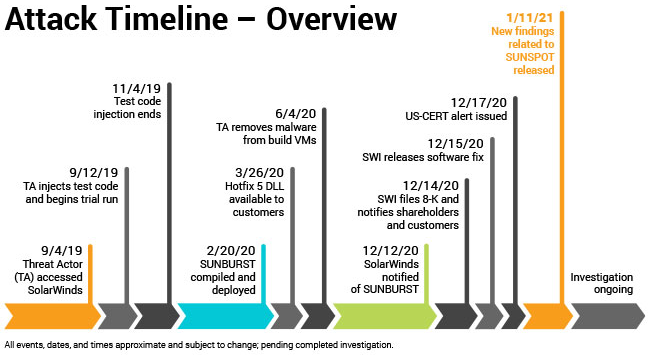
In a blog post published Jan. 11, SolarWinds said the attackers first compromised its development environment on Sept. 4, 2019. Soon after, the attackers began testing code designed to surreptitiously inject backdoors into Orion, a suite of tools used by many Fortune 500 firms and a broad swath of the federal government to manage their internal networks.

Image: SolarWinds.

According to SolarWinds and a technical analysis from CrowdStrike, the intruders were trying to work out whether their “Sunspot” malware — designed specifically for use in undermining SolarWinds’ software development process — could successfully insert their malicious “Sunburst” backdoor into Orion products without tripping any alarms or alerting Orion developers.

In October 2019, SolarWinds pushed an update to their Orion customers that contained the modified test code. By February 2020, the intruders had used Sunspot to inject the Sunburst backdoor into the Orion source code, which was then digitally signed by the company and propagated to customers via SolarWinds’ software update process.

Crowdstrike said Sunspot was written to be able to detect when it was installed on a SolarWinds developer system, and to lie in wait until specific Orion source code files were accessed by developers. This allowed the intruders to “replace source code files during the build process, before compilation,” Crowdstrike wrote.

The attackers also included safeguards to prevent the backdoor code lines from appearing in Orion software build logs, and checks to ensure that such tampering wouldn’t cause build errors.

“The design of SUNSPOT suggests [the malware] developers invested a lot of effort to ensure the code was properly inserted and remained undetected, and prioritized operational security to avoid revealing their presence in the build environment to SolarWinds developers,” CrowdStrike wrote.

A third malware strain — dubbed “Teardrop” by FireEye, the company that first disclosed the SolarWinds attack in December — was installed via the backdoored Orion updates on networks that the SolarWinds attackers wanted to plunder more deeply.

So far, the Teardrop malware has been found on several government networks, including the Commerce, Energy and Treasury departments, the Department of Justice and the Administrative Office of the U.S. Courts.

SolarWinds emphasized that while the Sunspot code was specifically designed to compromise the integrity of its software development process, that same process is likely common across the software industry.

“Our concern is that right now similar processes may exist in software development environments at other companies throughout the world,” said SolarWinds CEO Sudhakar Ramakrishna. “The severity and complexity of this attack has taught us that more effectively combatting similar attacks in the future will require an industry-wide approach as well as public-private partnerships that leverage the skills, insight, knowledge, and resources of all constituents.”

Read More

The post SolarWinds: What Hit Us Could Hit Others appeared first on Malware Devil.


https://malwaredevil.com/2021/01/12/solarwinds-what-hit-us-could-hit-others/?utm_source=rss&utm_medium=rss&utm_campaign=solarwinds-what-hit-us-could-hit-others

Sunburst: The Cleanup – SCW #58

We will shift focus of the discussion from understanding to action – that is, what to do about this and similar types of attacks that might be perpetrated agains your organization. Or is there anything to do about this “clear and present danger”?

Visit https://www.securityweekly.com/scw for all the latest episodes!

Show Notes: https://securityweekly.com/scw58

The post Sunburst: The Cleanup – SCW #58 appeared first on Malware Devil.


https://malwaredevil.com/2021/01/12/sunburst-the-cleanup-scw-58-2/?utm_source=rss&utm_medium=rss&utm_campaign=sunburst-the-cleanup-scw-58-2

Sunburst: The Cleanup – SCW #58

We will shift focus of the discussion from understanding to action – that is, what to do about this and similar types of attacks that might be perpetrated agains your organization. Or is there anything to do about this “clear and present danger”?

Visit https://www.securityweekly.com/scw for all the latest episodes!

Show Notes: https://securityweekly.com/scw58

The post Sunburst: The Cleanup – SCW #58 appeared first on Malware Devil.


https://malwaredevil.com/2021/01/12/sunburst-the-cleanup-scw-58/?utm_source=rss&utm_medium=rss&utm_campaign=sunburst-the-cleanup-scw-58

Veracode Named a Leader in The Forrester Wave: Static Application Security Testing, Q1 2021

If you???re looking to start or optimize an AppSec program in 2021, the Forrester WaveTM report is a good place to begin your research. The report not only details essential elements of AppSec solutions, but also ranks 12 static application security testing (SAST) vendors based on their current offering, strategy, and market presence.

Development speeds and methods are changing and the requirements for a SAST solution are evolving as well. Forrester notes that SAST providers need to build their security solutions into the software development lifecycle (SDLC); integrate them into the CI/CD pipeline; protect new architectures like containers; and provide accurate, actionable results.

To help development teams and security and risk professionals identify the industry???s foremost SAST providers, Forrester conducted a 28-criterion evaluation. The research and analysis identified Veracode as a leader among SAST providers. The Forrester report noted, ???For firms looking for an enterprise-grade SAST tool, Veracode remains a top choice.???

The Forrester report specifically mentions, ???Veracode has invested in the developer experience.??? Veracode???s SAST offering is fully cloud-based and offers three different levels of scans that aid developers:

  • IDE Scan provides focused, real-time security feedback while the developer codes. It also helps developers remediate faster and learn on the job through positive reinforcement, remediation guidance, code examples, and links to Veracode application security (AppSec) tutorials.
  • Pipeline Scan happens in the build phase. It directly embeds into teams??? CI tooling and provides fast feedback on flaws being introduced on new commits. It helps answer the question, ???is the code my team is writing secure????
  • Policy Scan reviews code before production to ensure that applications are meeting policy compliance and industry standards. It helps answer the question, ???are my organization’s applications secure????

Veracode also offers Security Labs, which trains developers to tackle evolving security threats by exploiting and patching real code. Through hands-on labs that use modern web apps, developers learn the skills and strategies that are directly applicable to their organization’s code. Detailed progress reporting, email assignments, and a leaderboard encourage developers to continuously level up their secure coding skills.

We believe prioritization is another important strength for Veracode. As the Forrester report states, ?????ヲVeracode???s graphical representation of code flaws according to risk and ease of fix [are] unmatched in the market.??? In addition, the report states, ???References complimented Veracode’s premium support,??? and Veracode is highly rated by customers for remediation guidance. As one customer stated, ???the relationship [with Veracode] really stands out.???

Learn more

Download The Forrester WaveTM: Static Application Security Testing, Q1 2021 report to learn more on what to look for in a SAST vendor and for more information on Veracode???s position as a Leader.

The post Veracode Named a Leader in The Forrester Wave: Static Application Security Testing, Q1 2021 appeared first on Security Boulevard.

Read More

The post Veracode Named a Leader in The Forrester Wave: Static Application Security Testing, Q1 2021 appeared first on Malware Devil.


https://malwaredevil.com/2021/01/12/veracode-named-a-leader-in-the-forrester-wave-static-application-security-testing-q1-2021/?utm_source=rss&utm_medium=rss&utm_campaign=veracode-named-a-leader-in-the-forrester-wave-static-application-security-testing-q1-2021

Obfuscation Techniques in Ransomweb “Ransomware”

Obfuscation Techniques in Ransomweb “Ransomware”

As vital assets for many business operations, websites and their hosting servers are often the target of ransomware attacks — and if they get taken offline, this can cause major issues for a business’ data, revenue, and ultimately reputation.

The worst part about ransomware is that it encrypts data and removes the original encrypted copies. This means if victims don’t have backups of their files and databases, there may not be any way to recover the kidnapped data without paying the ransom.

Continue reading Obfuscation Techniques in Ransomweb “Ransomware” at Sucuri Blog.

The post Obfuscation Techniques in Ransomweb “Ransomware” appeared first on Security Boulevard.

Read More

The post Obfuscation Techniques in Ransomweb “Ransomware” appeared first on Malware Devil.


https://malwaredevil.com/2021/01/12/obfuscation-techniques-in-ransomweb-ransomware/?utm_source=rss&utm_medium=rss&utm_campaign=obfuscation-techniques-in-ransomweb-ransomware

CMMC Takeaways and Impact

DATA SECURITY PODCAST

In a recent podcast interview with Hillarie McClure, Multimedia Director of Cybercrime Magazine, and Tom Cornelius, who currently serves as both the senior partner at Compliance Forge, and senior director at the Secure Controls Framework Council, discuss the latest views  the Cybersecurity Maturation Model Certification, or CMMC.   The podcast can be listened to in it’s entirety below.


The post CMMC Takeaways and Impact appeared first on Security Boulevard.

Read More

The post CMMC Takeaways and Impact appeared first on Malware Devil.


https://malwaredevil.com/2021/01/12/cmmc-takeaways-and-impact/?utm_source=rss&utm_medium=rss&utm_campaign=cmmc-takeaways-and-impact

Sunburst: Down the Rabbit Hole – SCW #58

We’re going to dissect what we know about the Sunburst/SolarWinds hack to this point – SCW style! We’ll touch on the things that keep coming up in the news – attribution, conspiracy theories, implications, consequences, and so forth.

Visit https://www.securityweekly.com/scw for all the latest episodes!

Show Notes: https://securityweekly.com/scw58

The post Sunburst: Down the Rabbit Hole – SCW #58 appeared first on Malware Devil.


https://malwaredevil.com/2021/01/12/sunburst-down-the-rabbit-hole-scw-58-3/?utm_source=rss&utm_medium=rss&utm_campaign=sunburst-down-the-rabbit-hole-scw-58-3

Sunburst: Down the Rabbit Hole – SCW #58

We’re going to dissect what we know about the Sunburst/SolarWinds hack to this point – SCW style! We’ll touch on the things that keep coming up in the news – attribution, conspiracy theories, implications, consequences, and so forth.

Visit https://www.securityweekly.com/scw for all the latest episodes!

Show Notes: https://securityweekly.com/scw58

The post Sunburst: Down the Rabbit Hole – SCW #58 appeared first on Malware Devil.


https://malwaredevil.com/2021/01/12/sunburst-down-the-rabbit-hole-scw-58-2/?utm_source=rss&utm_medium=rss&utm_campaign=sunburst-down-the-rabbit-hole-scw-58-2

Sunburst: Down the Rabbit Hole – SCW #58

We’re going to dissect what we know about the Sunburst/SolarWinds hack to this point – SCW style! We’ll touch on the things that keep coming up in the news – attribution, conspiracy theories, implications, consequences, and so forth.

Visit https://www.securityweekly.com/scw for all the latest episodes!

Show Notes: https://securityweekly.com/scw58

The post Sunburst: Down the Rabbit Hole – SCW #58 appeared first on Malware Devil.


https://malwaredevil.com/2021/01/12/sunburst-down-the-rabbit-hole-scw-58/?utm_source=rss&utm_medium=rss&utm_campaign=sunburst-down-the-rabbit-hole-scw-58

How to Boost Executive Buy-In for Security Investments

Linking security budgets to breach-protection outcomes helps executives balance spending against risk and earns CISOs greater respect in the C-suite.

The post How to Boost Executive Buy-In for Security Investments appeared first on Malware Devil.


https://malwaredevil.com/2021/01/12/how-to-boost-executive-buy-in-for-security-investments/?utm_source=rss&utm_medium=rss&utm_campaign=how-to-boost-executive-buy-in-for-security-investments

DEF CON 28 Safe Mode Lock Picking Village – Austin Marck’s ‘Keystone To The Kingdom’

Many thanks to DEF CON and Conference Speakers for publishing their outstanding presentations; of which, originally appeared at the organization’s DEFCON 28 SAFE MODE Conference, and on the DEF CON YouTube channel. Enjoy!

Permalink

The post DEF CON 28 Safe Mode Lock Picking Village – Austin Marck’s ‘Keystone To The Kingdom’ appeared first on Security Boulevard.

Read More

The post DEF CON 28 Safe Mode Lock Picking Village – Austin Marck’s ‘Keystone To The Kingdom’ appeared first on Malware Devil.


https://malwaredevil.com/2021/01/12/def-con-28-safe-mode-lock-picking-village-austin-marcks-keystone-to-the-kingdom-3/?utm_source=rss&utm_medium=rss&utm_campaign=def-con-28-safe-mode-lock-picking-village-austin-marcks-keystone-to-the-kingdom-3

Ubiquiti breach, and other IoT security problems

Networking equipment manufacturer Ubiquiti sent out an email to warn users about a possible data breach. The email stated there had been unauthorized access to its IT systems that are hosted with a third-party cloud provider.

Ubiquiti Networks sells networking devices and IoT devices. It did not specify which products were affected but pointed at UI.com, which is its customer web portal. The servers in this domain store user profile information for account.ui.com, the web portal that Ubiquiti makes available to customers who bought one of its products. From there, users can manage devices from a remote location and access a help and support portal.

According to Ubiquiti, the intruder accessed servers that stored data on UI.com users, such as names, email addresses, and salted and hashed passwords, although the company says there’s no evidence of the attacker accessing the specific databases that contained user information.

Ubiquiti advised users to change their password and enable 2FA for their Ubiquiti account. The manufacturer also warned customers who stored their physical address and phone number in their account that these may also have been accessed.

What happened exactly?

Unfortunately, there is very little other information about this breach. How many Ubiquiti users are impacted and how the data breach occurred is unknown at this time.

Ubiquiti mail
Image courtesy of a Ubiquiti customer

Ubiquiti’s advice

The advice provided by Ubiquiti as shown in a copy of the email is sensible:

  • Change the password.
  • Enable 2FA.
  • Don’t forget to change passwords on sites where you have used the same credentials.

Other IoT shenanigans

In other IoT news this week, a security flaw in a chastity belt for men made it possible for hackers to remotely lock all the devices in use simultaneously. The internet-linked sheath has no manual override, so owners might have been faced with the fear of having to use a grinder or bolt cutter to free themselves from its metal clamp. Luckily a workaround was provided by the Chinese developer.

Also, a group of Dutch safety experts have demonstrated that a traffic light system for bikes connected to a smartphone app can be hacked, potentially causing an accident. The smart system, part of which is still in the testing phase, has currently only been installed by ten local councils, but future plans included all the traffic at some 1,200 crossroads to be regulated via the internet to improve the flow of the traffic.

IoT insecurity

These are all examples of IoT insecurity that reached us this week alone, and clearly there is still a lot of work to be done to improve IoT security in general.

The examples show that there are a lot of angles that attackers can look at when they want to breach devices or interfere with their operations. The Ubiquiti attack was carried out through the online customer portal. The chastity belts were operated by compromising the server that provided remote control. The Dutch white hats were able to send false information to the traffic lights by reverse engineering and altering the signal sent by the app.

Advice for IoT users

Firstly, users should ask themselves if they need the device they are buying to be an IoT device. Is the remote functionality a mere “gadget” or is it something you expect to use regularly?

Secondly, look at the manufacturers track record when it comes to data privacy and the nature of the data you are providing them with. If it looks dodgy, it may well be.

Stay safe, everyone!

The post Ubiquiti breach, and other IoT security problems appeared first on Malwarebytes Labs.

The post Ubiquiti breach, and other IoT security problems appeared first on Malware Devil.


https://malwaredevil.com/2021/01/12/ubiquiti-breach-and-other-iot-security-problems/?utm_source=rss&utm_medium=rss&utm_campaign=ubiquiti-breach-and-other-iot-security-problems

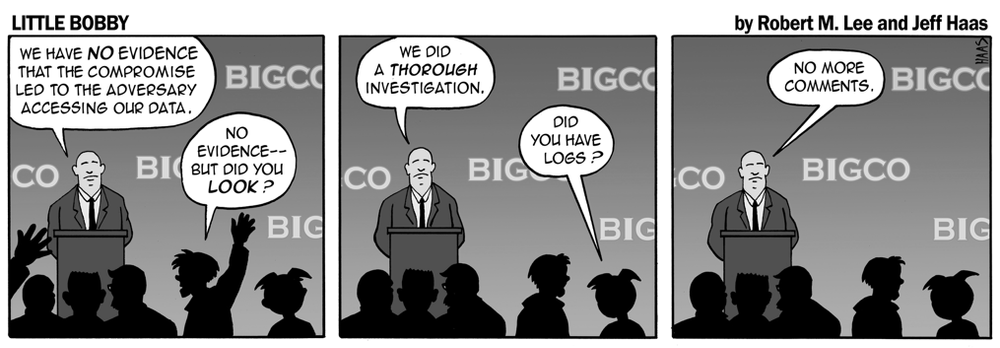
Robert M. Lee’s & Jeff Haas’ Little Bobby Comics – ‘WEEK 311’

via the respected information security capabilities of Robert M. Lee & the superlative illustration talents of Jeff Haas at Little Bobby Comics !

via the respected information security capabilities of Robert M. Lee & the superlative illustration talents of Jeff Haas at Little Bobby Comics!

Permalink

The post Robert M. Lee’s & Jeff Haas’ Little Bobby Comics – ‘WEEK 311’ appeared first on Security Boulevard.

Read More

The post Robert M. Lee’s & Jeff Haas’ Little Bobby Comics – ‘WEEK 311’ appeared first on Malware Devil.


https://malwaredevil.com/2021/01/12/robert-m-lees-jeff-haas-little-bobby-comics-week-311/?utm_source=rss&utm_medium=rss&utm_campaign=robert-m-lees-jeff-haas-little-bobby-comics-week-311

Via The Department Of Better Late Than Never: Federal Trade Commission Sues Facebook Inc.

Very pleased with this news. Let the Zuckerbergian Chicanery Commence!

The post Via The Department Of Better Late Than Never: Federal Trade Commission Sues Facebook Inc. appeared first on Security Boulevard.

Read More

The post Via The Department Of Better Late Than Never: Federal Trade Commission Sues Facebook Inc. appeared first on Malware Devil.


https://malwaredevil.com/2021/01/12/via-the-department-of-better-late-than-never-federal-trade-commission-sues-facebook-inc/?utm_source=rss&utm_medium=rss&utm_campaign=via-the-department-of-better-late-than-never-federal-trade-commission-sues-facebook-inc

Monday, January 11, 2021

Harnessing Digital Identity to Build Tomorrow’s Public Sector

As we continue to endure the prolonged effects of the pandemic, it should come as no surprise that millions of people are online more than ever. In fact, our New Normal report surveyed 5,000 global consumers and showed that this is likely to be a long-term shift – 45% of people stated that they plan on continuing to use more online services post-pandemic than they did before. 

Government services are one area that has seen online demand skyrocket. From departments who were challenged to manage an influx of benefit claimants, to websites buckling under the weight of people attempting to learn what the COVID-19 restrictions were in their area – government departments and agencies have been at the forefront of the battle to ramp up their digital transformation efforts to meet demand. 

Now with COVID-19 vaccines on the horizon, the beginning of the end of the pandemic crisis just might be in sight. So what long-term lessons can be learned about how to service a customer base which looks ready to access services increasingly online-first, while remaining agile enough to respond to any future societal shifts?

Identity First

To start, your approach should put digital identity at the heart of your operations. Many companies still consider identity a layer in their software stack rather than a core component. It’s only those that subscribe to the latter, more modern mode of thinking, who will stand to benefit from the true business value of identity. From managing and safeguarding a remote workforce to ensuring all citizens have easy access to your online services, digital identity will allow your organisation to face the challenges of today and provide secure, connected digital services at scale, simply by ensuring that systems, services and apps know who (or what) they are interacting with. 

For those of you in customer-facing operations, this matters because it allows you to deliver a personalized, and therefore better, online service that directs people to precisely what they need based on their identity. This creates an effortless user journey that also requires less resource investment. For your workforce, ForgeRock’s digital identity and access management functionality means you can now control who has access to what, and allow rapid scaling as demand grows or shrinks. 

Focusing Your Time on What Matters

Next, your organization needs to be able to react to unforeseen events and changing situations, like COVID-19, quickly and without tying up scarce resources which are in acute demand elsewhere.  

And using the Government-Cloud’s framework will allow you to search, compare, and procure from pre-approved suppliers and vendors without lengthy bureaucratic processes.

This speeds up an otherwise protracted approval process, making the task of finding the right digital identity solution for your department quick and seamless. It also means you can focus your efforts on the mission-critical areas that need your attention – like managing the increased user demand from the thousands of people newly accessing government services online now and into the foreseeable future.  

Pick a Cloud, Any Cloud

And the good news? As an approved Government-Cloud vendor, ForgeRock is on the list of providers you can choose from. What’s more, ForgeRock is the only vendor recognized as a leader across the top three analyst firms

Which takes us to the third lesson: every department’s digital transformation journey won’t be identical. That’s why we’ve developed our Identity Cloud solution, a single identity and access management (IAM) platform that can manage and protect all of the identities, devices and services within your organization. 

There’s a range of deployment options available, meaning that organizations can embed our solution into an existing public cloud, on-premises or hybrid environments. It is not an all-or-nothing proposition: your department doesn’t need to ‘rip-and-replace’ their entire legacy identity systems to benefit from our identity cloud capabilities. We adapt to the unique needs and capabilities of each organization.

That means by moving to a hybrid cloud model that can co-exist and augment your existing identity infrastructure, your department can scale with ease, on your own timeline and according to your unique departmental demands and capabilities.

Keeping Your Data Safe

Final lesson: security is more important than ever. From HMRC reporting an increase in phishing scams at the start of the pandemic to local councils suffering from serious cyber-attacks, public sector data breaches are on the rise following the online migration of so many users during the pandemic. With more people signing up for government services, departments must ensure that user data is protected from cyber-attacks and malicious hackers. 

Thankfully, a modern hybrid cloud solution can defend against compromised accounts and data breaches, via ongoing contextual authentication and authorization – ensuring only the right people are accessing the right things. 

It’s a Hybrid World  

The pandemic has changed many aspects of our lives. Some of those shifts will be temporary; others permanent. But for public sector bodies concerned with equipping themselves for the long-term, the lessons are clear: a digital identity solution, available quickly, which adapts to your specific needs and protects your users’ data will put you in good standing. 

And ForgeRock’s Identity Cloud Solution, available to procure via the Government-Cloud portal, will do just that.


The post Harnessing Digital Identity to Build Tomorrow’s Public Sector appeared first on Security Boulevard.

Read More

The post Harnessing Digital Identity to Build Tomorrow’s Public Sector appeared first on Malware Devil.


https://malwaredevil.com/2021/01/11/harnessing-digital-identity-to-build-tomorrows-public-sector/?utm_source=rss&utm_medium=rss&utm_campaign=harnessing-digital-identity-to-build-tomorrows-public-sector

IoT Vendor Ubiquiti Suffers Data Breach

Cloud provider hosting “certain” IT systems attacked, company says.

The post IoT Vendor Ubiquiti Suffers Data Breach appeared first on Malware Devil.


https://malwaredevil.com/2021/01/11/iot-vendor-ubiquiti-suffers-data-breach/?utm_source=rss&utm_medium=rss&utm_campaign=iot-vendor-ubiquiti-suffers-data-breach

Parler data scraped and archived by online activists

A hacker who has asked to be called by her Twitter handle, @donk_enby, has scraped and archived data from the social network Parler, which bills itself as the “premier free speech social network.” Parler was a major meeting and planning place for people planning the deadly storming of the US capital last week. It was removed from the Apple App Store, Google Play Store, and Amazon Web Services (AWS) for violating those companies’ terms of service, shortly after the violent insurrection.

The post Parler data scraped and archived by online activists appeared first on Security Boulevard.

Read More

The post Parler data scraped and archived by online activists appeared first on Malware Devil.


https://malwaredevil.com/2021/01/11/parler-data-scraped-and-archived-by-online-activists/?utm_source=rss&utm_medium=rss&utm_campaign=parler-data-scraped-and-archived-by-online-activists

Why deepwatch Chose Splunk to Secure Customer Networks – Patrick Orzechowski – BSW #202

Learn why deepwatch chose Splunk as it’s one and only SIEM solution to deliver its Managed Detection & Response services to Fortune 2000 customers. Hear how deepwatch is leveraging a variety of Splunk capabilities and advanced API integrations to detect and respond to threats in customer environments.

This segment is sponsored by deepwatch.

Visit https://securityweekly.com/deepwatch to learn more about them!
Visit https://www.securityweekly.com/bsw for all the latest episodes!
Show Notes: https://securityweekly.com/bsw202

The post Why deepwatch Chose Splunk to Secure Customer Networks – Patrick Orzechowski – BSW #202 appeared first on Malware Devil.


https://malwaredevil.com/2021/01/11/why-deepwatch-chose-splunk-to-secure-customer-networks-patrick-orzechowski-bsw-202-2/?utm_source=rss&utm_medium=rss&utm_campaign=why-deepwatch-chose-splunk-to-secure-customer-networks-patrick-orzechowski-bsw-202-2

Why deepwatch Chose Splunk to Secure Customer Networks – Patrick Orzechowski – BSW #202

Learn why deepwatch chose Splunk as it’s one and only SIEM solution to deliver its Managed Detection & Response services to Fortune 2000 customers. Hear how deepwatch is leveraging a variety of Splunk capabilities and advanced API integrations to detect and respond to threats in customer environments.

This segment is sponsored by deepwatch.

Visit https://securityweekly.com/deepwatch to learn more about them!
Visit https://www.securityweekly.com/bsw for all the latest episodes!
Show Notes: https://securityweekly.com/bsw202

The post Why deepwatch Chose Splunk to Secure Customer Networks – Patrick Orzechowski – BSW #202 appeared first on Malware Devil.


https://malwaredevil.com/2021/01/11/why-deepwatch-chose-splunk-to-secure-customer-networks-patrick-orzechowski-bsw-202/?utm_source=rss&utm_medium=rss&utm_campaign=why-deepwatch-chose-splunk-to-secure-customer-networks-patrick-orzechowski-bsw-202

Barbary Pirates and Russian Cybercrime

In 1801, the United States had a small Navy. Thomas Jefferson deployed almost half that Navy—three frigates and a schooner—to the Barbary C...