Malware Devil

Monday, January 25, 2021

ESB-2020.3094.3 – UPDATE [Appliance] Intel Active Management Technology: Increased privileges – Remote/unauthenticated

-----BEGIN PGP SIGNED MESSAGE-----
Hash: SHA256

===========================================================================
             AUSCERT External Security Bulletin Redistribution

                              ESB-2020.3094.3
                      Intel AMT and Intel ISMAdvisory
                              25 January 2021

===========================================================================

        AusCERT Security Bulletin Summary
        ---------------------------------

Product:           Intel Active Management Technology
Publisher:         Intel
Operating System:  Network Appliance
Impact/Access:     Increased Privileges -- Remote/Unauthenticated
Resolution:        Patch/Upgrade
CVE Names:         CVE-2020-8758  

Original Bulletin: 
   https://www.intel.com/content/www/us/en/security-center/advisory/intel-sa-00404.html

Revision History:  January   25 2021: Vendor added ICSA-20-353-01 reference
                   October   30 2020: Vendor released minor update
                   September  9 2020: Initial Release

- --------------------------BEGIN INCLUDED TEXT--------------------

Intel ID:                 INTEL-SA-00404
Advisory Category:        Firmware
Impact of vulnerability : Escalation of Privilege
Severity rating :         CRITICAL
Original release:         09/08/2020
Last revised:             01/22/2021

Summary:

Potential security vulnerability in Intel Active Management Technology (AMT),
and Intel Standard Manageability (ISM) may allow escalation of privilege. Intel
is releasing firmware updates to mitigate this potential vulnerability.

Vulnerability Details:

CVEID: CVE-2020-8758

Description: Improper buffer restrictions in network subsystem in provisioned
Intel(R) AMT and Intel(R) ISM versions before 11.8.79, 11.12.79, 11.22.79,
12.0.68 and 14.0.39 may allow an unauthenticated user to potentially enable
escalation of privilege via network access. On un-provisioned systems, an
authenticated user may potentially enable escalation of privilege via local
access.

CVSS Vector (Provisioned, unauthenticated, network):

CVSS Base Score: 9.8 Critical

CVSS:3.1/AV:N/AC:L/PR:N/UI:N/S:U/C:H/I:H/A:H

CVSS Vector (Un-provisioned, authenticated, local):

CVSS Base Score: 7.8

CVSS:3.1/AV:L/AC:L/PR:L/UI:N/S:U/C:H/I:H/A:H

Affected Products:

Intel AMT and Intel ISM versions before 11.8.79, 11.12.79, 11.22.79, 12.0.68
and 14.0.39.

The following CVE assigned by Intel, corresponds to a CVE disclosed on 12/18/
2020 as part of ICSA-20-353-01 :

+--------------------------------------------+--------------------------------------------+
|Disclosed in INTEL-SA-00404                 |Disclosed in ICSA-20-353-01                 |
+--------------------------------------------+--------------------------------------------+
|CVE-2020-8758                               |CVE-2020-25066                              |
+--------------------------------------------+--------------------------------------------+

Note: Firmware versions of Intel ME 3.x thru 10.x, Intel TXE 1.x thru 2.x, and
Intel Server Platform Services 1.x thru 2.X are no longer supported versions.
There is no new general release planned for these versions.

Recommendations:

Intel recommends that users of Intel AMT and Intel ISM update to the latest
version provided by the system manufacturer that addresses these issues.

Acknowledgements:

This issue was found internally by Intel employees. Intel would like to thank
Yaakov Cohen, Yocheved Butterman and Yossef Kuszer.

Intel, and nearly the entire technology industry, follows a disclosure practice
called Coordinated Disclosure, under which a cybersecurity vulnerability is
generally publicly disclosed only after mitigations are available.

Revision History

Revision    Date             Description
1.0      09/08/2020 Initial Release
1.1      10/29/2020 Updated affected products
1.2      01/22/2021 Added ICSA-20-353-01 reference

- --------------------------END INCLUDED TEXT--------------------

You have received this e-mail bulletin as a result of your organisation's
registration with AusCERT. The mailing list you are subscribed to is
maintained within your organisation, so if you do not wish to continue
receiving these bulletins you should contact your local IT manager. If
you do not know who that is, please send an email to auscert@auscert.org.au
and we will forward your request to the appropriate person.

NOTE: Third Party Rights
This security bulletin is provided as a service to AusCERT's members.  As
AusCERT did not write the document quoted above, AusCERT has had no control
over its content. The decision to follow or act on information or advice
contained in this security bulletin is the responsibility of each user or
organisation, and should be considered in accordance with your organisation's
site policies and procedures. AusCERT takes no responsibility for consequences
which may arise from following or acting on information or advice contained in
this security bulletin.

NOTE: This is only the original release of the security bulletin.  It may
not be updated when updates to the original are made.  If downloading at
a later date, it is recommended that the bulletin is retrieved directly
from the author's website to ensure that the information is still current.

Contact information for the authors of the original document is included
in the Security Bulletin above.  If you have any questions or need further
information, please contact them directly.

Previous advisories and external security bulletins can be retrieved from:

        https://www.auscert.org.au/bulletins/

===========================================================================
Australian Computer Emergency Response Team
The University of Queensland
Brisbane
Qld 4072

Internet Email: auscert@auscert.org.au
Facsimile:      (07) 3365 7031
Telephone:      (07) 3365 4417 (International: +61 7 3365 4417)
                AusCERT personnel answer during Queensland business hours
                which are GMT+10:00 (AEST).
                On call after hours for member emergencies only.
===========================================================================
-----BEGIN PGP SIGNATURE-----
Comment: http://www.auscert.org.au/render.html?it=1967

iQIVAwUBYA4fU+NLKJtyKPYoAQjgnRAAqXIDI+Wg/4txnRbYUoKjv75cOX9gayg8
RlqI0gXrKAqVXpJlOfZzMDSNG/D8EALTQNe9cXcDK824QyXyzxxJNmx66EB3/n2y
OeSmXU1tyJCzFYX5uZ3/5KuYYc9DuAoVVOzrPDnjpjRidj/c7FErpVPbjAsUfW5M
0841p2c4kFA7GPN7pN158+qSeJ+himL+FXq6hz5H1EQjMe8KlvXFDCg5+MmoHGAo
hxXoCSOG9JTzG3+JAPEELawPFM3p0ydIwTkW0FYgk1oxuGdhWD43pXa83lPnvyZ5
JxAetuE8S6/kIeIk0/rq6zczEHJqkul9VD5AmbsK47zA8XNTLDRoLYmaT/DF4bkj
be8WBLmYUIVeGEwxD9ViMPbxlJCMfqtiLOFmyI6zIHlLIVXehjMjvrrkxQjwqCmU
QzyTS+RpluAz5RBn6M6eR2l4P+HkIrP8KcWqJGqX1JCZRjBUnxuBuIZ7X5kqiZJy
QPu6oXPkt8RXV3D4mHI03G+EEn9qejVvFFjdnov8crDtUp6c6KEM4cclryTgGI3q
zsU54uwuXBwQfGjAOnOFObUZeuI/Mk89/FC2NDY0Z3YBqjgzmiOUZND806TSutd2
46Ede3E8PLG1BYfq4+zT12AlhnQyVPuh1GOG09chXReRX+hLMra7Iuos1vX6BrU6
Ix0pfSP11UU=
=GO8G
-----END PGP SIGNATURE-----

Read More

The post ESB-2020.3094.3 – UPDATE [Appliance] Intel Active Management Technology: Increased privileges – Remote/unauthenticated appeared first on Malware Devil.


https://malwaredevil.com/2021/01/25/esb-2020-3094-3-update-appliance-intel-active-management-technology-increased-privileges-remote-unauthenticated/?utm_source=rss&utm_medium=rss&utm_campaign=esb-2020-3094-3-update-appliance-intel-active-management-technology-increased-privileges-remote-unauthenticated

ESB-2020.3958.3 – UPDATE [Win][UNIX/Linux] Intel CSME, SPS, TXE, ,AMT, ISM & DAL: Multiple vulnerabilities

-----BEGIN PGP SIGNED MESSAGE-----
Hash: SHA256

===========================================================================
             AUSCERT External Security Bulletin Redistribution

                              ESB-2020.3958.3
            2020.2 IPU - Intel CSME, SPS, TXE, and AMT Advisory
                              25 January 2021

===========================================================================

        AusCERT Security Bulletin Summary
        ---------------------------------

Product:           Intel Converged Security and Manageability Engine
                   Server Platform Services
                   Intel Trusted Execution Engine
                   Intel Dynamic Application Loader
                   Intel Active Management Technology
                   Intel Standard Manageability
                   Intel Dynamic Application Loader
Publisher:         Intel
Operating System:  Windows
                   UNIX variants (UNIX, Linux, OSX)
Impact/Access:     Increased Privileges     -- Remote/Unauthenticated
                   Denial of Service        -- Remote/Unauthenticated
                   Access Confidential Data -- Remote/Unauthenticated
Resolution:        Patch/Upgrade
CVE Names:         CVE-2020-12356 CVE-2020-12355 CVE-2020-12354
                   CVE-2020-12304 CVE-2020-12303 CVE-2020-12297
                   CVE-2020-8761 CVE-2020-8760 CVE-2020-8757
                   CVE-2020-8756 CVE-2020-8755 CVE-2020-8754
                   CVE-2020-8753 CVE-2020-8752 CVE-2020-8751
                   CVE-2020-8750 CVE-2020-8749 CVE-2020-8747
                   CVE-2020-8746 CVE-2020-8745 CVE-2020-8744
                   CVE-2020-8705  

Original Bulletin: 
   https://www.intel.com/content/www/us/en/security-center/advisory/intel-sa-00391.html

Revision History:  January  25 2021: Vendfor added ICSA-20-353-01 reference
                   January   4 2021: Vendor updated the description for CVE-2020-8705
                   November 11 2020: Initial Release

- --------------------------BEGIN INCLUDED TEXT--------------------

Intel ID:             INTEL-SA-00391
Advisory Category:    Firmware, Software
Impact of             Escalation of Privilege, Denial of Service, Information
vulnerability :       Disclosure
Severity rating :     CRITICAL
Original release:     11/10/2020
Last revised:         1/22/2021

Summary:

Potential security vulnerabilities in Intel Converged Security and
Manageability Engine (CSME), Server Platform Services (SPS), Intel Trusted
Execution Engine (TXE), Intel Dynamic Application Loader (DAL), Intel Active
Management Technology (AMT), Intel Standard Manageability (ISM) and Intel
Dynamic Application Loader (Intel DAL) may allow escalation of privilege,
denial of service or information disclosure. Intel is releasing firmware and
software updates to mitigate these potential vulnerabilities.

Intel is not releasing updates to mitigate a potential vulnerability and has
issued a Product Discontinuation Notice for Intel DAL SDK.

Vulnerability Details:

CVEID: CVE-2020-8752

Description: Out-of-bounds write in IPv6 subsystem for Intel(R) AMT, Intel(R)
ISM versions before 11.8.80, 11.12.80, 11.22.80, 12.0.70, 14.0.45 may allow an
unauthenticated user to potentially enable escalation of privileges via network
access.

CVSS Base Score: 9.4 Critical

CVSS Vector: CVSS:3.1/AV:N/AC:L/PR:N/UI:N/S:U/C:H/I:H/A:L

CVEID: CVE-2020-8753

Description: Out-of-bounds read in DHCP subsystem for Intel(R) AMT, Intel(R)
ISM versions before 11.8.80, 11.12.80, 11.22.80, 12.0.70 and 14.0.45 may allow
an unauthenticated user to potentially enable information disclosure via
network access.

CVSS Base Score: 8.2 High

CVSS Vector: CVSS:3.1/AV:N/AC:L/PR:N/UI:N/S:U/C:H/I:N/A:L

CVEID: CVE-2020-12297

Description: Improper access control in Installer for Intel(R) CSME Driver for
Windows versions before 11.8.80, 11.12.80, 11.22.80, 12.0.70, 13.0.40,
13.30.10, 14.0.45 and 14.5.25, Intel TXE 3.1.80, 4.0.30 may allow an
authenticated user to potentially enable escalation of privileges via local
access.

CVSS Base Score: 8.2 High

CVSS Vector: CVSS:3.1/AV:L/AC:L/PR:L/UI:R/S:C/C:H/I:H/A:H

CVEID: CVE-2020-12304

Description: Improper access control in Installer for Intel(R) DAL SDK before
version 2.1 for Windows may allow an authenticated user to potentially enable
escalation of privileges via local access.

CVSS Base Score: 8.2 High

CVSS Vector: CVSS:3.1/AV:L/AC:L/PR:L/UI:R/S:C/C:H/I:H/A:H

CVEID: CVE-2020-8745

Description: Insufficient control flow management in subsystem for Intel(R)
CSME versions before 11.8.80, 11.12.80, 11.22.80, 12.0.70, 13.0.40, 13.30.10,
14.0.45 and 14.5.25 , Intel(R) TXE versions before 3.1.80 and 4.0.30 may allow
an unauthenticated user to potentially enable escalation of privilege via
physical access.

CVSS Base Score: 7.3 High

CVSS Vector: CVSS:3.1/AV:P/AC:L/PR:N/UI:N/S:C/C:H/I:H/A:N

CVEID: CVE-2020-8744

Description: Improper initialization in subsystem for Intel(R) CSME versions
before12.0.70, 13.0.40, 13.30.10, 14.0.45 and 14.5.25, Intel TXE versions
before 4.0.30 Intel(R) SPS versions before E3_05.01.04.200 may allow a
privileged user to potentially enable escalation of privilege via local access.

CVSS Base Score: 7.2 High

CVSS Vector: CVSS:3.1/AV:L/AC:H/PR:H/UI:N/S:C/C:H/I:H/A:N

CVEID: CVE-2020-8705

Description: Insecure default initialization of resource in Intel(R) Boot Guard
in Intel(R) CSME versions before 11.8.82, 11.12.82, 11.22.82, 12.0.70, 13.0.40,
13.30.10, 14.0.45 and 14.5.25, Intel(R) TXE versions before 3.1.80 and 4.0.30,
Intel(R) SPS versions before E5_04.01.04.400, E3_04.01.04.200,
SoC-X_04.00.04.200 and SoC-A_04.00.04.300 may allow an unauthenticated user to
potentially enable escalation of privileges via physical access.

CVSS Base Score: 7.1 High

CVSS Vector: CVSS:3.1/AV:P/AC:H/PR:N/UI:N/S:C/C:H/I:H/A:H

CVEID: CVE-2020-8750

Description: Use after free in Kernel Mode Driver for Intel(R) TXE versions
before 3.1.80 and 4.0.30 may allow an authenticated user to potentially enable
escalation of privilege via local access.

CVSS Base Score: 7.0 High

CVSS Vector: CVSS:3.1/AV:L/AC:H/PR:L/UI:N/S:U/C:H/I:H/A:H

CVEID: CVE-2020-12303

Description: Use after free in DAL subsystem for Intel(R) CSME versions before
11.8.80, 11.12.80, 11.22.80, 12.0.70, 13.0.40, 13.30.10, 14.0.45 and 14.5.25,
Intel TXE 3.1.80, 4.0.30 may allow an authenticated user to potentially enable
escalation of privileges via local access.

CVSS Base Score: 7.0 High

CVSS Vector: CVSS:3.1/AV:L/AC:H/PR:L/UI:N/S:U/C:H/I:H/A:H

CVE ID: CVE-2020-12354

Description: Incorrect default permissions in Windows(R) installer in Intel(R)
AMT SDK versions before 14.0.0.1 may allow an authenticated user to potentially
enable escalation of privilege via local access.

CVSS Base Score: 6.7 Medium

CVSS Vector: CVSS:3.1/AV:L/AC:H/PR:L/UI:R/S:U/C:H/I:H/A:H

CVEID: CVE-2020-8757

Description: Out-of-bounds read in subsystem for Intel(R) AMT versions before
11.8.80, 11.12.80, 11.22.80, 12.0.70 and 14.0.45 may allow a privileged user to
potentially enable escalation of privilege via local access.

CVSS Base Score: 6.3 Medium

CVSS Vector: CVSS:3.1/AV:L/AC:L/PR:H/UI:N/S:U/C:H/I:H/A:L

CVEID: CVE-2020-8756

Description: Improper input validation in subsystem for Intel(R) CSME versions
before 11.8.80, 11.12.80, 11.22.80, 12.0.70 and 14.0.45 may allow a privileged
user to potentially enable escalation of privilege via local access.

CVSS Base Score: 6.3 Medium

CVSS Vector: CVSS:3.1/AV:L/AC:L/PR:H/UI:N/S:U/C:H/I:H/A:L

CVEID: CVE-2020-8760

Description: Integer overflow in subsystem for Intel(R) AMT versions before
11.8.80, 11.12.80, 11.22.80, 12.0.70, 14.0.45 may allow a privileged user to
potentially enable escalation of privilege via local access.

CVSS Base Score: 6.0 Medium

CVSS Vector: CVSS:3.1/AV:L/AC:H/PR:H/UI:N/S:U/C:H/I:H/A:L

CVE ID: CVE-2020-12355

Description: Authentication bypass by capture-replay in RPMB protocol message
authentication subsystem in Intel(R) TXE versions before 4.0.30 may allow an
unauthenticated user to potentially enable escalation of privilege via physical
access.

CVSS Base Score: 5.3 Medium

CVSS Vector: CVSS:3.1/AV:P/AC:L/PR:N/UI:N/S:C/C:N/I:H/A:N

CVEID: CVE-2020-8751

Description: Insufficient control flow management in subsystem for Intel(R)
CSME versions before 11.8.80, Intel(R) TXE versions before 3.1.80 may allow an
unauthenticated user to potentially enable information disclosure via physical
access.

CVSS Base Score: 5.3 Medium

CVSS Vector: CVSS:3.1/AV:P/AC:L/PR:N/UI:N/S:C/C:H/I:N/A:N

CVEID: CVE-2020-8754

Description: Out-of-bounds read in subsystem for Intel(R) AMT, Intel(R) ISM
versions before 11.8.80, 11.12.80, 11.22.80, 12.0.70 and 14.0.45 may allow an
unauthenticated user to potentially enable information disclosure via network
access.

CVSS Base Score: 5.3 Medium

CVSS Vector: CVSS:3.1/AV:N/AC:L/PR:N/UI:N/S:U/C:L/I:N/A:N

CVEID: CVE-2020-8761

Description: Inadequate encryption strength in subsystem for Intel(R) CSME
versions before 13.0.40 and 13.30.10 may allow an unauthenticated user to
potentially enable information disclosure via physical access.

CVSS Base Score: 4.9 Medium

CVSS Vector: CVSS:3.1/AV:P/AC:H/PR:N/UI:N/S:C/C:H/I:N/A:N

CVEID: CVE-2020-8747

Description: Out-of-bounds read in subsystem for Intel(R) AMT versions before
11.8.80, 11.12.80, 11.22.80, 12.0.70 and 14.0.45 may allow an unauthenticated
user to potentially enable information disclosure and/or denial of service via
network access.

CVSS Base Score: 4.8 Medium

CVSS Vector: CVSS:3.1/AV:N/AC:H/PR:N/UI:N/S:U/C:L/I:N/A:L

CVEID: CVE-2020-8755

Description: Race condition in subsystem for Intel(R) CSME versions before
12.0.70 and 14.0.45, Intel(R) SPS versions before E5_04.01.04.400 and
E3_05.01.04.200 may allow an unauthenticated user to potentially enable
escalation of privilege via physical access.

CVSS Base Score: 4.6 Medium

CVSS Vector: CVSS:3.1/AV:P/AC:L/PR:N/UI:N/S:U/C:N/I:H/A:N

CVE ID: CVE-2020-12356

Description: Out-of-bounds read in subsystem in Intel(R) AMT versions before
11.8.80, 11.12.80, 11.22.80, 12.0.70 and 14.0.45 may allow a privileged user to
potentially enable information disclosure via local access.

CVSS Base Score: 4.4 Medium

CVSS Vector: CVSS:3.1/AV:L/AC:L/PR:H/UI:N/S:U/C:H/I:N/A:N

CVEID: CVE-2020-8746

Description: Integer overflow in subsystem for Intel(R) AMT versions before
11.8.80, 11.12.80, 11.22.80, 12.0.70 and 14.0.45 may allow an unauthenticated
user to potentially enable denial of service via adjacent access.

CVSS Base Score: 4.3 Medium

CVSS Vector: CVSS:3.1/AV:A/AC:L/PR:N/UI:N/S:U/C:N/I:N/A:L

CVEID: CVE-2020-8749

Description: Out-of-bounds read in subsystem for Intel(R) AMT versions before
11.8.80, 11.12.80, 11.22.80, 12.0.70 and 14.0.45 may allow an unauthenticated
user to potentially enable escalation of privilege via adjacent access.

CVSS Base Score: 4.2 Medium

CVSS Vector: CVSS:3.1/AV:A/AC:H/PR:N/UI:N/S:U/C:L/I:L/A:N

Affected Products:

  o Intel CSME and Intel AMT versions before 11.8.82, 11.12.82, 11.22.82,
    12.0.70, 13.0.40, 13.30.10, 14.0.45 and 14.5.25.

  o Intel TXE versions before 3.1.80 and 4.0.30.

  o Intel Server Platform Services firmware versions before
    SPS_E5_04.01.04.400, SPS_E3_05.01.04.200, SPS_E3_04.01.04.200,
    SPS_SoC-X_04.00.04.200 and SPS_SoC-A_04.00.04.300.

The following CVEs assigned by Intel, correspond to a subset of the CVEs
disclosed on 12/18/2020 as part of ICSA-20-353-01 :

+--------------------------------------------+--------------------------------------------+
|Disclosed in INTEL-SA-00391                 |Disclosed in ICSA-20-353-01                 |
+--------------------------------------------+--------------------------------------------+
|CVE-2020-8752                               |CVE-2020-27337                              |
+--------------------------------------------+--------------------------------------------+
|CVE-2020-8753                               |CVE-2020-27338                              |
+--------------------------------------------+--------------------------------------------+
|CVE-2020-8754                               |CVE-2020-27336                              |
+--------------------------------------------+--------------------------------------------+

Note: Firmware versions of Intel ME 3.x thru 10.x, Intel TXE 1.x thru 2.x, and
Intel Server Platform Services 1.x thru 2.X are no longer supported versions.
There is no new general release planned for these versions.

Recommendations:

Intel recommends that users of Intel CSME, Intel TXE, Intel AMT and Intel SPS
update to the latest version provided by the system manufacturer that addresses
these issues.

The Intel AMT SDK is available for download here .

Intel has issued a Product Discontinuation notice for the Intel DAL SDK and
recommends that users of the Intel DAL SDK uninstall it or discontinue use at
their earliest convenience.

Acknowledgements:

Intel would like to thank Trammell Hudson (CVE-2020-8705), Marius Gabriel Mihai
(CVE-2020-12354, CVE-2020-12304), Oussama Sahnoun (CVE-2020-12297), Rotem Sela
and Brian Mastenbrook (CVE-2020-12355) for reporting these issues.

The additional issues were found internally by Intel employees. Intel would
like to thank Arie Haenel, Aviya Erenfeld, Binyamin Belaciano, Dmitry
Piotrovsky, Julien Lenoir, Niv Israely, Ofek Mostovoy and Yakov Cohen.

Intel, and nearly the entire technology industry, follows a disclosure practice
called Coordinated Disclosure, under which a cybersecurity vulnerability is
generally publicly disclosed only after mitigations are available.

Revision History

Revision    Date                           Description
1.0      11/10/2020 Initial Release
1.1      12/30/2020 Revisions to CVE-2020-8705 and affected product versions.
1.2      01/22/2021 Added ICSA-20-353-01 reference

- --------------------------END INCLUDED TEXT--------------------

You have received this e-mail bulletin as a result of your organisation's
registration with AusCERT. The mailing list you are subscribed to is
maintained within your organisation, so if you do not wish to continue
receiving these bulletins you should contact your local IT manager. If
you do not know who that is, please send an email to auscert@auscert.org.au
and we will forward your request to the appropriate person.

NOTE: Third Party Rights
This security bulletin is provided as a service to AusCERT's members.  As
AusCERT did not write the document quoted above, AusCERT has had no control
over its content. The decision to follow or act on information or advice
contained in this security bulletin is the responsibility of each user or
organisation, and should be considered in accordance with your organisation's
site policies and procedures. AusCERT takes no responsibility for consequences
which may arise from following or acting on information or advice contained in
this security bulletin.

NOTE: This is only the original release of the security bulletin.  It may
not be updated when updates to the original are made.  If downloading at
a later date, it is recommended that the bulletin is retrieved directly
from the author's website to ensure that the information is still current.

Contact information for the authors of the original document is included
in the Security Bulletin above.  If you have any questions or need further
information, please contact them directly.

Previous advisories and external security bulletins can be retrieved from:

        https://www.auscert.org.au/bulletins/

===========================================================================
Australian Computer Emergency Response Team
The University of Queensland
Brisbane
Qld 4072

Internet Email: auscert@auscert.org.au
Facsimile:      (07) 3365 7031
Telephone:      (07) 3365 4417 (International: +61 7 3365 4417)
                AusCERT personnel answer during Queensland business hours
                which are GMT+10:00 (AEST).
                On call after hours for member emergencies only.
===========================================================================
-----BEGIN PGP SIGNATURE-----
Comment: http://www.auscert.org.au/render.html?it=1967

iQIVAwUBYA4fSONLKJtyKPYoAQjyEBAAlCGAcoeBmodLoluWuDrRzGKdn85cRRSF
x8TQhFtjrSdgrs5TMVWJ+v8UxBDf7OC00lx/WqTnL2+7xb+NjR+6iLvvSRla+cAw
/NIlyPNYIshSO+hRrD+y4QdxtuvZeFOQsntgYnkLA9u4h6GJNudNZ61qNsKmgnL1
Er6AkVzl8TxGLRaUwVfTyWl9AbatK7v67/aVcR/RfAzKp+XRBhptckNAmusgm37x
IbNBSoLvcWcnlUGlFjNiwFe5exsKMOBnelJwY7QRmBFvRd2aqimtugwuj/I856z3
1ZnCiLwmaS5XFqG4vIZdygBN9VElvrftAbqJ4c+d6SNhm/wEHoA8dqayGNusBqA3
wOujYYSkLuFefZVM1gb/rmwYLLGzbEUNKZD9/uQZmylff67fyMqRRHKi4RxWqfcI
Xa3Q71Cvk1qV9SoGvjeRe3itPgliz6ssyaqarHM3xeRX681wG7gLcg5h4Khd5kYm
UyiA7irUJuRW4iVRxjgHZgg296jMni/iAWS6z8RIxdBEtufNR9StxkCJP0Lt62f6
vSLRLroIzhvqVROfLPVfa9cfrLKd6pcFdJ+ZCMLXGnBRxsssybTqqBRdE5Iofcx7
Dw0xGDfnIyfYbw5YATJOI///jTy5LC4qouQ/gVYQxVU5gLb++is4G+rCyXBW9jsE
2ZC06HRB9Ow=
=6CZJ
-----END PGP SIGNATURE-----

Read More

The post ESB-2020.3958.3 – UPDATE [Win][UNIX/Linux] Intel CSME, SPS, TXE, ,AMT, ISM & DAL: Multiple vulnerabilities appeared first on Malware Devil.


https://malwaredevil.com/2021/01/25/esb-2020-3958-3-update-winunix-linux-intel-csme-sps-txe-amt-ism-dal-multiple-vulnerabilities/?utm_source=rss&utm_medium=rss&utm_campaign=esb-2020-3958-3-update-winunix-linux-intel-csme-sps-txe-amt-ism-dal-multiple-vulnerabilities

ESB-2021.0146.2 – UPDATE [Cisco] Cisco Finesse: Multiple vulnerabilities

-----BEGIN PGP SIGNED MESSAGE-----
Hash: SHA256

===========================================================================
             AUSCERT External Security Bulletin Redistribution

                              ESB-2021.0146.2
          Cisco Finesse OpenSocial Gadget Editor Vulnerabilities
                              25 January 2021

===========================================================================

        AusCERT Security Bulletin Summary
        ---------------------------------

Product:           Cisco Finesse
Publisher:         Cisco Systems
Operating System:  Cisco
Impact/Access:     Cross-site Scripting     -- Remote/Unauthenticated
                   Access Confidential Data -- Remote/Unauthenticated
Resolution:        Patch/Upgrade
CVE Names:         CVE-2021-1246 CVE-2021-1245 

Original Bulletin: 
   https://tools.cisco.com/security/center/content/CiscoSecurityAdvisory/cisco-sa-multi-vuln-finesse-qp6gbUO2

Revision History:  January 25 2021: Vendor updated vulnerable products and 
                                    fixed software sections
                   January 14 2021: Initial Release

- --------------------------BEGIN INCLUDED TEXT--------------------

Cisco Finesse OpenSocial Gadget Editor Vulnerabilities

Priority:        Medium
Advisory ID:     cisco-sa-multi-vuln-finesse-qp6gbUO2
First Published: 2021 January 13 16:00 GMT
Last Updated:    2021 January 22 16:24 GMT
Version 1.1:     Final
Workarounds:     No workarounds available
Cisco Bug IDs:   CSCvs52916
CVE Names:       CVE-2021-1245 CVE-2021-1246
CWEs:            CWE-306 CWE-79

Summary

  o Multiple vulnerabilities in the web-based management interface of Cisco
    Finesse could allow an unauthenticated, remote attacker to conduct a
    cross-site scripting (XSS) attack and obtain potentially confidential
    information by leveraging a flaw in the authentication mechanism.

    For more information about these vulnerabilities, see the Details section
    of this advisory.

    Cisco has released software updates that address these vulnerabilities.
    There are no workarounds that address these vulnerabilities.

    This advisory is available at the following link:
    https://tools.cisco.com/security/center/content/CiscoSecurityAdvisory/cisco-sa-multi-vuln-finesse-qp6gbUO2

Affected Products

  o Vulnerable Products

    At the time of publication, these vulnerabilities affected Cisco Finesse
    releases earlier than Release 12.0(1) ES3 and Release 12.5(1).

    See the Details section in the bug ID(s) at the top of this advisory for
    the most complete and current information.

    Products Confirmed Not Vulnerable

    Only products listed in the Vulnerable Products section of this advisory
    are known to be affected by these vulnerabilities.

Details

  o The vulnerabilities are dependent on one another; exploitation of one of
    the vulnerabilities is required to exploit the other vulnerability.

    Details about the vulnerabilities are as follows:

    Cisco Finesse OpenSocial Gadget Editor Unauthenticated Access Vulnerability

    A vulnerability in the web management interface of Cisco Finesse could
    allow an unauthenticated, remote attacker to access the OpenSocial Gadget
    Editor without providing valid user credentials.

    The vulnerability is due to missing authentication for a specific section
    of the web-based management interface. An attacker could exploit this
    vulnerability by accessing a crafted URL. A successful exploit could allow
    the attacker to obtain access to a section of the interface, which they
    could use to obtain potentially confidential information and create
    arbitrary XML files.

    Cisco has released software updates that address this vulnerability. There
    are no workarounds that address this vulnerability.

    CVE ID: CVE-2021-1246
    Bug ID(s): CSCvs52916
    Security Impact Rating (SIR): Medium
    CVSS Base Score: 6.5
    CVSS Vector: CVSS:3.1/AV:N/AC:L/PR:N/UI:N/S:U/C:L/I:L/A:N
   
    Cisco Finesse OpenSocial Gadget Editor Cross-Site Scripting Vulnerability

    A vulnerability in the web-based management interface of Cisco Finesse
    could allow an unauthenticated, remote attacker to conduct a cross-site
    scripting (XSS) attack against a user of the interface.

    The vulnerability exists because the web-based management interface does
    not properly validate user-supplied input. An attacker could exploit this
    vulnerability by persuading a user of the interface to click a crafted
    link. A successful exploit could allow the attacker to execute arbitrary
    script code in the context of the interface or access sensitive,
    browser-based information.

    Cisco has released software updates that address this vulnerability. There
    are no workarounds that address this vulnerability.

    CVE ID: CVE-2021-1245
    Bug ID(s): CSCvs52916
    Security Impact Rating (SIR): Medium
    CVSS Base Score: 6.1
    CVSS Vector: CVSS:3.1/AV:N/AC:L/PR:N/UI:R/S:C/C:L/I:L/A:N
   
Workarounds

  o There are no workarounds that address these vulnerabilities.

Fixed Software

  o When considering software upgrades , customers are advised to regularly
    consult the advisories for Cisco products, which are available from the
    Cisco Security Advisories page , to determine exposure and a complete
    upgrade solution.

    In all cases, customers should ensure that the devices to be upgraded
    contain sufficient memory and confirm that current hardware and software
    configurations will continue to be supported properly by the new release.
    If the information is not clear, customers are advised to contact the Cisco
    Technical Assistance Center (TAC) or their contracted maintenance
    providers.

    Fixed Releases

    At the time of publication, Cisco Finesse releases 12.0(1) ES3 and 12.5(1)
    and later contained the fix for these vulnerabilities.

    See the Details section in the bug ID(s) at the top of this advisory for
    the most complete and current information.

Exploitation and Public Announcements

  o The Cisco Product Security Incident Response Team (PSIRT) is not aware of
    any public announcements or malicious use of the vulnerabilities that are
    described in this advisory.

Source

  o CVE-2021-1246 was found during the resolution of a Cisco TAC support case.

    CVE-2021-1245: Cisco would like to thank security researchers Brett
    Staniforth, Christopher Benscoter, and David Sullivan (GobiasInfosec) for
    independently reporting this vulnerability.

Cisco Security Vulnerability Policy

  o To learn about Cisco security vulnerability disclosure policies and
    publications, see the Security Vulnerability Policy . This document also
    contains instructions for obtaining fixed software and receiving security
    vulnerability information from Cisco.

Related to This Advisory

  o Cross-Site Scripting

URL

  o https://tools.cisco.com/security/center/content/CiscoSecurityAdvisory/cisco-sa-multi-vuln-finesse-qp6gbUO2

Revision History

  o +---------+------------------------+---------------+--------+-------------+
    | Version |      Description       |    Section    | Status |    Date     |
    +---------+------------------------+---------------+--------+-------------+
    |         | Updated the vulnerable | Vulnerable    |        |             |
    | 1.1     | release numbers and    | Products and  | Final  | 2021-JAN-22 |
    |         | the fixed release      | Fixed         |        |             |
    |         | numbers.               | Software      |        |             |
    +---------+------------------------+---------------+--------+-------------+
    | 1.0     | Initial public         | -             | Final  | 2021-JAN-13 |
    |         | release.               |               |        |             |
    +---------+------------------------+---------------+--------+-------------+

- --------------------------END INCLUDED TEXT--------------------

You have received this e-mail bulletin as a result of your organisation's
registration with AusCERT. The mailing list you are subscribed to is
maintained within your organisation, so if you do not wish to continue
receiving these bulletins you should contact your local IT manager. If
you do not know who that is, please send an email to auscert@auscert.org.au
and we will forward your request to the appropriate person.

NOTE: Third Party Rights
This security bulletin is provided as a service to AusCERT's members.  As
AusCERT did not write the document quoted above, AusCERT has had no control
over its content. The decision to follow or act on information or advice
contained in this security bulletin is the responsibility of each user or
organisation, and should be considered in accordance with your organisation's
site policies and procedures. AusCERT takes no responsibility for consequences
which may arise from following or acting on information or advice contained in
this security bulletin.

NOTE: This is only the original release of the security bulletin.  It may
not be updated when updates to the original are made.  If downloading at
a later date, it is recommended that the bulletin is retrieved directly
from the author's website to ensure that the information is still current.

Contact information for the authors of the original document is included
in the Security Bulletin above.  If you have any questions or need further
information, please contact them directly.

Previous advisories and external security bulletins can be retrieved from:

        https://www.auscert.org.au/bulletins/

===========================================================================
Australian Computer Emergency Response Team
The University of Queensland
Brisbane
Qld 4072

Internet Email: auscert@auscert.org.au
Facsimile:      (07) 3365 7031
Telephone:      (07) 3365 4417 (International: +61 7 3365 4417)
                AusCERT personnel answer during Queensland business hours
                which are GMT+10:00 (AEST).
                On call after hours for member emergencies only.
===========================================================================
-----BEGIN PGP SIGNATURE-----
Comment: http://www.auscert.org.au/render.html?it=1967

iQIVAwUBYA4fKuNLKJtyKPYoAQiuqxAArqHzMlzB1Er76VS57t1ldg6ZI3qLorpI
Q1eUA7Qukb99DtMPdyDeaVw596qaRMkT4CehQXLGneMxCnu2M6GUtOCahAfa2PrN
NNCACmnmbqDIVu3OKg6aWaHM4gMD/kP4WTa9i26k/KgmLJ6NuX2sFwY7fk5CUTfb
pjWadm2UYnDXItlr/nJMchzZCBV1+XIF2qtVwX/V0YPyIN0pvF2Y/s7dtQFIHnwG
CPeG9ThFHv7LEBMeizK7/O/bXF9RtyMN084bgk9TMKqhSMosNNAkc89w9DJ50iHV
XGGk+2D0URixQxTe26RP5GBBzvyln8pIHMa4xigaWTjGKfvoxAkPKFUqjZc7b8PV
4cZvSAs1S+ChkzAc56zx4Am7oeS/lxwoum/B5dB2w5y/ZtRSjMsorodYUPvvmI1x
d3vAHY5xZLAPyRGg839sWwD1Mkzkbx3rzXTVxKFBmRH9NHQZ6fQm9DQ1XR58uGu9
TMNVD9c5S5oHJ6vIB1PzE4ALjjL28bNL3Q+ask42WOrKhU+qJba5N59gLKF8vIAq
BdAvCHzf19nFpC00qKCcc9GRK8czYV2wQFbJfuhJ9nMuS2B1ADB/AHmBNJiy0wXr
gupmBVMssSnQam2fldWQYin0HpkAHYU51bsHpmSLDFz1QAsMhP0Ih3sVh1ic8wZX
EriC6zLwu1w=
=UMdt
-----END PGP SIGNATURE-----

Read More

The post ESB-2021.0146.2 – UPDATE [Cisco] Cisco Finesse: Multiple vulnerabilities appeared first on Malware Devil.


https://malwaredevil.com/2021/01/25/esb-2021-0146-2-update-cisco-cisco-finesse-multiple-vulnerabilities/?utm_source=rss&utm_medium=rss&utm_campaign=esb-2021-0146-2-update-cisco-cisco-finesse-multiple-vulnerabilities

ESB-2020.3149.2 – UPDATE [Appliance] BIG-IP: Reduced security – Unknown/unspecified

-----BEGIN PGP SIGNED MESSAGE-----
Hash: SHA256

===========================================================================
             AUSCERT External Security Bulletin Redistribution

                              ESB-2020.3149.2
       The BIG-IP system may not interpret an HTTP request the same
                  way the target web server interprets it
                              25 January 2021

===========================================================================

        AusCERT Security Bulletin Summary
        ---------------------------------

Product:           BIG-IP
Publisher:         F5 Networks
Operating System:  Network Appliance
Impact/Access:     Reduced Security -- Unknown/Unspecified
Resolution:        Mitigation

Original Bulletin: 
   https://support.f5.com/csp/article/K27551003

Revision History:  January   25 2021: Vendor updated security advisory status
                   September 15 2020: Initial Release

- --------------------------BEGIN INCLUDED TEXT--------------------

K27551003: The BIG-IP system may not interpret an HTTP request the same way the
target web server interprets it

Original Publication Date: 24 Jun, 2020
Latest   Publication Date: 22 Jan, 2021

Security Advisory Description

This issue occurs when all of the following conditions are met:

  o A virtual server is associated with an HTTP profile.
  o An iRule or LTM policy that uses HTTP header information is associated with
    the virtual server.
  o The BIG-IP system receives a specially crafted HTTP request.

Impact

Customers should evaluate whether this behavior is in line with how their
application processes this traffic, especially when using iRules or Local
Traffic Policies in a security context such as determining ACL or selecting ASM
policies based on request content.

Symptoms

As a result of this issue, you may encounter one or more of the following
symptoms:

  o The BIG-IP HTTP parser may not parse requests in the same manner as a web
    server.
  o The following examples illustrate how the BIG-IP system interprets the
    different HTTP requests:
       Interpretation of non-encoded white spaces in HTTP URIs
       Interpretation of HTTP/0.9 requests that include HTTP headers beyond
        the method, URI, and version
       Interpretation of white space in HTTP headers between the header name
        and the separating colon
       Interpretation of multiple HTTP Host headers
       Interpretation of absolute URIs containing Host information
     
       Interpretation of non-encoded white spaces in HTTP URIs

        Review the following request:

            GET /file.txt foo/file2.txt HTTP/1.1rn
            Host: www.example.comrn
            Connection: closernrn

        The following is true about the previous request:

        The request is sent to the server as previously noted (without any
        changes).

        An iRule or Local Traffic Policy extracting the path/URL captures the
        string up to the first white space.

        For example:

            [HTTP::path] = /file.txt
            [HTTP::uri] = /file.txt

        Note: You can configure the BIG-IP ASM system to block such requests by
        ensuring the Bad HTTP Version violation within the HTTP Protocol
        Compliance Failed category is enabled.

        F5 has assigned ID858285 to the requirement to have an option to reject
        such requests within the BIG-IP LTM HTTP profile configuration.
         

       Interpretation of HTTP/0.9 requests that include HTTP headers beyond
        the method, URI, and version

        Review the following request:

            GET /file.txt HTTP/0.9
            Host: www.example.com

        The following is true about the previous request:

        The request is sent to the server as previously noted (without any
        changes).

        An iRule or Local Traffic Policy extracting the HTTP Host header
        returns an empty result.

        Per RFC 1945, HTTP/0.9 Simple-Requests do not contain any headers or
        information beyond the URI requested. The BIG-IP LTM ignores all data
        beyond the URI and passes it to the target pool member unmodified and
        without additional inspection or parsing.

        For example:

            [HTTP::host] = 

        Note: You can configure the BIG-IP ASM system to block requests that
        lack an explicitly defined HTTP version (for example, 0.9 requests)
        through the HTTP Protocol Compliance Failed violation. If you want to
        block all HTTP/0.9 requests, including those with a version explicitly
        defined, consider entering a simple iRule such as the following:

        when HTTP_REQUEST {
          if {[HTTP::version] eq "0.9"} {
            reject
          }
        }
         

       Interpretation of white space in HTTP headers between the header name
        and the separating colon

        Review the following request:

            GET /file.txt HTTP/1.0
            Host : www.example.com
            Connection: close

        The following is true about the previous request:

        The request is sent to the server as previously noted (without any
        changes).

        The BIG-IP system ignores any additional white space between the header
        name and the separating colon, processes the HTTP headers as
        normal, and makes the values available to iRules and Local Traffic
        Policies with the additional white space removed.

        For example:

            [HTTP::header names] = Host Connection
            [HTTP::host] = www.example.com
            [HTTP::header value Host] = www.example.com

        The HTTP RFCs do not define white space characters between HTTP header
        names and the separating colon (see RFC 2616 section 4.2 and RFC 7230
        section 3.2.3). For BIG-IP versions with the fix for ID 858289, the
        system incorrectly drops and sends a TCP reset for requests with white
        space between HTTP header names and separating colons. F5 assigned ID
        967353 to the requirement for a proxy to remove any such white space
        from a response message before the system forwards the message (see RFC
        7230 section 3.2.4).

        In addition to addressing ID 967353, also evaluate how your application
        handles such white space.

       Interpretation of multiple HTTP Host headers

        Review the following request:

            GET /file.txt HTTP/1.0
            Host: host1.example.com
            Host: host2.example.com
            Connection: close

        The following is true about the previous request:

        The request is sent to the server as previously noted (without any
        changes).

        An iRule or Local Traffic Policy extracting the HTTP Host header
        returns only the last header value, per the documentation for
        HTTP::header (https://clouddocs.f5.com/api/irules/HTTP__header.html)
        and HTTP::host (https://clouddocs.f5.com/api/irules/HTTP__host.html).

        For example:

            [HTTP::header names] = Host Host Connection
            [HTTP::host] = host2.example.com
            [HTTP::header value Host] = host2.example.com
            [HTTP::header values Host] = host1.example.com host2.example.com

        Note: You can configure the BIG-IP ASM system to block requests with
        multiple Host headers by enabling the Multiple Host Headers violation
        within the HTTP Protocol Compliance Failed violation category.

        Additionally, the following iRule example concatenates multiple Host
        header values together before examining them:

        when HTTP_REQUEST {
          if { [HTTP::header values "Host"] eq "www.example.com" } then {
            # A single Host-header was received containing www.example.com
          }
        }

        F5 has assigned ID858297 to the requirement to have an option to reject
        such requests within the BIG-IP LTM HTTP profile configuration.
         

       Interpretation of absolute URIs containing Host information

        Review the following request:

            GET http://www.bar.com/file.txt HTTP/1.1
            Host: www.example.com
            Connection: close

        The following is true about the previous request:

        The request is sent to the server as previously noted (without any
        changes).

        An iRule or Local Traffic Policy extracting the HTTP Host header
        returns only the host information contained in the Host header and not
        the information contained in the absolute URI.

        For example:

            [HTTP::host] = www.example.com
            [HTTP::header value Host] = www.example.com

        If the target application complies with RFC 2616 section 5.2 or RFC
        7230 section 5.5, then it may honor the host portion of the Absolute
        URI and may, therefore, interpret the request in a different manner
        than the BIG-IP system does.

        F5 has assigned ID858301 to the requirement to have the BIG-IP LTM HTTP
        profile handle such Absolute-URI requests per the guidance in RFC 7230.

Security Advisory Status

F5 Product Development has assigned IDs 858285, 858289, 858297, and 858301 to
this issue. F5 has confirmed that this issue exists in the products listed in
the Applies to (see versions) box, located in the upper-right corner of this
article. For information about releases, point releases, or hotfixes that
resolve this issue, refer to the following table.

+------------------+-----------------+----------------------------------------+
|Type of fix       |Fixes introduced |Related articles                        |
|                  |in               |                                        |
+------------------+-----------------+----------------------------------------+
|Release           |16.0.0           |K2200: Most recent versions of F5       |
|                  |                 |software                                |
+------------------+-----------------+----------------------------------------+
|                  |15.1.2.1         |                                        |
|Point release/    |15.0.1.4         |K9502: BIG-IP hotfix and point release  |
|hotfix            |13.1.3.4         |matrix                                  |
|                  |12.1.5.2^1       |                                        |
+------------------+-----------------+----------------------------------------+

^1In addition to the versions listed in the Fixes introduced in column, fixes
for ID 858297 and ID 858301 were also introduced in the 12.1.5.2 point release.

Security Advisory Recommended Actions

Workaround

On BIG-IP versions that include mitigations for the IDs discussed in this
article, note that enforcing RFC Compliance is achieved differently depending
on the version, per the following table.
 
+--------+--------------------------------------------------------------------+
|BIG-IP  |Mitigations                                                         |
|versions|                                                                    |
+--------+--------------------------------------------------------------------+
|        |The Enforce RFC Compliance checkbox is available in the Enforcement |
|        |section of the HTTP profile. To fix the issue described in this     |
|15.1.0  |article, you must select this checkbox in the HTTP profile for the  |
|or later|affected BIG-IP virtual server. Selecting this checkbox causes the  |
|        |system to silently drop HTTP requests that do not conform to HTTP   |
|        |RFCs as described in this article.                                  |
+--------+--------------------------------------------------------------------+

Important: If either HTTP PSM or ASM are configured on a virtual server, the
state of the "Enforce RFC Compliance" check box (15.1.0+) is ignored on that
virtual server. Requests will be allowed or blocked based on the configured ASM
or PSM policy.

Alternatively, to avoid this issue, customers should evaluate how their
application interprets HTTP requests in accordance with published RFCs and how
any customer-defined conditional traffic handling (for example, iRules or Local
Traffic Policies) interprets the same HTTP requests to ensure that the
application stack behaves consistently.

Acknowledgements

F5 would like to acknowledge the F5 DevCentral MVP Kai Wilke of itacs GmbH for
bringing this issue to our attention, and for following the highest standards
of responsible disclosure.

Supplemental Information

o K51812227: Understanding Security Advisory versioning
  o K41942608: Overview of AskF5 Security Advisory articles
  o K4602: Overview of the F5 security vulnerability response policy
  o K4918: Overview of the F5 critical issue hotfix policy
  o K9502: BIG-IP hotfix and point release matrix
  o K13123: Managing BIG-IP product hotfixes (11.x - 16.x)
  o K48955220: Installing an OPSWAT Endpoint Security update on BIG-IP APM
    systems (11.4.x and later)
  o K167: Downloading software and firmware from F5
  o K9970: Subscribing to email notifications regarding F5 products
  o K9957: Creating a custom RSS feed to view new and updated documents

- --------------------------END INCLUDED TEXT--------------------

You have received this e-mail bulletin as a result of your organisation's
registration with AusCERT. The mailing list you are subscribed to is
maintained within your organisation, so if you do not wish to continue
receiving these bulletins you should contact your local IT manager. If
you do not know who that is, please send an email to auscert@auscert.org.au
and we will forward your request to the appropriate person.

NOTE: Third Party Rights
This security bulletin is provided as a service to AusCERT's members.  As
AusCERT did not write the document quoted above, AusCERT has had no control
over its content. The decision to follow or act on information or advice
contained in this security bulletin is the responsibility of each user or
organisation, and should be considered in accordance with your organisation's
site policies and procedures. AusCERT takes no responsibility for consequences
which may arise from following or acting on information or advice contained in
this security bulletin.

NOTE: This is only the original release of the security bulletin.  It may
not be updated when updates to the original are made.  If downloading at
a later date, it is recommended that the bulletin is retrieved directly
from the author's website to ensure that the information is still current.

Contact information for the authors of the original document is included
in the Security Bulletin above.  If you have any questions or need further
information, please contact them directly.

Previous advisories and external security bulletins can be retrieved from:

        https://www.auscert.org.au/bulletins/

===========================================================================
Australian Computer Emergency Response Team
The University of Queensland
Brisbane
Qld 4072

Internet Email: auscert@auscert.org.au
Facsimile:      (07) 3365 7031
Telephone:      (07) 3365 4417 (International: +61 7 3365 4417)
                AusCERT personnel answer during Queensland business hours
                which are GMT+10:00 (AEST).
                On call after hours for member emergencies only.
===========================================================================
-----BEGIN PGP SIGNATURE-----
Comment: http://www.auscert.org.au/render.html?it=1967

iQIVAwUBYA4fPeNLKJtyKPYoAQhvjhAAmXdiGuGTPWyciVlHrnC1WP2NY2mpcX2+
+P2UAqwkcQYdYgbw0OXsMvT+AjnwcoynoLTYZbNeMZPiABeXaKaiW5iEcrAa9/om
AoJdXYF/eFHIToh+Q2gTUrw9KwaYrweazTqFTsBZPpI3shLwaAs7Y6bP1eLzRTpW
rljozXQIhttZP9tbeSSSxUcMGEHLvRNxpMLnoHXZtuLWHkikQBABcjw19KrhMIxV
7fpOzP9V42DgysGIuWnSQvXQpEsjzvl01/n67YHrMwouHaUz1O4fAShgwSnGH7Iq
MdamB9MqL8QHfwvyVz2ekdcAco/ZRvOPnyKZLi8OoCbk5CHZ1NMwGp4Xm8IlO6PP
CUYralnq9wxixZlAKzseHkQIpPNY5//DOwIaNRiwRxrP0KhMkjLl+5VR0qNjKR6g
EjDV9130tP+aSAOSpDu+FY82/aKNK9RJZBZcz8AsbH7/O60peZjdJ2NI9diApFKc
cFwOHJUHYI+2VcmYiAjUm8EcYP/oddbazccHNJPkihSuT8QQZJTRmC9H9S9lwibk
5WvunrltrXLgs7erzdXCm1CndegiViiH19hMEtVevoRVW0ORg29TAP+YGiqFQE1G
otBGIhQtJigGvEFNdJil1K+DiUlAg7GD/HN2JxF3+CBDE5xnD11e0wCnKjvrRa2P
PHx/BkOnKk8=
=f6/6
-----END PGP SIGNATURE-----

Read More

The post ESB-2020.3149.2 – UPDATE [Appliance] BIG-IP: Reduced security – Unknown/unspecified appeared first on Malware Devil.


https://malwaredevil.com/2021/01/25/esb-2020-3149-2-update-appliance-big-ip-reduced-security-unknown-unspecified/?utm_source=rss&utm_medium=rss&utm_campaign=esb-2020-3149-2-update-appliance-big-ip-reduced-security-unknown-unspecified

ESB-2021.0278 – [SUSE] wavpack: Multiple vulnerabilities

-----BEGIN PGP SIGNED MESSAGE-----
Hash: SHA256

===========================================================================
             AUSCERT External Security Bulletin Redistribution

                               ESB-2021.0278
                        Security update for wavpack
                              25 January 2021

===========================================================================

        AusCERT Security Bulletin Summary
        ---------------------------------

Product:           wavpack
Publisher:         SUSE
Operating System:  SUSE
Impact/Access:     Execute Arbitrary Code/Commands -- Remote with User Interaction
                   Denial of Service               -- Remote with User Interaction
                   Reduced Security                -- Remote with User Interaction
Resolution:        Patch/Upgrade
CVE Names:         CVE-2020-35738 CVE-2019-1010319 CVE-2019-11498
                   CVE-2018-19841 CVE-2018-19840 CVE-2018-10540
                   CVE-2018-10539 CVE-2018-10538 CVE-2018-10537
                   CVE-2018-10536 CVE-2018-7254 CVE-2018-7253
                   CVE-2018-6767  

Reference:         ESB-2021.0195
                   ESB-2021.0062
                   ESB-2020.1522
                   ESB-2019.3192
                   ESB-2019.2645

Original Bulletin: 
   https://www.suse.com/support/update/announcement/2021/suse-su-20210186-1

- --------------------------BEGIN INCLUDED TEXT--------------------

SUSE Security Update: Security update for wavpack

______________________________________________________________________________

Announcement ID:   SUSE-SU-2021:0186-1
Rating:            moderate
References:        #1091340 #1091341 #1091342 #1091343 #1091344 #1180414
Cross-References:  CVE-2018-10536 CVE-2018-10537 CVE-2018-10538 CVE-2018-10539
                   CVE-2018-10540 CVE-2018-19840 CVE-2018-19841 CVE-2018-6767
                   CVE-2018-7253 CVE-2018-7254 CVE-2019-1010319 CVE-2019-11498
                   CVE-2020-35738
Affected Products:
                   SUSE Manager Server 4.0
                   SUSE Manager Retail Branch Server 4.0
                   SUSE Manager Proxy 4.0
                   SUSE Linux Enterprise Server for SAP 15-SP1
                   SUSE Linux Enterprise Server for SAP 15
                   SUSE Linux Enterprise Server 15-SP1-LTSS
                   SUSE Linux Enterprise Server 15-SP1-BCL
                   SUSE Linux Enterprise Server 15-LTSS
                   SUSE Linux Enterprise Module for Desktop Applications 15-SP3
                   SUSE Linux Enterprise Module for Desktop Applications 15-SP2
                   SUSE Linux Enterprise Module for Basesystem 15-SP3
                   SUSE Linux Enterprise Module for Basesystem 15-SP2
                   SUSE Linux Enterprise High Performance Computing 15-SP1-LTSS
                   SUSE Linux Enterprise High Performance Computing 15-SP1-ESPOS
                   SUSE Linux Enterprise High Performance Computing 15-LTSS
                   SUSE Linux Enterprise High Performance Computing 15-ESPOS
                   SUSE Enterprise Storage 6
                   SUSE CaaS Platform 4.0
______________________________________________________________________________

An update that fixes 13 vulnerabilities is now available.

Description:

This update for wavpack fixes the following issues:

  o Update to version 5.4.0 * CVE-2020-35738: Fixed an out-of-bounds write in
    WavpackPackSamples (bsc#1180414) * fixed: disable A32 asm code when
    building for Apple silicon * fixed: issues with Adobe-style floating-point
    WAV files * added: --normalize-floats option to wvunpack for correctly
    exporting un-normalized floating-point files
  o Update to version 5.3.0 * fixed: OSS-Fuzz issues 19925, 19928, 20060, 20448
    * fixed: trailing garbage characters on imported ID3v2 TXXX tags * fixed:
    various minor undefined behavior and memory access issues * fixed: sanitize
    tag extraction names for length and path inclusion * improved: reformat
    wvunpack "help" and split into long + short versions * added: regression
    testing to Travis CI for OSS-Fuzz crashers
  o Updated to version 5.2.0 *fixed: potential security issues including the
    following CVEs:
    CVE-2018-19840, CVE-2018-19841, CVE-2018-10536 (bsc#1091344),
    CVE-2018-10537 (bsc#1091343) CVE-2018-10538 (bsc#1091342), CVE-2018-10539
    (bsc#1091341), CVE-2018-10540 (bsc#1091340), CVE-2018-7254, CVE-2018-7253,
    CVE-2018-6767, CVE-2019-11498 and CVE-2019-1010319 * added: support for
    CMake, Travis CI, and Google's OSS-fuzz * fixed: use correction file for
    encode verify (pipe input, Windows) * fixed: correct WAV header with actual
    length (pipe input, -i option) * fixed: thumb interworking and not needing
    v6 architecture (ARM asm) * added: handle more ID3v2.3 tag items and from
    all file types * fixed: coredump on Sparc64 (changed MD5 implementation) *
    fixed: handle invalid ID3v2.3 tags from sacd-ripper * fixed: several
    corner-case memory leaks

Patch Instructions:

To install this SUSE Security Update use the SUSE recommended installation
methods like YaST online_update or "zypper patch".
Alternatively you can run the command listed for your product:

  o SUSE Manager Server 4.0:
    zypper in -t patch SUSE-SLE-Product-SUSE-Manager-Server-4.0-2021-186=1
  o SUSE Manager Retail Branch Server 4.0:
    zypper in -t patch
    SUSE-SLE-Product-SUSE-Manager-Retail-Branch-Server-4.0-2021-186=1
  o SUSE Manager Proxy 4.0:
    zypper in -t patch SUSE-SLE-Product-SUSE-Manager-Proxy-4.0-2021-186=1
  o SUSE Linux Enterprise Server for SAP 15-SP1:
    zypper in -t patch SUSE-SLE-Product-SLES_SAP-15-SP1-2021-186=1
  o SUSE Linux Enterprise Server for SAP 15:
    zypper in -t patch SUSE-SLE-Product-SLES_SAP-15-2021-186=1
  o SUSE Linux Enterprise Server 15-SP1-LTSS:
    zypper in -t patch SUSE-SLE-Product-SLES-15-SP1-LTSS-2021-186=1
  o SUSE Linux Enterprise Server 15-SP1-BCL:
    zypper in -t patch SUSE-SLE-Product-SLES-15-SP1-BCL-2021-186=1
  o SUSE Linux Enterprise Server 15-LTSS:
    zypper in -t patch SUSE-SLE-Product-SLES-15-2021-186=1
  o SUSE Linux Enterprise Module for Desktop Applications 15-SP3:
    zypper in -t patch SUSE-SLE-Module-Desktop-Applications-15-SP3-2021-186=1
  o SUSE Linux Enterprise Module for Desktop Applications 15-SP2:
    zypper in -t patch SUSE-SLE-Module-Desktop-Applications-15-SP2-2021-186=1
  o SUSE Linux Enterprise Module for Basesystem 15-SP3:
    zypper in -t patch SUSE-SLE-Module-Basesystem-15-SP3-2021-186=1
  o SUSE Linux Enterprise Module for Basesystem 15-SP2:
    zypper in -t patch SUSE-SLE-Module-Basesystem-15-SP2-2021-186=1
  o SUSE Linux Enterprise High Performance Computing 15-SP1-LTSS:
    zypper in -t patch SUSE-SLE-Product-HPC-15-SP1-LTSS-2021-186=1
  o SUSE Linux Enterprise High Performance Computing 15-SP1-ESPOS:
    zypper in -t patch SUSE-SLE-Product-HPC-15-SP1-ESPOS-2021-186=1
  o SUSE Linux Enterprise High Performance Computing 15-LTSS:
    zypper in -t patch SUSE-SLE-Product-HPC-15-2021-186=1
  o SUSE Linux Enterprise High Performance Computing 15-ESPOS:
    zypper in -t patch SUSE-SLE-Product-HPC-15-2021-186=1
  o SUSE Enterprise Storage 6:
    zypper in -t patch SUSE-Storage-6-2021-186=1
  o SUSE CaaS Platform 4.0:
    To install this update, use the SUSE CaaS Platform 'skuba' tool. I will
    inform you if it detects new updates and let you then trigger updating of
    the complete cluster in a controlled way.

Package List:

  o SUSE Manager Server 4.0 (ppc64le s390x x86_64):
       libwavpack1-5.4.0-4.9.1
       libwavpack1-debuginfo-5.4.0-4.9.1
       wavpack-5.4.0-4.9.1
       wavpack-debuginfo-5.4.0-4.9.1
       wavpack-debugsource-5.4.0-4.9.1
       wavpack-devel-5.4.0-4.9.1
  o SUSE Manager Retail Branch Server 4.0 (x86_64):
       libwavpack1-5.4.0-4.9.1
       libwavpack1-debuginfo-5.4.0-4.9.1
       wavpack-5.4.0-4.9.1
       wavpack-debuginfo-5.4.0-4.9.1
       wavpack-debugsource-5.4.0-4.9.1
       wavpack-devel-5.4.0-4.9.1
  o SUSE Manager Proxy 4.0 (x86_64):
       libwavpack1-5.4.0-4.9.1
       libwavpack1-debuginfo-5.4.0-4.9.1
       wavpack-5.4.0-4.9.1
       wavpack-debuginfo-5.4.0-4.9.1
       wavpack-debugsource-5.4.0-4.9.1
       wavpack-devel-5.4.0-4.9.1
  o SUSE Linux Enterprise Server for SAP 15-SP1 (ppc64le x86_64):
       libwavpack1-5.4.0-4.9.1
       libwavpack1-debuginfo-5.4.0-4.9.1
       wavpack-5.4.0-4.9.1
       wavpack-debuginfo-5.4.0-4.9.1
       wavpack-debugsource-5.4.0-4.9.1
       wavpack-devel-5.4.0-4.9.1
  o SUSE Linux Enterprise Server for SAP 15 (ppc64le x86_64):
       libwavpack1-5.4.0-4.9.1
       libwavpack1-debuginfo-5.4.0-4.9.1
       wavpack-debuginfo-5.4.0-4.9.1
       wavpack-debugsource-5.4.0-4.9.1
  o SUSE Linux Enterprise Server 15-SP1-LTSS (aarch64 ppc64le s390x x86_64):
       libwavpack1-5.4.0-4.9.1
       libwavpack1-debuginfo-5.4.0-4.9.1
       wavpack-5.4.0-4.9.1
       wavpack-debuginfo-5.4.0-4.9.1
       wavpack-debugsource-5.4.0-4.9.1
       wavpack-devel-5.4.0-4.9.1
  o SUSE Linux Enterprise Server 15-SP1-BCL (x86_64):
       libwavpack1-5.4.0-4.9.1
       libwavpack1-debuginfo-5.4.0-4.9.1
       wavpack-5.4.0-4.9.1
       wavpack-debuginfo-5.4.0-4.9.1
       wavpack-debugsource-5.4.0-4.9.1
       wavpack-devel-5.4.0-4.9.1
  o SUSE Linux Enterprise Server 15-LTSS (aarch64 s390x):
       libwavpack1-5.4.0-4.9.1
       libwavpack1-debuginfo-5.4.0-4.9.1
       wavpack-debuginfo-5.4.0-4.9.1
       wavpack-debugsource-5.4.0-4.9.1
  o SUSE Linux Enterprise Module for Desktop Applications 15-SP3 (aarch64
    ppc64le s390x x86_64):
       wavpack-5.4.0-4.9.1
       wavpack-debuginfo-5.4.0-4.9.1
       wavpack-debugsource-5.4.0-4.9.1
       wavpack-devel-5.4.0-4.9.1
  o SUSE Linux Enterprise Module for Desktop Applications 15-SP2 (aarch64
    ppc64le s390x x86_64):
       wavpack-5.4.0-4.9.1
       wavpack-debuginfo-5.4.0-4.9.1
       wavpack-debugsource-5.4.0-4.9.1
       wavpack-devel-5.4.0-4.9.1
  o SUSE Linux Enterprise Module for Basesystem 15-SP3 (aarch64 ppc64le s390x
    x86_64):
       libwavpack1-5.4.0-4.9.1
       libwavpack1-debuginfo-5.4.0-4.9.1
       wavpack-debuginfo-5.4.0-4.9.1
       wavpack-debugsource-5.4.0-4.9.1
  o SUSE Linux Enterprise Module for Basesystem 15-SP2 (aarch64 ppc64le s390x
    x86_64):
       libwavpack1-5.4.0-4.9.1
       libwavpack1-debuginfo-5.4.0-4.9.1
       wavpack-debuginfo-5.4.0-4.9.1
       wavpack-debugsource-5.4.0-4.9.1
  o SUSE Linux Enterprise High Performance Computing 15-SP1-LTSS (aarch64
    x86_64):
       libwavpack1-5.4.0-4.9.1
       libwavpack1-debuginfo-5.4.0-4.9.1
       wavpack-5.4.0-4.9.1
       wavpack-debuginfo-5.4.0-4.9.1
       wavpack-debugsource-5.4.0-4.9.1
       wavpack-devel-5.4.0-4.9.1
  o SUSE Linux Enterprise High Performance Computing 15-SP1-ESPOS (aarch64
    x86_64):
       libwavpack1-5.4.0-4.9.1
       libwavpack1-debuginfo-5.4.0-4.9.1
       wavpack-5.4.0-4.9.1
       wavpack-debuginfo-5.4.0-4.9.1
       wavpack-debugsource-5.4.0-4.9.1
       wavpack-devel-5.4.0-4.9.1
  o SUSE Linux Enterprise High Performance Computing 15-LTSS (aarch64 x86_64):
       libwavpack1-5.4.0-4.9.1
       libwavpack1-debuginfo-5.4.0-4.9.1
       wavpack-debuginfo-5.4.0-4.9.1
       wavpack-debugsource-5.4.0-4.9.1
  o SUSE Linux Enterprise High Performance Computing 15-ESPOS (aarch64 x86_64):
       libwavpack1-5.4.0-4.9.1
       libwavpack1-debuginfo-5.4.0-4.9.1
       wavpack-debuginfo-5.4.0-4.9.1
       wavpack-debugsource-5.4.0-4.9.1
  o SUSE Enterprise Storage 6 (aarch64 x86_64):
       libwavpack1-5.4.0-4.9.1
       libwavpack1-debuginfo-5.4.0-4.9.1
       wavpack-5.4.0-4.9.1
       wavpack-debuginfo-5.4.0-4.9.1
       wavpack-debugsource-5.4.0-4.9.1
       wavpack-devel-5.4.0-4.9.1
  o SUSE CaaS Platform 4.0 (x86_64):
       libwavpack1-5.4.0-4.9.1
       libwavpack1-debuginfo-5.4.0-4.9.1
       wavpack-5.4.0-4.9.1
       wavpack-debuginfo-5.4.0-4.9.1
       wavpack-debugsource-5.4.0-4.9.1
       wavpack-devel-5.4.0-4.9.1


References:

  o https://www.suse.com/security/cve/CVE-2018-10536.html
  o https://www.suse.com/security/cve/CVE-2018-10537.html
  o https://www.suse.com/security/cve/CVE-2018-10538.html
  o https://www.suse.com/security/cve/CVE-2018-10539.html
  o https://www.suse.com/security/cve/CVE-2018-10540.html
  o https://www.suse.com/security/cve/CVE-2018-19840.html
  o https://www.suse.com/security/cve/CVE-2018-19841.html
  o https://www.suse.com/security/cve/CVE-2018-6767.html
  o https://www.suse.com/security/cve/CVE-2018-7253.html
  o https://www.suse.com/security/cve/CVE-2018-7254.html
  o https://www.suse.com/security/cve/CVE-2019-1010319.html
  o https://www.suse.com/security/cve/CVE-2019-11498.html
  o https://www.suse.com/security/cve/CVE-2020-35738.html
  o https://bugzilla.suse.com/1091340
  o https://bugzilla.suse.com/1091341
  o https://bugzilla.suse.com/1091342
  o https://bugzilla.suse.com/1091343
  o https://bugzilla.suse.com/1091344
  o https://bugzilla.suse.com/1180414

- --------------------------END INCLUDED TEXT--------------------

You have received this e-mail bulletin as a result of your organisation's
registration with AusCERT. The mailing list you are subscribed to is
maintained within your organisation, so if you do not wish to continue
receiving these bulletins you should contact your local IT manager. If
you do not know who that is, please send an email to auscert@auscert.org.au
and we will forward your request to the appropriate person.

NOTE: Third Party Rights
This security bulletin is provided as a service to AusCERT's members.  As
AusCERT did not write the document quoted above, AusCERT has had no control
over its content. The decision to follow or act on information or advice
contained in this security bulletin is the responsibility of each user or
organisation, and should be considered in accordance with your organisation's
site policies and procedures. AusCERT takes no responsibility for consequences
which may arise from following or acting on information or advice contained in
this security bulletin.

NOTE: This is only the original release of the security bulletin.  It may
not be updated when updates to the original are made.  If downloading at
a later date, it is recommended that the bulletin is retrieved directly
from the author's website to ensure that the information is still current.

Contact information for the authors of the original document is included
in the Security Bulletin above.  If you have any questions or need further
information, please contact them directly.

Previous advisories and external security bulletins can be retrieved from:

        https://www.auscert.org.au/bulletins/

===========================================================================
Australian Computer Emergency Response Team
The University of Queensland
Brisbane
Qld 4072

Internet Email: auscert@auscert.org.au
Facsimile:      (07) 3365 7031
Telephone:      (07) 3365 4417 (International: +61 7 3365 4417)
                AusCERT personnel answer during Queensland business hours
                which are GMT+10:00 (AEST).
                On call after hours for member emergencies only.
===========================================================================
-----BEGIN PGP SIGNATURE-----
Comment: http://www.auscert.org.au/render.html?it=1967

iQIVAwUBYA4MwONLKJtyKPYoAQgDQw/9GotOdXTuEGr/o2Muu0t0Z0NkcUZH/wem
KZU2uE9ycPQVDQezImZfNNKxwUuuoy7W78RcxGYsSSuC5rWs1apLc6QR4yYukzxv
5OvEhPp8m8M2kzdlmr5lFfG9ESogwUoB3E2g/lxBLHVWWfLo8U9/TmxKM2bvCDbu
OFhCXaEM7cL+uub+HdU0VUQsXPjXBPDAckOwlEzGI7pg4bHOnKXwdP1Bj2CiD7+G
XiSGekug6vKOYut68qXH2L1galT9E5MID2ie5l5vbnQwyigAphT6OeVP2KhjceAU
AWhd0ed0ATZ4cif3W70ENbNmpd2zMEDHnv4gkt6rNoeHUee6ybDDIaqoHFUD1wHT
COVGU0qNZlpXQWbwdI7AFAnrG5DIN4R6+O0e845At4Vcvf7IGgaEvKZksXGEUw4/
adiqAe7ZfwMI1rk1kSelfNgoXwcVf4llHiNn24jMmwcrEzerzBa3ewVM2QXUEY2z
RC3NjfiMSYftQ3ztNzQ3LJgVvQGZNyBmf51MxhuQR+Qc/tET5j6OsuXjngaJ/11R
YuTzEQXdCEaSZnfJby+OZt8J44pi/ZGf+zZivoRuPAMC2xd03MiSPu/fCLrCmVMN
cmQPja9+KDkCpxHjYp9hkAdixc7pR8ojXrxPk0I9XZcCyGfvV0o1/osiYInr9UtP
Jkdp5KSbHpM=
=b16E
-----END PGP SIGNATURE-----

Read More

The post ESB-2021.0278 – [SUSE] wavpack: Multiple vulnerabilities appeared first on Malware Devil.


https://malwaredevil.com/2021/01/25/esb-2021-0278-suse-wavpack-multiple-vulnerabilities/?utm_source=rss&utm_medium=rss&utm_campaign=esb-2021-0278-suse-wavpack-multiple-vulnerabilities

Sunday, January 24, 2021

DEF CON 28 Safe Mode IoT Village – t1v0’s ‘In Search Of The Perfect UPnP Tool’

Many thanks to DEF CON and Conference Speakers for publishing their outstanding presentations; of which, originally appeared at the organization’s DEFCON 28 SAFE MODE Conference, and on the DEF CON YouTube channel. Enjoy!

Permalink

The post DEF CON 28 Safe Mode IoT Village – t1v0’s ‘In Search Of The Perfect UPnP Tool’ appeared first on Security Boulevard.

Read More

The post DEF CON 28 Safe Mode IoT Village – t1v0’s ‘In Search Of The Perfect UPnP Tool’ appeared first on Malware Devil.


https://malwaredevil.com/2021/01/24/def-con-28-safe-mode-iot-village-t1v0s-in-search-of-the-perfect-upnp-tool/?utm_source=rss&utm_medium=rss&utm_campaign=def-con-28-safe-mode-iot-village-t1v0s-in-search-of-the-perfect-upnp-tool

Pcaps and the Tools That Love Them Part 2 of ???

There’s more to a primitive under the surface, and once we discover what it’s actually doing, it opens up a whole new way for us to inspect and filter packets. 


Lets use the TCP primitive as an example. What is it actually doing? How does it show us only TCP packets? 


To see this we need to look at the IP header..not the TCP header. Here’s a really simple version of a nicely color coded diagram.

Now we can see in the IP header we have a field called Protocol, or more accurately, Embedded Protocol. This signifies the next layer protocol embedded in the packet. 

If that field is 01, we have an ICMP packet. If it’s 06, it’s TCP. If it’s 0x11 hex, or 17 in decimal, it’s UDP.


So the tcp primitive is checking the Protocol field and seeing if that field contains 6, and if so it passes the packet on to be displayed or captured. 


Now, what field IS that. When counting header fields we start counting at zero. So we can count from the beginning of the packet and see that the protocol field is field 9.

Not clear from the diagram? You’re right, it’s not..too simple now..here’s one showing the number of bits in each field.


Now we can see each line is 4 bytes, 23 bits. And starting from zero and counting the bytes we find Protocol in the ninth field.

The first two fields are divided into half bytes, call nibbles, 4 bits each. Just count them both as one byte. 

We’ll cover what they do later and why the authors who wrote the protocol divided them up.

Most fields in the protocol header break on byte, or nibble (half byte) boundaries.

There are a few notable examples, which we’ll cover as we look at bitmasking. Bitmasking can be simply defined as showing only the bits you need to see and masking out the others.


The same principles apply to any protocol. If there’s a header, you can parse it. 

Getting yourself a good set of diagrams, in the format and layout YOU like is really going to help you. Unless you’re in the rare position of doing nothing but analyzing packets all day, you’re not going to memorize the protocol headers, probably. 

But from practice, you will remember the embedded protocol is in the ninth byte offset from zero in the IP header, or the flags bits are in the 13th byte in the TCP header, or the IP version is in the most significant 4 bits of byte 0 in the IP header. 

Without bunny trailing into big endian and little endian, for the purposes of packet inspection just remember that network byte order always starts from the left (you start counting at the leftmost bit and move right).


So to make this practical (and start at the beginning), the first byte of the IP header (byte zero) is split in half. The first four bits are the IP 

The second 4 bits, or nibble, is the header length. This is a value multiplied by 4. A normal IP header, with no options, is 20 bytes, so this should normally be 5.


Now that’s your first visual clue when looking at a packet capture in hex. If the capture included the Ethernet header and you’re looking for the start of the IP header, it SHOULD, but isn’t always, be 45.


So if you see a packet capture and don’t know what it is, a quick way to start orienting yourself is to look for a 45 byte.


The post Pcaps and the Tools That Love Them Part 2 of ??? appeared first on Security Boulevard.

Read More

The post Pcaps and the Tools That Love Them Part 2 of ??? appeared first on Malware Devil.


https://malwaredevil.com/2021/01/24/pcaps-and-the-tools-that-love-them-part-2-of/?utm_source=rss&utm_medium=rss&utm_campaign=pcaps-and-the-tools-that-love-them-part-2-of

Bitdefender 2021 Review: Test vs Malware

Bitdefender Total Security 2021 Tested vs Malware on The PC Security Channel.
Get Bitdefender: https://bitdefender.evyy.net/c/459713/278689/4466?u=https%3A%2F%2Fwww.bitdefender.com%2Fsolutions%2Ftotal-security.html

🔥 Buy the best antivirus/security products with exclusive discounts and support this channel:
https://www.thepcsecuritychannel.com/buy

🔥 Want to join the community and participate?
https://www.thepcsecuritychannel.com/connect

▶ See how your product performs in a Test vs Malware:
https://www.thepcsecuritychannel.com/tests

▶ Want to learn cybersecurity? Get started here:
https://www.thepcsecuritychannel.com/learn

⭐Want us involved in the cybersecurity of your business? Interested to sponsor or work with us? Check out the business section at: https://www.thepcsecuritychannel.com
The post Bitdefender 2021 Review: Test vs Malware appeared first on Malware Devil.


https://malwaredevil.com/2021/01/24/bitdefender-2021-review-test-vs-malware/?utm_source=rss&utm_medium=rss&utm_campaign=bitdefender-2021-review-test-vs-malware

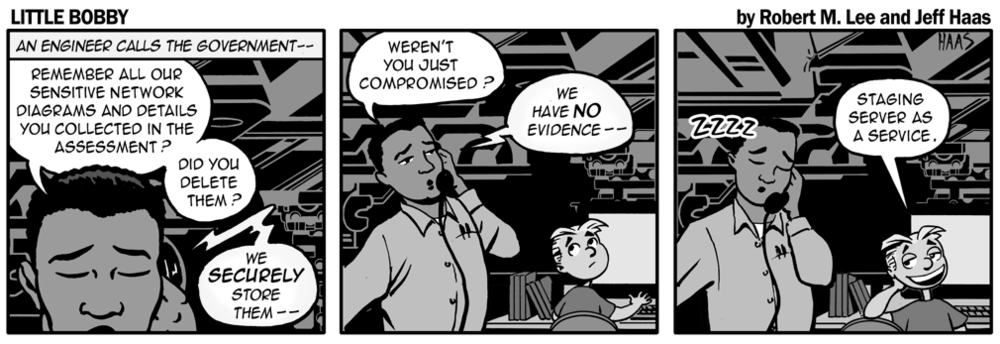
Robert M. Lee’s & Jeff Haas’ Little Bobby Comics – ‘WEEK 313’

via the respected information security capabilities of Robert M. Lee & the superlative illustration talents of Jeff Haas at Little Bobby Comics

via the respected information security capabilities of Robert M. Lee & the superlative illustration talents of Jeff Haas at Little Bobby Comics

Permalink

The post Robert M. Lee’s & Jeff Haas’ Little Bobby Comics – ‘WEEK 313’ appeared first on Security Boulevard.

Read More

The post Robert M. Lee’s & Jeff Haas’ Little Bobby Comics – ‘WEEK 313’ appeared first on Malware Devil.


https://malwaredevil.com/2021/01/24/robert-m-lees-jeff-haas-little-bobby-comics-week-313/?utm_source=rss&utm_medium=rss&utm_campaign=robert-m-lees-jeff-haas-little-bobby-comics-week-313

DEF CON 28 Safe Mode IoT Village – Troy Brown’s ‘Pandemic In Plaintext’

Many thanks to DEF CON and Conference Speakers for publishing their outstanding presentations; of which, originally appeared at the organization’s DEFCON 28 SAFE MODE Conference, and on the DEF CON YouTube channel. Enjoy!

Permalink

The post DEF CON 28 Safe Mode IoT Village – Troy Brown’s ‘Pandemic In Plaintext’ appeared first on Security Boulevard.

Read More

The post DEF CON 28 Safe Mode IoT Village – Troy Brown’s ‘Pandemic In Plaintext’ appeared first on Malware Devil.


https://malwaredevil.com/2021/01/24/def-con-28-safe-mode-iot-village-troy-browns-pandemic-in-plaintext/?utm_source=rss&utm_medium=rss&utm_campaign=def-con-28-safe-mode-iot-village-troy-browns-pandemic-in-plaintext

Video: Doc & RTF Malicious Document, (Sun, Jan 24th)

I made a video for my diary entry “Doc & RTF Malicious Document“. And I show a new feature of my tool re-search.py, that helps with filtering URLs found in OOXML files.

Didier Stevens
Senior handler
Microsoft MVP
blog.DidierStevens.com DidierStevensLabs.com

(c) SANS Internet Storm Center. https://isc.sans.edu Creative Commons Attribution-Noncommercial 3.0 United States License. Read More

The post Video: Doc & RTF Malicious Document, (Sun, Jan 24th) appeared first on Malware Devil.


https://malwaredevil.com/2021/01/24/video-doc-rtf-malicious-document-sun-jan-24th/?utm_source=rss&utm_medium=rss&utm_campaign=video-doc-rtf-malicious-document-sun-jan-24th

Calling [Compiled] Swift from R: Part 2

The previous post introduced the topic of how to compile Swift code for use in R using a useless, toy example. This one goes a bit further and makes a case for why one might want to do this by showing how to use one of Apple’s machine learning libraries, specifically the Natural Language one,… Continue reading

The post Calling [Compiled] Swift from R: Part 2 appeared first on Security Boulevard.

Read More

The post Calling [Compiled] Swift from R: Part 2 appeared first on Malware Devil.


https://malwaredevil.com/2021/01/24/calling-compiled-swift-from-r-part-2/?utm_source=rss&utm_medium=rss&utm_campaign=calling-compiled-swift-from-r-part-2

Beware! Fully-Functional Exploit Released Online for SAP Solution Manager Flaw

SAP Exploit

Cybersecurity researchers have warned of a publicly available fully-functional exploit that could be used to target SAP enterprise software.

The exploit leverages a vulnerability, tracked as CVE-2020-6207, that stems from a missing authentication check in SAP Solution Manager (SolMan) version 7.2

SAP SolMan is an application management and administration solution that offers end-to-end application lifecycle management in distributed environments, acting as a centralized hub for implementing and maintaining SAP systems such as ERP, CRM, HCM, SCM, BI, and others.

password auditor

“A successful exploitation could allow a remote unauthenticated attacker to execute highly privileged administrative tasks in the connected SAP SMD Agents,” researchers from Onapsis said, referring to the Solution Manager Diagnostics toolset used to analyze and monitor SAP systems.

The vulnerability, which has the highest possible CVSS base score of 10.0, was addressed by SAP as part of its March 2020 updates.

SAP Exploit

Exploitation methods leveraging the flaw were later demonstrated at the Black Hat conference last August by Onasis researchers Pablo Artuso and Yvan Genuer to highlight possible attack techniques that could be devised by rogue parties to strike SAP servers and obtain root access.

The critical flaw resided in SolMan’s User Experience Monitoring (formerly End-user Experience Monitoring or EEM) component, thus putting every business system connected to the Solution Manager at risk of a potential compromise.

The public availability of a Proof-of-Concept (PoC) exploit code, therefore, leaves unpatched servers exposed to a number of potential malicious attacks, including:

  • Shutting down any SAP system in the landscape
  • Causing IT to control deficiencies impacting financial integrity and privacy, leading to regulatory compliance violations
  • Deleting any data in the SAP systems, causing business disruptions
  • Assigning superuser privileges to any existing or new user, allowing those users to run critical operations, and
  • Reading sensitive data from the database

“While exploits are released regularly online, this hasn’t been the case for SAP vulnerabilities, for which publicly available exploits have been limited,” Onasis researchers said.

“The release of a public exploit significantly increases the chance of an attack attempt since it also expands potential attackers not only to SAP-experts or professionals, but also to script-kiddies or less-experienced attackers that can now leverage public tools instead of creating their own.”

Found this article interesting? Follow THN on Facebook, Twitter and LinkedIn to read more exclusive content we post.

Read More

The post Beware! Fully-Functional Exploit Released Online for SAP Solution Manager Flaw appeared first on Malware Devil.


https://malwaredevil.com/2021/01/24/beware-fully-functional-exploit-released-online-for-sap-solution-manager-flaw/?utm_source=rss&utm_medium=rss&utm_campaign=beware-fully-functional-exploit-released-online-for-sap-solution-manager-flaw

2020 Data Breaches Point to Cybersecurity Trends for 2021

Risk Based Security released their 2020 year-end data breach report this past week, and despite an overall decline in breach events (security incidents), the number of breached records grew dramatically. Other trends included a doubling of ransomware attacks from 2019 to 2020, and data breach severity rising. Here are some of the highlights from the..

The post 2020 Data Breaches Point to Cybersecurity Trends for 2021 appeared first on Security Boulevard.

Read More

The post 2020 Data Breaches Point to Cybersecurity Trends for 2021 appeared first on Malware Devil.


https://malwaredevil.com/2021/01/24/2020-data-breaches-point-to-cybersecurity-trends-for-2021/?utm_source=rss&utm_medium=rss&utm_campaign=2020-data-breaches-point-to-cybersecurity-trends-for-2021

Barbary Pirates and Russian Cybercrime

In 1801, the United States had a small Navy. Thomas Jefferson deployed almost half that Navy—three frigates and a schooner—to the Barbary C...