Malware Devil

Monday, February 15, 2021

Network Security News Summary for Monday February 15th, 2021

A brief daily summary of what is important in cybersecurity. The podcast is published every weekday and designed to get you ready for the day with a brief, usually about 5 minutes long, summary of current network security-related events. The content is late breaking, educational and based on listener input as well as on input received by the SANS Internet Storm Center. You may submit questions and comments via our contact form at https://isc.sans.edu/contact.html .

The post Network Security News Summary for Monday February 15th, 2021 appeared first on Malware Devil.


https://malwaredevil.com/2021/02/15/network-security-news-summary-for-monday-february-15th-2021/?utm_source=rss&utm_medium=rss&utm_campaign=network-security-news-summary-for-monday-february-15th-2021

Sunday, February 14, 2021

BSidesSF 2020 – Daniel Tobin’s & Paul Karayan’s ‘From Cockroaches To Marble Floors’

Our thanks to BSidesSF and Conference Speakers for publishing their outstanding presentations; which originally appeared at the group’s BSidesSF 2020 Conference, and on the Organization’s YouTube Channel. Additionally, the BSidesSF 2021 Conference will take place on March 6 – 9, 2021 – with no cost to participate. Enjoy!

Permalink

The post BSidesSF 2020 – Daniel Tobin’s & Paul Karayan’s ‘From Cockroaches To Marble Floors’ appeared first on Security Boulevard.

Read More

The post BSidesSF 2020 – Daniel Tobin’s & Paul Karayan’s ‘From Cockroaches To Marble Floors’ appeared first on Malware Devil.


https://malwaredevil.com/2021/02/14/bsidessf-2020-daniel-tobins-paul-karayans-from-cockroaches-to-marble-floors/?utm_source=rss&utm_medium=rss&utm_campaign=bsidessf-2020-daniel-tobins-paul-karayans-from-cockroaches-to-marble-floors

Extracting Heart Rate Data (Two Ways!) from Apple Health XML Export Files Using R (a.k.a. The Least Romantic Valentine’s Day R Post Ever)

💙 Expand for EKG code library(hrbrthemes) library(elementalist) # remotes::install_github(“teunbrand/elementalist”) library(ggplot2) read_csv( file = “~/Data/apple_health_export/electrocardiograms/ecg_2020-09-24.csv”, # this is extracted below skip = 12, col_names = “µV” ) %>% mutate( idx = 1:n() ) -> ekg ggplot() + geom_line_theme( data = ekg %>% tail(3000) %>% head(2500), aes(idx, µV), size = 0.125, color = “#cb181d” ) + labs(x… Continue reading

The post Extracting Heart Rate Data (Two Ways!) from Apple Health XML Export Files Using R (a.k.a. The Least Romantic Valentine’s Day R Post Ever) appeared first on Security Boulevard.

Read More

The post Extracting Heart Rate Data (Two Ways!) from Apple Health XML Export Files Using R (a.k.a. The Least Romantic Valentine’s Day R Post Ever) appeared first on Malware Devil.


https://malwaredevil.com/2021/02/14/extracting-heart-rate-data-two-ways-from-apple-health-xml-export-files-using-r-a-k-a-the-least-romantic-valentines-day-r-post-ever/?utm_source=rss&utm_medium=rss&utm_campaign=extracting-heart-rate-data-two-ways-from-apple-health-xml-export-files-using-r-a-k-a-the-least-romantic-valentines-day-r-post-ever

Video: tshark & Malware Analysis, (Sun, Feb 14th)

In this video, I show the commands I used in diary entry “Quickie: tshark & Malware Analysis” to analyze shellcode from a pcapng file, and I also show some basic options and feature of tshark, the command-line version of Wireshark.

Didier Stevens
Senior handler
Microsoft MVP
blog.DidierStevens.com DidierStevensLabs.com

(c) SANS Internet Storm Center. https://isc.sans.edu Creative Commons Attribution-Noncommercial 3.0 United States License. Read More

The post Video: tshark & Malware Analysis, (Sun, Feb 14th) appeared first on Malware Devil.


https://malwaredevil.com/2021/02/14/video-tshark-malware-analysis-sun-feb-14th/?utm_source=rss&utm_medium=rss&utm_campaign=video-tshark-malware-analysis-sun-feb-14th

A Secure Supply Chain Requires Independent Visibility Into Firmware

Once again, supply chain risks are in the news, with Bloomberg reporting attacks compromising servers via malicious firmware updates. While we don’t have many technical details about the attacks reported in the Bloomberg article, the risk associated with the supply chain remains a serious concern for both the public and private sectors. Organizations today face […]

The post A Secure Supply Chain Requires Independent Visibility Into Firmware appeared first on Security Boulevard.

Read More

The post A Secure Supply Chain Requires Independent Visibility Into Firmware appeared first on Malware Devil.


https://malwaredevil.com/2021/02/14/a-secure-supply-chain-requires-independent-visibility-into-firmware/?utm_source=rss&utm_medium=rss&utm_campaign=a-secure-supply-chain-requires-independent-visibility-into-firmware

Robert M. Lee’s & Jeff Haas’ Little Bobby Comics – ‘WEEK 316’

via the respected information security capabilities of Robert M. Lee & the superlative illustration talents of Jeff Haas at Little Bobby Comics

via the respected information security capabilities of Robert M. Lee & the superlative illustration talents of Jeff Haas at Little Bobby Comics

Permalink

The post Robert M. Lee’s & Jeff Haas’ Little Bobby Comics – ‘WEEK 316’ appeared first on Security Boulevard.

Read More

The post Robert M. Lee’s & Jeff Haas’ Little Bobby Comics – ‘WEEK 316’ appeared first on Malware Devil.


https://malwaredevil.com/2021/02/14/robert-m-lees-jeff-haas-little-bobby-comics-week-316/?utm_source=rss&utm_medium=rss&utm_campaign=robert-m-lees-jeff-haas-little-bobby-comics-week-316

BSidesSF 2020 – Mike Malone’s ‘If You’re Not Using SSH Certificates You’re Doing SSH Wrong’

Our thanks to BSidesSF and Conference Speakers for publishing their outstanding presentations; which originally appeared at the group’s BSidesSF 2020 Conference, and on the Organization’s YouTube Channel. Additionally, the BSidesSF 2021 Conference will take place on March 6 – 9, 2021 – with no cost to participate. Enjoy!

Permalink

The post BSidesSF 2020 – Mike Malone’s ‘If You’re Not Using SSH Certificates You’re Doing SSH Wrong’ appeared first on Security Boulevard.

Read More

The post BSidesSF 2020 – Mike Malone’s ‘If You’re Not Using SSH Certificates You’re Doing SSH Wrong’ appeared first on Malware Devil.


https://malwaredevil.com/2021/02/14/bsidessf-2020-mike-malones-if-youre-not-using-ssh-certificates-youre-doing-ssh-wrong/?utm_source=rss&utm_medium=rss&utm_campaign=bsidessf-2020-mike-malones-if-youre-not-using-ssh-certificates-youre-doing-ssh-wrong

Combatting the Growing Cyberthreat of QR Code Abuse

Back in 2013, David Geer laid out the dangers of QR codes for security, explaining how a malicious QR — Quick Response — code can contain a link to a website embedded with malware. The Web link then infects the user device with a Trojan. “Once a Trojan infiltrates a mobile device,” Geer wrote, “it..

The post Combatting the Growing Cyberthreat of QR Code Abuse appeared first on Security Boulevard.

Read More

The post Combatting the Growing Cyberthreat of QR Code Abuse appeared first on Malware Devil.


https://malwaredevil.com/2021/02/14/combatting-the-growing-cyberthreat-of-qr-code-abuse/?utm_source=rss&utm_medium=rss&utm_campaign=combatting-the-growing-cyberthreat-of-qr-code-abuse

XKCD ‘Normal Conversation’

via the comic delivery system monikered Randall Munroe resident at XKCD !

via the comic delivery system monikered Randall Munroe resident at XKCD!

Permalink

The post XKCD ‘Normal Conversation’ appeared first on Security Boulevard.

Read More

The post XKCD ‘Normal Conversation’ appeared first on Malware Devil.


https://malwaredevil.com/2021/02/13/xkcd-normal-conversation/?utm_source=rss&utm_medium=rss&utm_campaign=xkcd-normal-conversation

Saturday, February 13, 2021

Using Logstash to Parse IPtables Firewall Logs, (Sat, Feb 13th)

One of our reader submitted some DSL Modem Firewall logs (iptables format) and I wrote a simple logstash parser to analyze and illustrate the activity, in this case it is all scanning activity against this modem. An iptables parser exist for Filebeat[2], but for this example, I wanted to show how to create a simple logstash parser using Grok[3] to parse these logs and send them to Elastic.

The Logstash Configuration Parser

# Guy Bruneau, guybruneau@outlook.com
# Date: 13 Feb 2021
# Version: 0.1
#
# Parse to Elastic Common Schema (ECS) format
# https://www.elastic.co/guide/en/ecs/1.7/ecs-field-reference.html
#
# This custom parser is parsing iptables type firewall logs dump data

# Wed Feb 10 23:59:29 2021 kern.debug kernel: [288253.168004] Firewall WAN DROP (SRC): IN= OUT= MAC=20:b0:01:6d:51:c4:a0:f3:e4:a3:1d:ba:08:00 SRC=xxx.xxx.xxx.xxx DST=xx.xxx.xx.xx LEN=40 TOS=0x00 PREC=0x00 TTL=245 ID=6607 PROTO=TCP SPT=55035 DPT=6981 WINDOW=1024 RES=0x00 SYN URGP=0 MARK=0x8000000

# Grab the logs file from filebeat which match the pattern /home/guy/logs

filter {
  if [log][file][path] =~ “logs” {
    grok {
      match => { “message” => “^%{HTTPDERROR_DATE:timestamp}.*?%{LOGLEVEL:loglevel}s+%{WORD:event.provider}:.*Firewalls+%{WORD:interface.name}s+%{WORD:event.action}s+(%{WORD:network.direction}).*SRC=%{IP:source.ip}s+DST=%{IP:destination.ip}s+.*ID=%{WORD:event.id}s+PROTO=%{WORD:network.transport}s+SPT=%{INT:source.port}s+DPT=%{INT:destionation.port}.*” }
    }
  }
}

# Format: Thu Feb 11 08:46:32 2021
# https://docs.oracle.com/javase/7/docs/api/java/text/SimpleDateFormat.html

filter {
  date {
    match => [“timestamp”, “EEE MMM dd HH:mm:ss yyyy”]
    target => “@timestamp”
  }
}

# Add GeoIP information to destination hostname

filter {
  if [log][file][path] =~ “logs” {
    geoip { source => “source.ip” }
  }
}

Now that the data is in Elasticsearch, I can create various reports based on the activity logged by iptables. The dashboards I prepared shows the number of records, the Top 10 targeted ports (services) and a table with the Top 10 sources with its location (GeoIP), action taken by the firewall and a total.
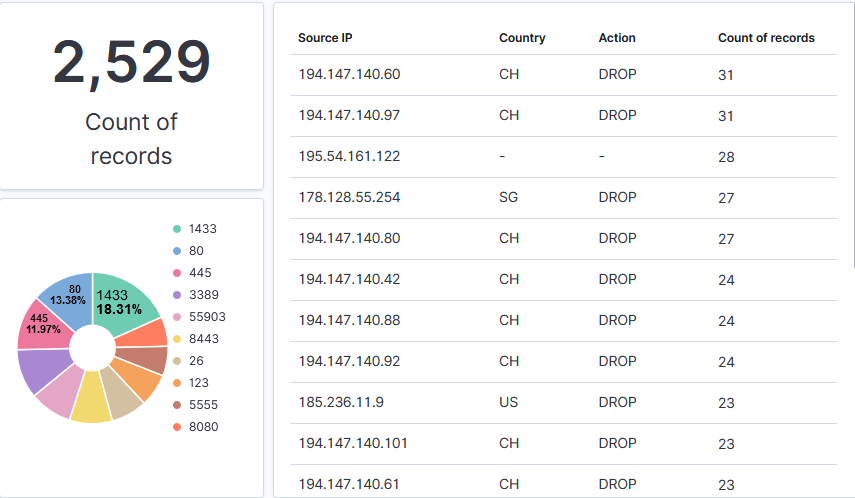
It is always a good idea to monitor and review the activity logged by the modem. If you aren’t sure what to look for, we have tips published here as well as how you can participate and submit your logs to DShield, the service is open and free.

[1] https://www.elastic.co/downloads/logstash
[2] https://www.elastic.co/guide/en/beats/filebeat/7.11/filebeat-module-iptables.html
[3] https://grokdebug.herokuapp.com/
[4] https://isc.sans.edu/howto.html
[5] https://isc.sans.edu/forums/diary/Secure+Communication+using+TLS+in+Elasticsearch/26902/

———–
Guy Bruneau IPSS Inc.
My Handler Page
Twitter: GuyBruneau
gbruneau at isc dot sans dot edu

(c) SANS Internet Storm Center. https://isc.sans.edu Creative Commons Attribution-Noncommercial 3.0 United States License. Read More

The post Using Logstash to Parse IPtables Firewall Logs, (Sat, Feb 13th) appeared first on Malware Devil.


https://malwaredevil.com/2021/02/13/using-logstash-to-parse-iptables-firewall-logs-sat-feb-13th/?utm_source=rss&utm_medium=rss&utm_campaign=using-logstash-to-parse-iptables-firewall-logs-sat-feb-13th

SlashNext Named in The Top 25 Cybersecurity Companies Of 2020

The companies selected for this year’s awards represent some of the most innovative and technically advanced organizations in their approach to protecting customers. Hundreds of nomination submissions were evaluated. These awardees implement proactive and comprehensive platform technologies to ensure customers are protected against a wide range of cyberattacks. With a large number of businesses allocating […]

The post SlashNext Named in The Top 25 Cybersecurity Companies Of 2020 first appeared on SlashNext.

The post SlashNext Named in The Top 25 Cybersecurity Companies Of 2020 appeared first on Security Boulevard.

Read More

The post SlashNext Named in The Top 25 Cybersecurity Companies Of 2020 appeared first on Malware Devil.


https://malwaredevil.com/2021/02/13/slashnext-named-in-the-top-25-cybersecurity-companies-of-2020/?utm_source=rss&utm_medium=rss&utm_campaign=slashnext-named-in-the-top-25-cybersecurity-companies-of-2020

What is DNS Poisoning? (aka DNS Spoofing) | Keyfactor

DNS poisoning, also known as DNS cache poisoning or DNS spoofing, is a highly deceptive cyber attack in which hackers redirect web traffic toward fake web servers and phishing websites. These fake sites typically look like the user’s intended destination, making it easy for hackers to trick visitors into sharing sensitive information. Note: if you’re looking for information on IP spoofing attacks, check out my previous blog.

The post What is DNS Poisoning? (aka DNS Spoofing) | Keyfactor appeared first on Security Boulevard.

Read More

The post What is DNS Poisoning? (aka DNS Spoofing) | Keyfactor appeared first on Malware Devil.


https://malwaredevil.com/2021/02/13/what-is-dns-poisoning-aka-dns-spoofing-keyfactor/?utm_source=rss&utm_medium=rss&utm_campaign=what-is-dns-poisoning-aka-dns-spoofing-keyfactor

BSidesSF 2020 – Claire Moynahan’s ‘Developing A Baseline Security Standard For Endpoint Devices’

Our thanks to BSidesSF and Conference Speakers for publishing their outstanding presentations; which originally appeared at the group’s BSidesSF 2020 Conference, and on the Organization’s YouTube Channel. Additionally, the BSidesSF 2021 Conference will take place on March 6 – 9, 2021 – with no cost to participate. Enjoy!

Permalink

The post BSidesSF 2020 – Claire Moynahan’s ‘Developing A Baseline Security Standard For Endpoint Devices’ appeared first on Security Boulevard.

Read More

The post BSidesSF 2020 – Claire Moynahan’s ‘Developing A Baseline Security Standard For Endpoint Devices’ appeared first on Malware Devil.


https://malwaredevil.com/2021/02/13/bsidessf-2020-claire-moynahans-developing-a-baseline-security-standard-for-endpoint-devices/?utm_source=rss&utm_medium=rss&utm_campaign=bsidessf-2020-claire-moynahans-developing-a-baseline-security-standard-for-endpoint-devices

Weekly News Roundup — February 7 to February 13

Hello and welcome to Sec Soup, where the weekly newsletter has a collection of infosec links to Tools & Tips, Threat Research, and more! The focus trends toward DFIR and threat intelligence, but general information security and hacking-related topics are included as well. This list is not vetted nor intended to be an exhaustive source. Keeping up with the enormous volume of security-related information is a daunting task, but this is my way of filtering the most useful items and improving the signal to noise ratio. Happy Reading!

Industry Reports, News, and Miscellany

Threat Research 

Tools and Tips

Breaches, Government, and Law Enforcement 

Vulnerabilities and Exploits

Read More

The post Weekly News Roundup — February 7 to February 13 appeared first on Malware Devil.


https://malwaredevil.com/2021/02/13/weekly-news-roundup-february-7-to-february-13/?utm_source=rss&utm_medium=rss&utm_campaign=weekly-news-roundup-february-7-to-february-13

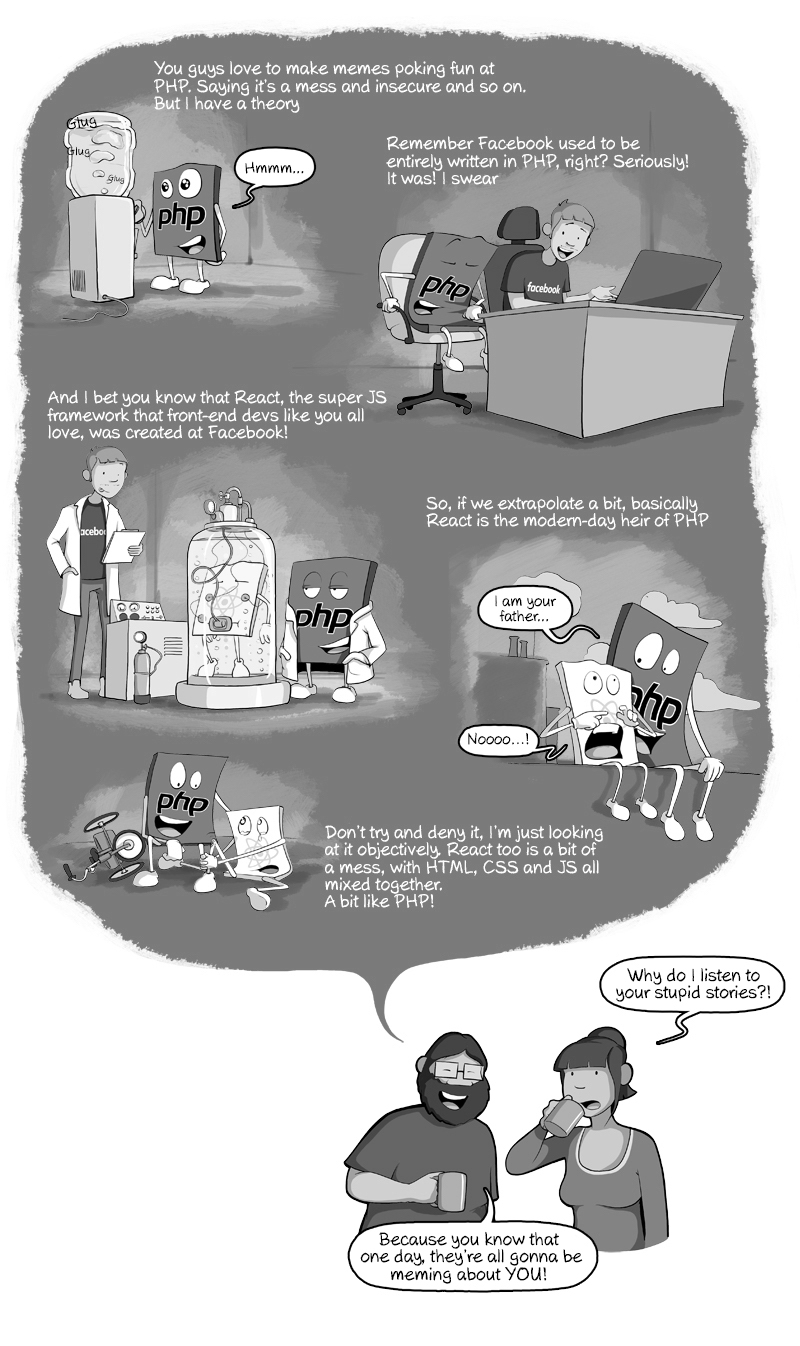
CommitStrip ‘A Theory About PHP’

via the textual amusements of Thomas Gx , along with the Illustration talents of Etienne Issartia and superb translation skillset of Mark Nightingale - the creators of CommitStrip !

via the textual amusements of Thomas Gx, along with the Illustration talents of Etienne Issartia and superb translation skillset of Mark Nightingale – the creators of CommitStrip!

Permalink

The post CommitStrip ‘A Theory About PHP’ appeared first on Security Boulevard.

Read More

The post CommitStrip ‘A Theory About PHP’ appeared first on Malware Devil.


https://malwaredevil.com/2021/02/13/commitstrip-a-theory-about-php/?utm_source=rss&utm_medium=rss&utm_campaign=commitstrip-a-theory-about-php

Chinese Supply-Chain Attack on Computer Systems

Bloomberg News has a major story about the Chinese hacking computer motherboards made by Supermicro, Levono, and others. It’s been going on since at least 2008. The US government has known about it for almost as long, and has tried to keep the attack secret:

China’s exploitation of products made by Supermicro, as the U.S. company is known, has been under federal scrutiny for much of the past decade, according to 14 former law enforcement and intelligence officials familiar with the matter. That included an FBI counterintelligence investigation that began around 2012, when agents started monitoring the communications of a small group of Supermicro workers, using warrants obtained under the …

The post Chinese Supply-Chain Attack on Computer Systems appeared first on Security Boulevard.

Read More

The post Chinese Supply-Chain Attack on Computer Systems appeared first on Malware Devil.


https://malwaredevil.com/2021/02/13/chinese-supply-chain-attack-on-computer-systems/?utm_source=rss&utm_medium=rss&utm_campaign=chinese-supply-chain-attack-on-computer-systems

BSidesSF 2020 – Nishil Shah’s ‘Securing Coinbase’s Edge Payments Infrastructure’

Our thanks to BSidesSF and Conference Speakers for publishing their outstanding presentations; which originally appeared at the group’s BSidesSF 2020 Conference, and on the Organization’s YouTube Channel. Additionally, the BSidesSF 2021 Conference will take place on March 6 – 9, 2021 – with no cost to participate. Enjoy!

Permalink

The post BSidesSF 2020 – Nishil Shah’s ‘Securing Coinbase’s Edge Payments Infrastructure’ appeared first on Security Boulevard.

Read More

The post BSidesSF 2020 – Nishil Shah’s ‘Securing Coinbase’s Edge Payments Infrastructure’ appeared first on Malware Devil.


https://malwaredevil.com/2021/02/13/bsidessf-2020-nishil-shahs-securing-coinbases-edge-payments-infrastructure/?utm_source=rss&utm_medium=rss&utm_campaign=bsidessf-2020-nishil-shahs-securing-coinbases-edge-payments-infrastructure

Yandex Employee Caught Selling Access to Users’ Email Inboxes

Russian Dutch-domiciled search engine, ride-hailing and  email service provider Yandex on Friday disclosed a data breach that compromised 4,887 email accounts of its users.
The company blamed the incident on an unnamed employee who had been providing unauthorized access to the users’ mailboxes for personal gain.
“The employee was one of three system administrators with the necessary access
Read More

The post Yandex Employee Caught Selling Access to Users’ Email Inboxes appeared first on Malware Devil.


https://malwaredevil.com/2021/02/13/yandex-employee-caught-selling-access-to-users-email-inboxes-2/?utm_source=rss&utm_medium=rss&utm_campaign=yandex-employee-caught-selling-access-to-users-email-inboxes-2

Identity Thefts Had Huge Surge in 2020

Trends come and go in the hacking world. A few years ago, stealing credit card numbers was the crime of choice for most of the hackers out there. They’ve since begin to gravitate toward health related information. The two big trends in 2020 were the rampant increase in ransomware attacks against companies of all shapes and sizes and the preference of hackers to focus on identity theft.


Both of these crimes saw huge increases last year, but the number of identities stolen last year reached a mind-boggling record of 1.4 million in 2020, which is more than double the number reported in 2019. While there are a number of different factors that have fed into this trend, the biggest and most influential one seems to be the ongoing pandemic, which has created a whole raft of opportunities for hackers to exploit.

The government’s Paycheck Protection Program has created a confusing maze that can be hard for some out of work people to navigate. The hackers and scammers of the world are only too happy to insert themselves in the process, offering assistance as a ruse to gain personal information.

In a similar vein, with tens of millions of people out of work and state unemployment systems struggling under the strain, there have been delays in getting benefits that sometimes span months. Again, this raises legitimate questions which hackers and scammers are only to happy to pretend to answer. They use social engineering techniques and pretend to offer assistance in getting needed benefits more quickly, only to steal the target’s identity.

Given this, the IRS has recommended that all taxpayers at least consider taking the time to establish an Identity Protection PIN when filing their taxes this year. This is essentially a form of two factor authentication that will help ensure that if you’re due a refund from the IRS, someone who has stolen your identity won’t file taxes on your behalf and steal it from you.

It’s sound advice but sadly, this won’t be the last threat we’ll need to be mindful of in the months ahead. Stay vigilant out there.

Used with permission from Article Aggregator

Read More

The post Identity Thefts Had Huge Surge in 2020 appeared first on Malware Devil.


https://malwaredevil.com/2021/02/13/identity-thefts-had-huge-surge-in-2020/?utm_source=rss&utm_medium=rss&utm_campaign=identity-thefts-had-huge-surge-in-2020

Yandex Employee Caught Selling Access to Users’ Email Inboxes

Russian Dutch-domiciled search engine, ride-hailing and email service provider Yandex on Friday disclosed a data breach that compromised 4,887 email accounts of its users.

The company blamed the incident on an unnamed employee who had been providing unauthorized access to the users’ mailboxes for personal gain.

“The employee was one of three system administrators with the necessary access rights to provide technical support for the service,” Yandex said in a statement.

The company said the security breach was identified during a routine audit of its systems by its security team. It also said there was no evidence that user payment details were compromised during the incident and that it had notified affected mailbox owners to change their passwords.

password auditor

It’s not immediately clear when the breach occurred or when the employee began offering unauthorized access to third-parties.

“A thorough internal investigation of the incident is under way, and Yandex will be making changes to administrative access procedures,” the company said. “This will help minimize the potential for individuals to compromise the security of user data in future. The company has also contacted law enforcement.”

Insider Threats Continue to Hit Companies

This is not the first time insider threats have plagued tech companies and resulted in financial or reputational damage.

Last month, Telesforo Aviles, a 35-year-old former Dallas-based ADT technician, pled guilty to computer fraud and invasive visual recording for repeatedly breaking into cameras he installed and viewed customers engaging in sex and other intimate acts. He was terminated from the firm in April 2020.

In December, former Cisco engineer Sudhish Kasaba Ramesh, 31, was sentenced to 24 months in prison for deleting 16,000 Webex accounts without authorization, costing the company more than $2.4 million, with $1,400,000 in employee time and $1,000,000 in customer refunds.

In October last year, Amazon fired an employee for sharing customers’ names and email addresses with a third-party.

And in November 2019, cybersecurity firm Trend Micro revealed that a rogue employee sold the data of 68,000 customers to malicious cybercriminals, who then used that data to target customers with scam calls by posing as Trend Micro support personnel.

Found this article interesting? Follow THN on Facebook, Twitter and LinkedIn to read more exclusive content we post.

Read More

The post Yandex Employee Caught Selling Access to Users’ Email Inboxes appeared first on Malware Devil.


https://malwaredevil.com/2021/02/13/yandex-employee-caught-selling-access-to-users-email-inboxes/?utm_source=rss&utm_medium=rss&utm_campaign=yandex-employee-caught-selling-access-to-users-email-inboxes

Barbary Pirates and Russian Cybercrime

In 1801, the United States had a small Navy. Thomas Jefferson deployed almost half that Navy—three frigates and a schooner—to the Barbary C...