Malware Devil

Tuesday, February 16, 2021

White Paper – How Behavioral Biometrics Prevents Fraud While Ensuring Positive Customer Experiences

The technically sophisticated nature of crime today demands a technically sophisticated response, and fraud prevention and financial crime expert Mark Tingey contends that ongoing advancements in behavioral biometrics are rising to this standard.

The post White Paper – How Behavioral Biometrics Prevents Fraud While Ensuring Positive Customer Experiences appeared first on BehavioSec.

The post White Paper – How Behavioral Biometrics Prevents Fraud While Ensuring Positive Customer Experiences appeared first on Security Boulevard.

Read More

The post White Paper – How Behavioral Biometrics Prevents Fraud While Ensuring Positive Customer Experiences appeared first on Malware Devil.


https://malwaredevil.com/2021/02/16/white-paper-how-behavioral-biometrics-prevents-fraud-while-ensuring-positive-customer-experiences/?utm_source=rss&utm_medium=rss&utm_campaign=white-paper-how-behavioral-biometrics-prevents-fraud-while-ensuring-positive-customer-experiences

Monday, February 15, 2021

Bluetooth Overlay Skimmer That Blocks Chip

As a total sucker for anything skimming-related, I was interested to hear from a reader working security for a retail chain in the United States who recently found Bluetooth-enabled skimming devices placed over top of payment card terminals at several stores. Interestingly, these skimmers interfered with the terminal’s ability to read chip-based cards, forcing customers to swipe the stripe instead.

The payment card skimmer overlay transmitted stolen data via Bluetooth, physically blocked chip-based transactions, and included a PIN pad overlay.

Here’s a closer look at the electronic gear jammed into these overlay skimmers. It includes a hidden PIN pad overlay that captures, stores and transmits via Bluetooth data from cards swiped through the machine, as well as PINs entered on the device:

The hidden magnetic stripe reader is in the bottom left, just below the Bluetooth circuit board. A PIN pad overlay (center) intercepts any PINs entered by customers; the cell phone battery (right) powers all of the components.

My reader source shared these images on condition that the retailer in question not be named. But it’s worth pointing out these devices can be installed on virtually any customer-facing payment terminal in the blink of eye.

Newer, chip-based payment cards are more costly and difficult for thieves to clone, but virtually all cards still store card data on a magnetic stripe on the back of the cards — mainly for reasons of backwards compatibility. This overlay skimmer included a physical component designed to block the payment terminal from reading the chip, forcing the customer to swipe the stripe instead of dip the chip.
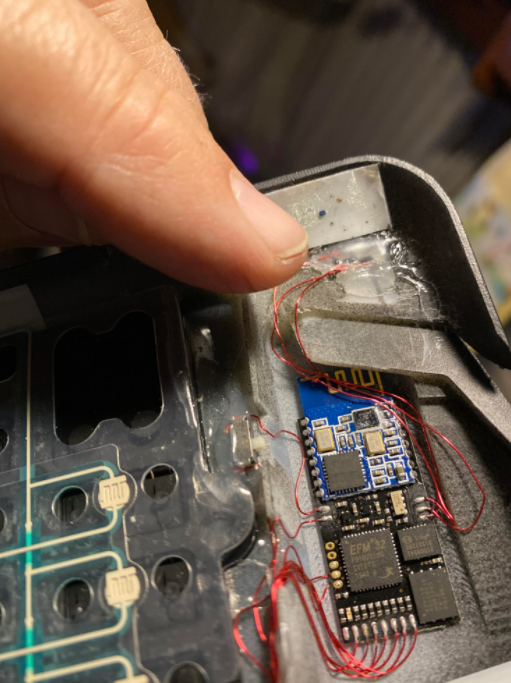
The magnetic stripe reader (top right) worked with a component designed to block the use of chip-based payment cards.

What’s remarkable is that these badboys went undetected for several weeks, particularly given that customers would have been forced to swipe.

“In this COVID19 world, with counter and terminal wipedowns frequent it was surprising that nobody noticed the overlay placements for a number of weeks,” the source said.

I realize a great many people use debit cards for everyday purchases, but I’ve never been interested in assuming the added risk and pay for everything with cash or a credit card. Armed with your PIN and debit card data, thieves can clone the card and pull money out of your account at an ATM. Having your checking account emptied of cash while your bank sorts out the situation can be a huge hassle and create secondary problems (bounced checks, for instance).

Want to learn more about overlay skimmers? Check out these other posts:

How to Spot Ingenico Self-Checkout Skimmers

Self-Checkout Skimmers Go Bluetooth

More on Bluetooth Ingenico Overlay Skimmers

Safeway Self-Checkout Skimmers Up Close

Skimmers Found at Wal-Mart: A Closer Look

Read More

The post Bluetooth Overlay Skimmer That Blocks Chip appeared first on Malware Devil.


https://malwaredevil.com/2021/02/15/bluetooth-overlay-skimmer-that-blocks-chip-2/?utm_source=rss&utm_medium=rss&utm_campaign=bluetooth-overlay-skimmer-that-blocks-chip-2

Bluetooth Overlay Skimmer That Blocks Chip

As a total sucker for anything skimming-related, I was interested to hear from a reader working security for a retail chain in the United States that recently found bluetooth-enabled skimming devices placed over top of payment card terminals at several stores. Interestingly, these skimmers interfered with the terminal’s ability to read chip-based cards, forcing customers to swipe the stripe instead.

The post Bluetooth Overlay Skimmer That Blocks Chip appeared first on Security Boulevard.

Read More

The post Bluetooth Overlay Skimmer That Blocks Chip appeared first on Malware Devil.


https://malwaredevil.com/2021/02/15/bluetooth-overlay-skimmer-that-blocks-chip/?utm_source=rss&utm_medium=rss&utm_campaign=bluetooth-overlay-skimmer-that-blocks-chip

Next-Gen Protection Essential to Prevent Evolving Phishing Attacks 

In early February, SlashNext debuted “Phish Stories,” a videocast and podcast series designed to educate cybersecurity professionals about the latest, most innovative phishing attacks challenging businesses today.     In each episode, cybersecurity experts discuss new zero-hour phishing attacks — their latest strategies, attack vectors, and technologies used to manipulate and deceive people — before a live audience of CISOs, CSOs and cybersecurity professionals.    Experts also discuss steps organizations can take to protect their employees from the fast-evolving attacks […]

The post Next-Gen Protection Essential to Prevent Evolving Phishing Attacks  first appeared on SlashNext.

The post Next-Gen Protection Essential to Prevent Evolving Phishing Attacks  appeared first on Security Boulevard.

Read More

The post Next-Gen Protection Essential to Prevent Evolving Phishing Attacks  appeared first on Malware Devil.


https://malwaredevil.com/2021/02/15/next-gen-protection-essential-to-prevent-evolving-phishing-attacks/?utm_source=rss&utm_medium=rss&utm_campaign=next-gen-protection-essential-to-prevent-evolving-phishing-attacks

Deliberately Playing Copyrighted Music to Avoid Being Live-Streamed

Vice is reporting on a new police hack: playing copyrighted music when being filmed by citizens, trying to provoke social media sites into taking the videos down and maybe even banning the filmers:

In a separate part of the video, which Devermont says was filmed later that same afternoon, Devermont approaches [BHPD Sgt. Billy] Fair outside. The interaction plays out almost exactly like it did in the department — when Devermont starts asking questions, Fair turns on the music.

Devermont backs away, and asks him to stop playing music. Fair says “I can’t hear you” — again, despite holding a phone that is blasting tunes…

The post Deliberately Playing Copyrighted Music to Avoid Being Live-Streamed appeared first on Security Boulevard.

Read More

The post Deliberately Playing Copyrighted Music to Avoid Being Live-Streamed appeared first on Malware Devil.


https://malwaredevil.com/2021/02/15/deliberately-playing-copyrighted-music-to-avoid-being-live-streamed/?utm_source=rss&utm_medium=rss&utm_campaign=deliberately-playing-copyrighted-music-to-avoid-being-live-streamed

Cybercrooks Rake in $304M in Romance Scams

The number of people being targeted by fake relationship-seekers has spiked during the COVID-19 pandemic.
Read More

The post Cybercrooks Rake in $304M in Romance Scams appeared first on Malware Devil.


https://malwaredevil.com/2021/02/15/cybercrooks-rake-in-304m-in-romance-scams/?utm_source=rss&utm_medium=rss&utm_campaign=cybercrooks-rake-in-304m-in-romance-scams

Talking Emotet’s takedown with Adam Kujawa: Lock and Code S02E01

This week on Lock and Code, we discuss the top security headlines generated right here on Labs and around the Internet. In addition, we talk to Adam Kujawa, security evangelist and director of Malwarebytes Labs, about Emotet, the former public enemy No. 1 in the cybercrime world.

What began in 2014 as a simple banking Trojan evolved into one of the most sophisticated malware types in the world, able to insert itself into ongoing email threads between coworkers, recognize and evade virtual environments, and serve as a first step into infecting a corporate network, only to deliver separate malware at a later date. It was bad, bad news.

But on January 27, Emotet got knocked out.

Tune in to hear about Emotet’s past, its evolution, its eventual takedown through an international law enforcement effort, and what the upcoming malware power vacuum means for malware development, on the latest episode of Lock and Code, with host David Ruiz.

You can also find us on the Apple iTunes store and Spotify, plus whatever preferred podcast platform you use.

We cover our own research on:

Other cybersecurity news:

  • Eight Britons arrested over hacking phones of US celebrities (Source: Sky News)
  • Scammers are selling fake COVID19 vaccination cards for $20 (Source: InfoSecurity Magazine)
  • 223 vulnerabilities identified that were used in recent ransomware attacks (Source: SC Magazine)
  • Malicious extension abuses Chrome sync to steal users’ data (Source: BleepingComputer)
  • Junior leaders need to move past the discourse surrounding digital media (Source: Modern War Institute)

Stay safe, everyone!

The post Talking Emotet’s takedown with Adam Kujawa: Lock and Code S02E01 appeared first on Malwarebytes Labs.

The post Talking Emotet’s takedown with Adam Kujawa: Lock and Code S02E01 appeared first on Malware Devil.


https://malwaredevil.com/2021/02/15/talking-emotets-takedown-with-adam-kujawa-lock-and-code-s02e01-2/?utm_source=rss&utm_medium=rss&utm_campaign=talking-emotets-takedown-with-adam-kujawa-lock-and-code-s02e01-2

BSidesSF 2020 – Bryan Zimmer’s ‘So You’re The First Security Hire’

Our thanks to BSidesSF and Conference Speakers for publishing their outstanding presentations; which originally appeared at the group’s BSidesSF 2020 Conference, and on the Organization’s YouTube Channel. Additionally, the BSidesSF 2021 Conference will take place on March 6 – 9, 2021 – with no cost to participate. Enjoy!

Permalink

The post BSidesSF 2020 – Bryan Zimmer’s ‘So You’re The First Security Hire’ appeared first on Security Boulevard.

Read More

The post BSidesSF 2020 – Bryan Zimmer’s ‘So You’re The First Security Hire’ appeared first on Malware Devil.


https://malwaredevil.com/2021/02/15/bsidessf-2020-bryan-zimmers-so-youre-the-first-security-hire/?utm_source=rss&utm_medium=rss&utm_campaign=bsidessf-2020-bryan-zimmers-so-youre-the-first-security-hire

OSINT: Mapping Threat Actor Social Media Accounts

A threatening social media post targeting an executive, employee, brand, or any other asset often has merit to it, and investigating the online accounts associated with the threat actor is imperative in the process of assessing risk. By mapping social media accounts operated by the threat actor, you can build a more comprehensive profile of the user and better assess the risk posed. It can also reveal the real-life identity of the user if they have attempted to remain anonymous.
 
We recently published a blog focused on the importance of determining a social media user’s location, and the same is true in gauging the behavior of an online user through posted content across their social media accounts. Past activity, interactions, and anonymous accounts may all help to determine the level of risk and can provide security teams valuable insight into whether or not mitigation should be pursued. 
 

The post OSINT: Mapping Threat Actor Social Media Accounts appeared first on Security Boulevard.

Read More

The post OSINT: Mapping Threat Actor Social Media Accounts appeared first on Malware Devil.


https://malwaredevil.com/2021/02/15/osint-mapping-threat-actor-social-media-accounts/?utm_source=rss&utm_medium=rss&utm_campaign=osint-mapping-threat-actor-social-media-accounts

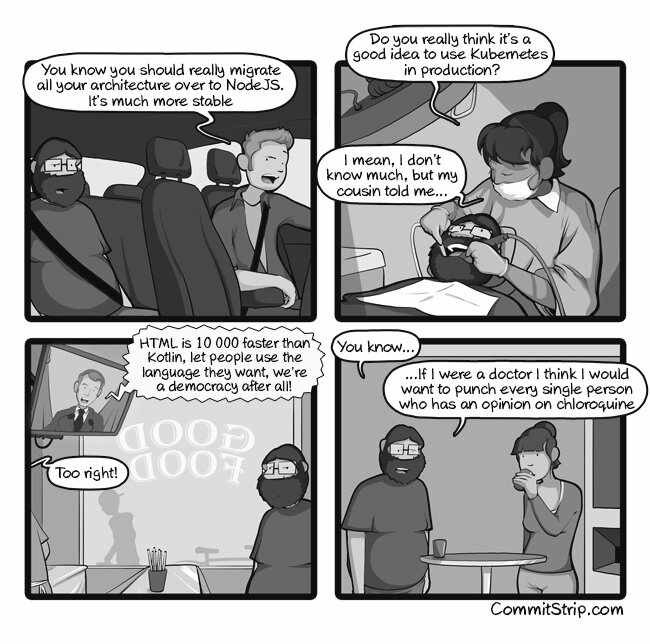
CommitStrip ‘Experts’

via the textual amusements of Thomas Gx , along with the Illustration talents of Etienne Issartia and superb translation skillset of Mark Nightingale - the creators of CommitStrip !

via the textual amusements of Thomas Gx, along with the Illustration talents of Etienne Issartia and superb translation skillset of Mark Nightingale – the creators of CommitStrip!

Permalink

The post CommitStrip ‘Experts’ appeared first on Security Boulevard.

Read More

The post CommitStrip ‘Experts’ appeared first on Malware Devil.


https://malwaredevil.com/2021/02/15/commitstrip-experts-2/?utm_source=rss&utm_medium=rss&utm_campaign=commitstrip-experts-2

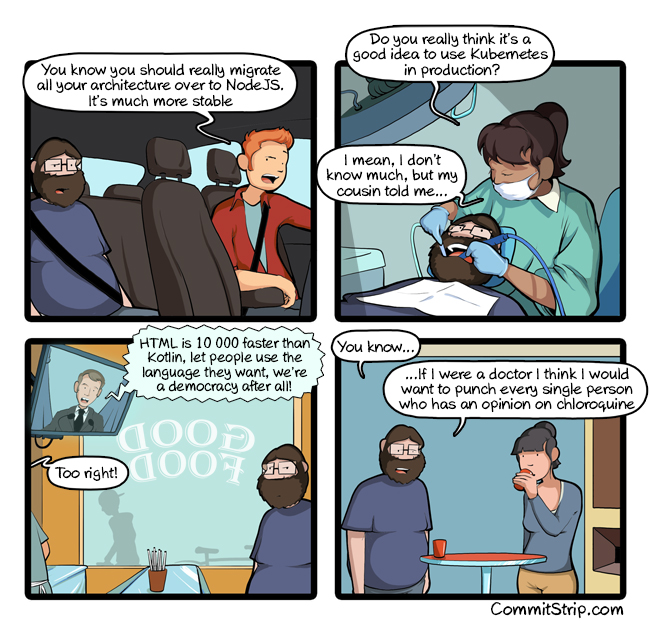
CommitStrip ‘Experts’

via the textual amusements of Thomas Gx , along with the Illustration talents of Etienne Issartia and superb translation skillset of Mark Nightingale - the creators of CommitStrip !

via the textual amusements of Thomas Gx, along with the Illustration talents of Etienne Issartia and superb translation skillset of Mark Nightingale – the creators of CommitStrip!

Permalink

The post CommitStrip ‘Experts’ appeared first on Security Boulevard.

Read More

The post CommitStrip ‘Experts’ appeared first on Malware Devil.


https://malwaredevil.com/2021/02/15/commitstrip-experts/?utm_source=rss&utm_medium=rss&utm_campaign=commitstrip-experts

Network Security: 5 Fundamentals for 2021

network security

In January 2020, no one could have predicted how unpredictable the coming year would be. But despite the seismic changes to the way we work, the biggest network security threats to organizations were mostly the same old threats we’ve been facing for the past five years. Yet even the largest enterprises with the most advanced,..

The post Network Security: 5 Fundamentals for 2021 appeared first on Security Boulevard.

Read More

The post Network Security: 5 Fundamentals for 2021 appeared first on Malware Devil.


https://malwaredevil.com/2021/02/15/network-security-5-fundamentals-for-2021/?utm_source=rss&utm_medium=rss&utm_campaign=network-security-5-fundamentals-for-2021

The State of Application Security: What the Statistics Tell Us

CSO Online ran an article last August covering some important application security statistics from a study run by the Enterprise Security Group (ESG).  The article titled The State of Application Security: What the Statistics Tell Us, covered an interesting finding from the report, notably that 79% of organizations push vulnerable code to production either occasionally or regularly

The post The State of Application Security: What the Statistics Tell Us appeared first on K2io.

The post The State of Application Security: What the Statistics Tell Us appeared first on Security Boulevard.

Read More

The post The State of Application Security: What the Statistics Tell Us appeared first on Malware Devil.


https://malwaredevil.com/2021/02/15/the-state-of-application-security-what-the-statistics-tell-us/?utm_source=rss&utm_medium=rss&utm_campaign=the-state-of-application-security-what-the-statistics-tell-us

Zerologon Vulnerability: What You Need to Know

Zerologon Malware Complacency

Zerologon made its way into our collective awareness in late September 2020, when it was revealed that hackers were actively targeting the vulnerability. While the complete patch was made available this month, on February 9th, 2021, both Microsoft and the U.S. Cybersecurity and Infrastructure Security Agency (CISA) have encouraged companies to use the available partial..

The post Zerologon Vulnerability: What You Need to Know appeared first on Security Boulevard.

Read More

The post Zerologon Vulnerability: What You Need to Know appeared first on Malware Devil.


https://malwaredevil.com/2021/02/15/zerologon-vulnerability-what-you-need-to-know/?utm_source=rss&utm_medium=rss&utm_campaign=zerologon-vulnerability-what-you-need-to-know

Florida Water Supply Hack, Android App Hijack, US Capitol Riot Phone Tracking

In episode 160: An attacker tried to poison a Florida city’s water supply, a popular Android app was hacked to display malicious ads, and how smartphone location data was used to track the US Capitol rioters. ** Links mentioned on the show ** A Hacker Tried to Poison a Florida City’s Water Supply, Officials Say […]

The post Florida Water Supply Hack, Android App Hijack, US Capitol Riot Phone Tracking appeared first on The Shared Security Show.

The post Florida Water Supply Hack, Android App Hijack, US Capitol Riot Phone Tracking appeared first on Security Boulevard.

Read More

The post Florida Water Supply Hack, Android App Hijack, US Capitol Riot Phone Tracking appeared first on Malware Devil.


https://malwaredevil.com/2021/02/15/florida-water-supply-hack-android-app-hijack-us-capitol-riot-phone-tracking/?utm_source=rss&utm_medium=rss&utm_campaign=florida-water-supply-hack-android-app-hijack-us-capitol-riot-phone-tracking

1980 Datsun Electric Car (Lektrikar II) For Sale

Would you buy a 1980 Datsun electric car? Let me explain why such a car would exist in America, by telling you an obscure and old story that nobody really remembers anymore, and as far as I can tell has never been told in full before (given so many records/pieces are missing). The New York … Continue reading 1980 Datsun Electric Car (Lektrikar II) For Sale

The post 1980 Datsun Electric Car (Lektrikar II) For Sale appeared first on Security Boulevard.

Read More

The post 1980 Datsun Electric Car (Lektrikar II) For Sale appeared first on Malware Devil.


https://malwaredevil.com/2021/02/15/1980-datsun-electric-car-lektrikar-ii-for-sale/?utm_source=rss&utm_medium=rss&utm_campaign=1980-datsun-electric-car-lektrikar-ii-for-sale

Common Criteria Certification: What Is It, and What Does It Mean for Tripwire Enterprise?

The Canadian Centre for Cyber Security performs evaluations on common IT products and releases a report called “Common Criteria Certification.” This process allows for organizations to review an evaluation without needing to set up and configure an IT product that they would like to test. Tripwire Enterprise v8.8.2.2 was recently evaluated and passed the certification. […]… Read More

The post Common Criteria Certification: What Is It, and What Does It Mean for Tripwire Enterprise? appeared first on The State of Security.

The post Common Criteria Certification: What Is It, and What Does It Mean for Tripwire Enterprise? appeared first on Security Boulevard.

Read More

The post Common Criteria Certification: What Is It, and What Does It Mean for Tripwire Enterprise? appeared first on Malware Devil.


https://malwaredevil.com/2021/02/15/common-criteria-certification-what-is-it-and-what-does-it-mean-for-tripwire-enterprise/?utm_source=rss&utm_medium=rss&utm_campaign=common-criteria-certification-what-is-it-and-what-does-it-mean-for-tripwire-enterprise

Scams Starting on Social Media and Targeting Your Business

Social media is no stranger to scams. However, recent trends show scammers have started to show more aggression toward businesses since the beginning of the pandemic. Being able to recognize these scams can help you prevent injury to your business. Social Media as a Newer Cybercrime Platform for Targeting Businesses Scammers go where the people […]… Read More

The post Scams Starting on Social Media and Targeting Your Business appeared first on The State of Security.

The post Scams Starting on Social Media and Targeting Your Business appeared first on Security Boulevard.

Read More

The post Scams Starting on Social Media and Targeting Your Business appeared first on Malware Devil.


https://malwaredevil.com/2021/02/15/scams-starting-on-social-media-and-targeting-your-business/?utm_source=rss&utm_medium=rss&utm_campaign=scams-starting-on-social-media-and-targeting-your-business

ISC Stormcast For Monday, February 15th, 2021 https://isc.sans.edu/podcastdetail.html?id=7372, (Mon, Feb 15th)

(c) SANS Internet Storm Center. https://isc.sans.edu Creative Commons Attribution-Noncommercial 3.0 United States License. Read More

The post ISC Stormcast For Monday, February 15th, 2021 https://isc.sans.edu/podcastdetail.html?id=7372, (Mon, Feb 15th) appeared first on Malware Devil.


https://malwaredevil.com/2021/02/15/isc-stormcast-for-monday-february-15th-2021-https-isc-sans-edu-podcastdetail-htmlid7372-mon-feb-15th/?utm_source=rss&utm_medium=rss&utm_campaign=isc-stormcast-for-monday-february-15th-2021-https-isc-sans-edu-podcastdetail-htmlid7372-mon-feb-15th

ESB-2021.0556 – [Debian] linux-4.19: Multiple vulnerabilities

-----BEGIN PGP SIGNED MESSAGE-----
Hash: SHA256

===========================================================================
             AUSCERT External Security Bulletin Redistribution

                               ESB-2021.0556
                        linux-4.19 security update
                             15 February 2021

===========================================================================

        AusCERT Security Bulletin Summary
        ---------------------------------

Product:           linux-4.19
Publisher:         Debian
Operating System:  Debian GNU/Linux
Impact/Access:     Execute Arbitrary Code/Commands -- Remote/Unauthenticated      
                   Root Compromise                 -- Existing Account            
                   Modify Arbitrary Files          -- Remote with User Interaction
                   Denial of Service               -- Existing Account            
                   Access Confidential Data        -- Remote with User Interaction
Resolution:        Patch/Upgrade
CVE Names:         CVE-2021-20177 CVE-2021-3347 CVE-2020-36158
                   CVE-2020-29661 CVE-2020-29660 CVE-2020-29569
                   CVE-2020-29568 CVE-2020-28374 CVE-2020-27830
                   CVE-2020-27825 CVE-2020-27815 

Reference:         ESB-2021.0553
                   ESB-2021.0529
                   ESB-2021.0348
                   ESB-2021.0325
                   ESB-2021.0189.2

Original Bulletin: 
   https://www.debian.org/lts/security/2021/dla-2557

- --------------------------BEGIN INCLUDED TEXT--------------------

- -------------------------------------------------------------------------
Debian LTS Advisory DLA-2557-1                debian-lts@lists.debian.org
https://www.debian.org/lts/security/                        Ben Hutchings
February 12, 2021                             https://wiki.debian.org/LTS
- -------------------------------------------------------------------------

Package        : linux-4.19
Version        : 4.19.171-2~deb9u1
CVE ID         : CVE-2020-27815 CVE-2020-27825 CVE-2020-27830 CVE-2020-28374
                 CVE-2020-29568 CVE-2020-29569 CVE-2020-29660 CVE-2020-29661
                 CVE-2020-36158 CVE-2021-3347 CVE-2021-20177
Debian Bug     : 970736 972345 977048 977615

Several vulnerabilities have been discovered in the Linux kernel that
may lead to a privilege escalation, denial of service or information
leaks.

CVE-2020-27815

    A flaw was reported in the JFS filesystem code allowing a local
    attacker with the ability to set extended attributes to cause a
    denial of service.

CVE-2020-27825

    Adam 'pi3' Zabrocki reported a use-after-free flaw in the ftrace
    ring buffer resizing logic due to a race condition, which could
    result in denial of service or information leak.

CVE-2020-27830

    Shisong Qin reported a NULL pointer dereference flaw in the Speakup
    screen reader core driver.

CVE-2020-28374

    David Disseldorp discovered that the LIO SCSI target implementation
    performed insufficient checking in certain XCOPY requests. An
    attacker with access to a LUN and knowledge of Unit Serial Number
    assignments can take advantage of this flaw to read and write to any
    LIO backstore, regardless of the SCSI transport settings.

CVE-2020-29568 (XSA-349)

    Michael Kurth and Pawel Wieczorkiewicz reported that frontends can
    trigger OOM in backends by updating a watched path.

CVE-2020-29569 (XSA-350)

    Olivier Benjamin and Pawel Wieczorkiewicz reported a use-after-free
    flaw which can be triggered by a block frontend in Linux blkback. A
    misbehaving guest can trigger a dom0 crash by continuously
    connecting / disconnecting a block frontend.

CVE-2020-29660

    Jann Horn reported a locking inconsistency issue in the tty
    subsystem which may allow a local attacker to mount a
    read-after-free attack against TIOCGSID.

CVE-2020-29661

    Jann Horn reported a locking issue in the tty subsystem which can
    result in a use-after-free. A local attacker can take advantage of
    this flaw for memory corruption or privilege escalation.

CVE-2020-36158

    A buffer overflow flaw was discovered in the mwifiex WiFi driver
    which could result in denial of service or the execution of
    arbitrary code via a long SSID value.

CVE-2021-3347

    It was discovered that PI futexes have a kernel stack use-after-free
    during fault handling. An unprivileged user could use this flaw to
    crash the kernel (resulting in denial of service) or for privilege
    escalation.

CVE-2021-20177

    A flaw was discovered in the Linux implementation of string matching
    within a packet. A privileged user (with root or CAP_NET_ADMIN) can
    take advantage of this flaw to cause a kernel panic when inserting
    iptables rules.

For Debian 9 stretch, these problems have been fixed in version
4.19.171-2~deb9u1.

We recommend that you upgrade your linux-4.19 packages.

For the detailed security status of linux-4.19 please refer to
its security tracker page at:
https://security-tracker.debian.org/tracker/linux-4.19

Further information about Debian LTS security advisories, how to apply
these updates to your system and frequently asked questions can be
found at: https://wiki.debian.org/LTS

- --------------------------END INCLUDED TEXT--------------------

You have received this e-mail bulletin as a result of your organisation's
registration with AusCERT. The mailing list you are subscribed to is
maintained within your organisation, so if you do not wish to continue
receiving these bulletins you should contact your local IT manager. If
you do not know who that is, please send an email to auscert@auscert.org.au
and we will forward your request to the appropriate person.

NOTE: Third Party Rights
This security bulletin is provided as a service to AusCERT's members.  As
AusCERT did not write the document quoted above, AusCERT has had no control
over its content. The decision to follow or act on information or advice
contained in this security bulletin is the responsibility of each user or
organisation, and should be considered in accordance with your organisation's
site policies and procedures. AusCERT takes no responsibility for consequences
which may arise from following or acting on information or advice contained in
this security bulletin.

NOTE: This is only the original release of the security bulletin.  It may
not be updated when updates to the original are made.  If downloading at
a later date, it is recommended that the bulletin is retrieved directly
from the author's website to ensure that the information is still current.

Contact information for the authors of the original document is included
in the Security Bulletin above.  If you have any questions or need further
information, please contact them directly.

Previous advisories and external security bulletins can be retrieved from:

        https://www.auscert.org.au/bulletins/

===========================================================================
Australian Computer Emergency Response Team
The University of Queensland
Brisbane
Qld 4072

Internet Email: auscert@auscert.org.au
Facsimile:      (07) 3365 7031
Telephone:      (07) 3365 4417 (International: +61 7 3365 4417)
                AusCERT personnel answer during Queensland business hours
                which are GMT+10:00 (AEST).
                On call after hours for member emergencies only.
===========================================================================
-----BEGIN PGP SIGNATURE-----
Comment: http://www.auscert.org.au/render.html?it=1967

iQIVAwUBYCobHONLKJtyKPYoAQirsQ/+MhmdyfJ7PtAtp0ixWgFvslu5ag6/cjpX
dtX+QDF6LAwyOPkcuuRXV84RTkgIlc2s1zFI0SmNXT/RwDAI0dSPd3o0WAdqlT6j
GABNNgJ5EFRktFicjNsPMRXcUGEn8AE4q0WEdziNCCdTLEfN3JSYUI2ScVQ/Rpf+
e4L2/Cp7tRSAYdwIVuQCrEi3KXt4Tq/f9XQ+o3+PfEaKBGkyp+/qnFU53iva5BSd
MpC3/Me2rs6jpeUl6C4h1Au714sB+sC8Ud9yJamf/kIUecycMES/8wkG6MvQ4olL
rzm2R62RTW6AALcZp+FD/1d0zjDHS8riMDpn7ScOr7qC4qXATgVjSauHnF1xm5L2
6yxenhpdcP4P3EWpMC3R3D7O/2DvLqOlju6ZomXFfA/dpKcbEsvfUnuIOPqImsd1
02Ws9aYtcx88ZM+8j0wyVFZqB++D1TQzmU3UzrdIE6ysvsioM90ndMA66mhZi0mM
nZq2eIGT/31DxljuGCVqtfIgvUhriOPxnfHXhB2aEpIwIhKfbOmL8Qi66DU0av/g
xEThmJDvhHJr/n4pUpBesgLnOJ++MyM3Vcu1YJtJN0P39X75WeVpI28qtZ3M0dHV
s96jATNfImuDebXcoGcnZlrRoQexKTMNiH8hrEtWWt1UBELrgU5vuo7yRiMfrQPK
pGhkrzN0Ao4=
=/BA/
-----END PGP SIGNATURE-----

Read More

The post ESB-2021.0556 – [Debian] linux-4.19: Multiple vulnerabilities appeared first on Malware Devil.


https://malwaredevil.com/2021/02/15/esb-2021-0556-debian-linux-4-19-multiple-vulnerabilities/?utm_source=rss&utm_medium=rss&utm_campaign=esb-2021-0556-debian-linux-4-19-multiple-vulnerabilities

Barbary Pirates and Russian Cybercrime

In 1801, the United States had a small Navy. Thomas Jefferson deployed almost half that Navy—three frigates and a schooner—to the Barbary C...