Malware Devil

Wednesday, February 17, 2021

White House Says 100 Private Sector Orgs Hit in SolarWinds Campaign

Register for Dark Reading Newsletters

Subscribe to Newsletters

White Papers

Video

Cartoon Contest

Current Issue

image2021 Top Enterprise IT TrendsWe’ve identified the key trends that are poised to impact the IT landscape in 2021. Find out why they’re important and how they will affect you today!
image

Flash Poll

Building the SOC of the Future
Digital transformation, cloud-focused attacks, and a worldwide pandemic. The past year has changed the way business works and the way security teams operate. There is no going back.
image

Twitter Feed

Dark Reading - Bug Report

Bug Report

Enterprise Vulnerabilities
From DHS/US-CERT’s National Vulnerability Database
CVE-2020-13550
PUBLISHED: 2021-02-17

A local file inclusion vulnerability exists in the installation functionality of Advantech WebAccess/SCADA 9.0.1. A specially crafted application can lead to information disclosure. An attacker can send an authenticated HTTP request to trigger this vulnerability.

CVE-2020-13551
PUBLISHED: 2021-02-17

An exploitable local privilege elevation vulnerability exists in the file system permissions of Advantech WebAccess/SCADA 9.0.1 installation. In privilege escalation via PostgreSQL executable, an attacker can either replace binary or loaded modules to execute code with NT SYSTEM privilege.

CVE-2020-13552
PUBLISHED: 2021-02-17

An exploitable local privilege elevation vulnerability exists in the file system permissions of Advantech WebAccess/SCADA 9.0.1 installation. In privilege escalation via multiple service executables in installation folder of WebAccess, an attacker can either replace binary or loaded modules to execu…

CVE-2020-13553
PUBLISHED: 2021-02-17

An exploitable local privilege elevation vulnerability exists in the file system permissions of Advantech WebAccess/SCADA 9.0.1 installation. In webvrpcs Run Key Privilege Escalation in installation folder of WebAccess, an attacker can either replace binary or loaded modules to execute code with NT …

CVE-2020-13555
PUBLISHED: 2021-02-17

An exploitable local privilege elevation vulnerability exists in the file system permissions of Advantech WebAccess/SCADA 9.0.1 installation. In COM Server Application Privilege Escalation, an attacker can either replace binary or loaded modules to execute code with NT SYSTEM privilege.

The post White House Says 100 Private Sector Orgs Hit in SolarWinds Campaign appeared first on Malware Devil.


https://malwaredevil.com/2021/02/17/white-house-says-100-private-sector-orgs-hit-in-solarwinds-campaign/?utm_source=rss&utm_medium=rss&utm_campaign=white-house-says-100-private-sector-orgs-hit-in-solarwinds-campaign

Malspam pushing Trickbot gtag rob13, (Wed, Feb 17th)

Introduction

Trickbot malware has been a relatively constant presence in the cyber threat landscape so far this year.  We’ve seen activity continue this week, and today’s diary reviews an infection I generated on Wednesday 2021-02-17.

The infection chain of events:

malicious spam (malspam) –> attachment (Excel spreadsheet) –> enable macros –> URL for Trickbot DLL –> post-infection activity


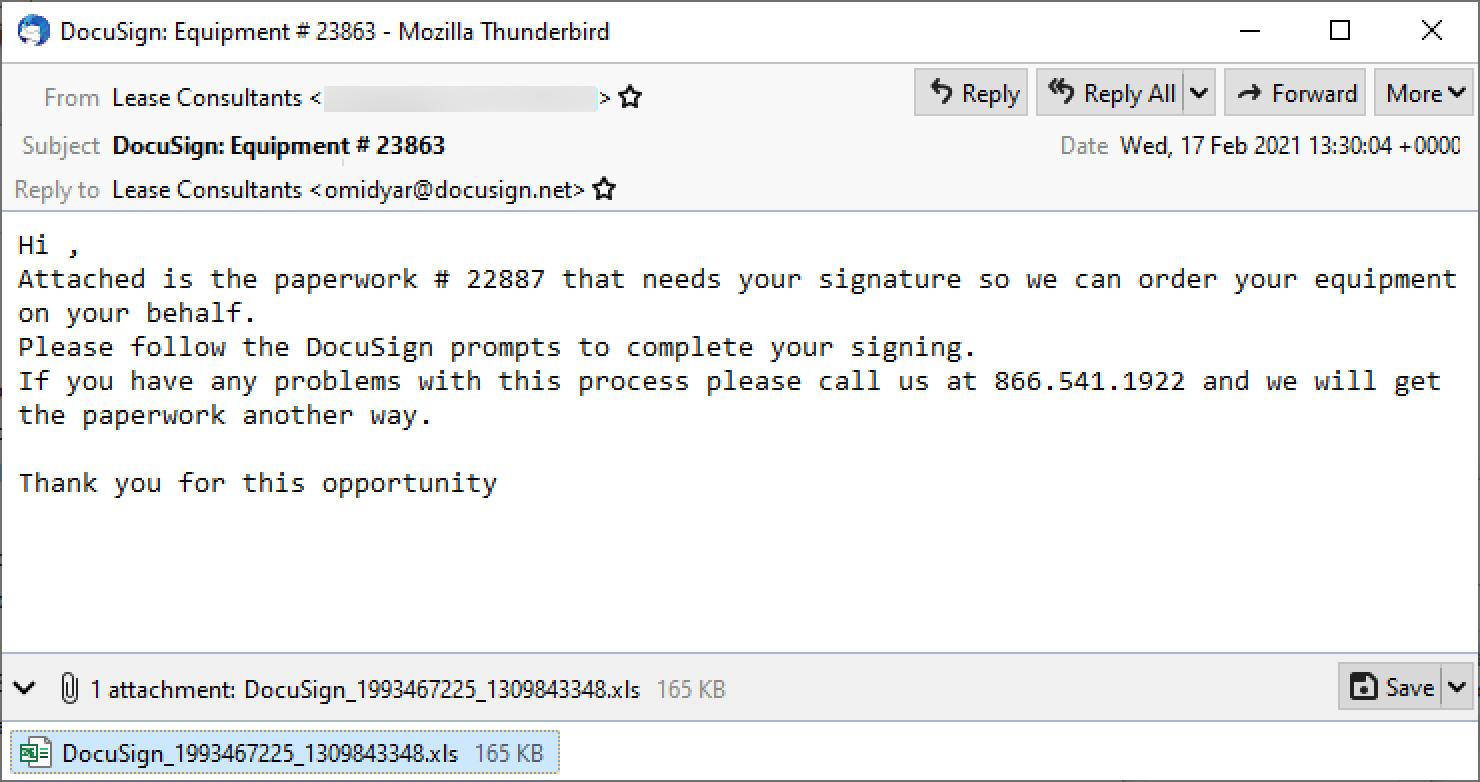
The email


Shown above:  Screenshot from an example of malspam seen earlier today (Wednesday 2021-02-17).

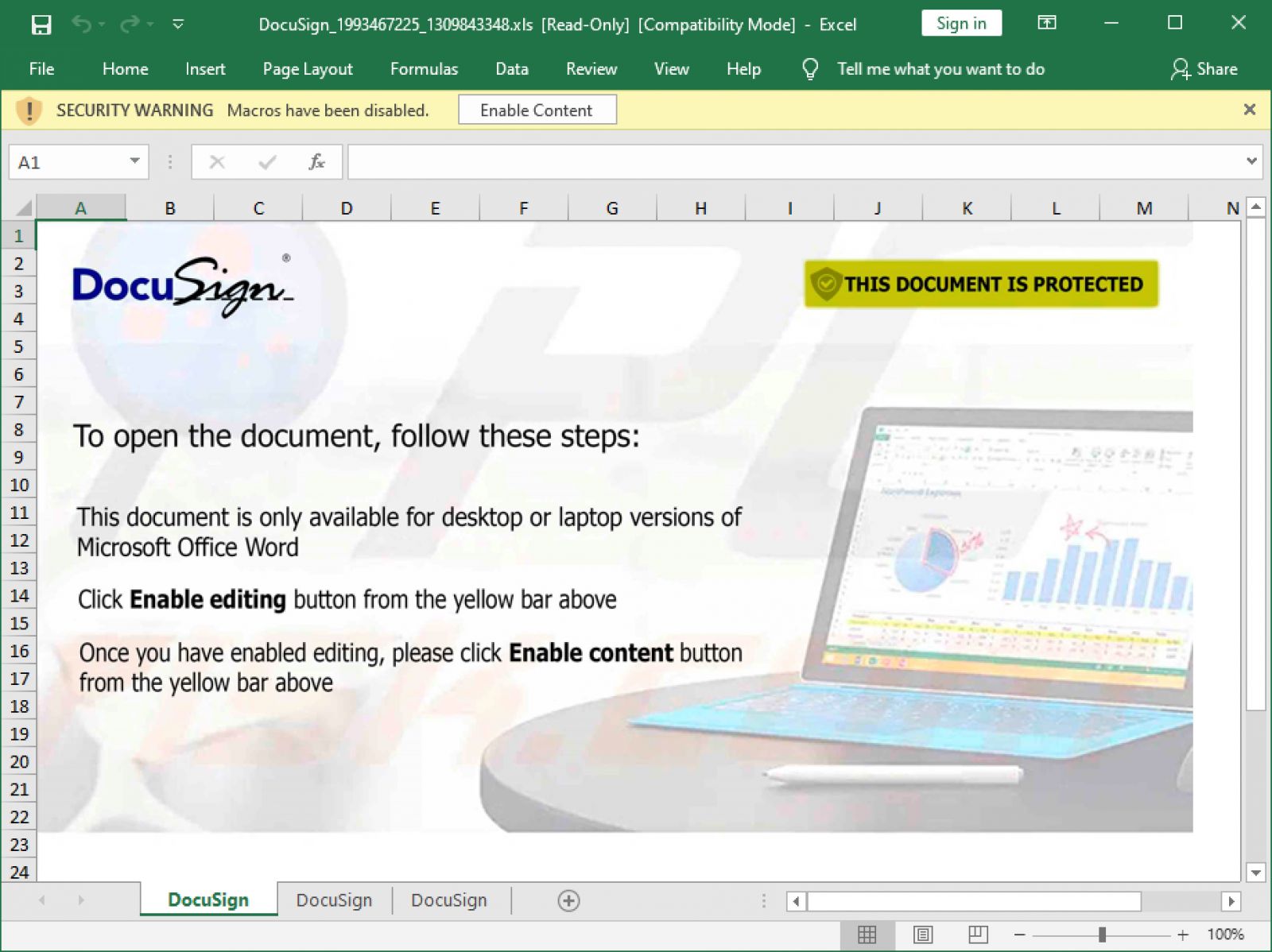
The spreadsheet


Shown above:  Screenshot of the attached Excel spreadsheet with macros for Trickbot.

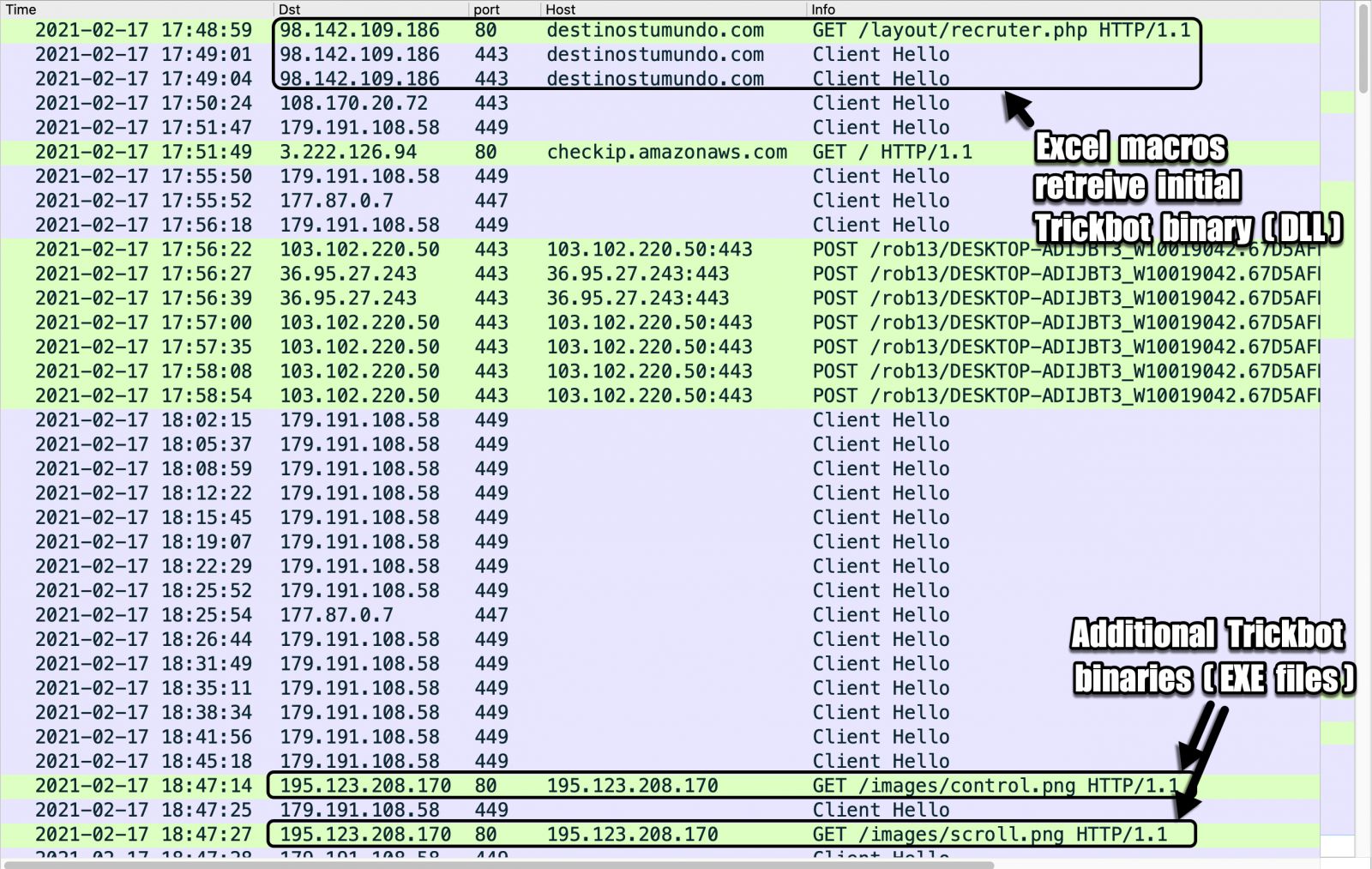
Infection traffic


Shown above:  Traffic from an infection filtered in Wireshark.

Forensics on an infected Windows host


Shown above:  Initial Trickbot binary retrieved by the Excel macro.


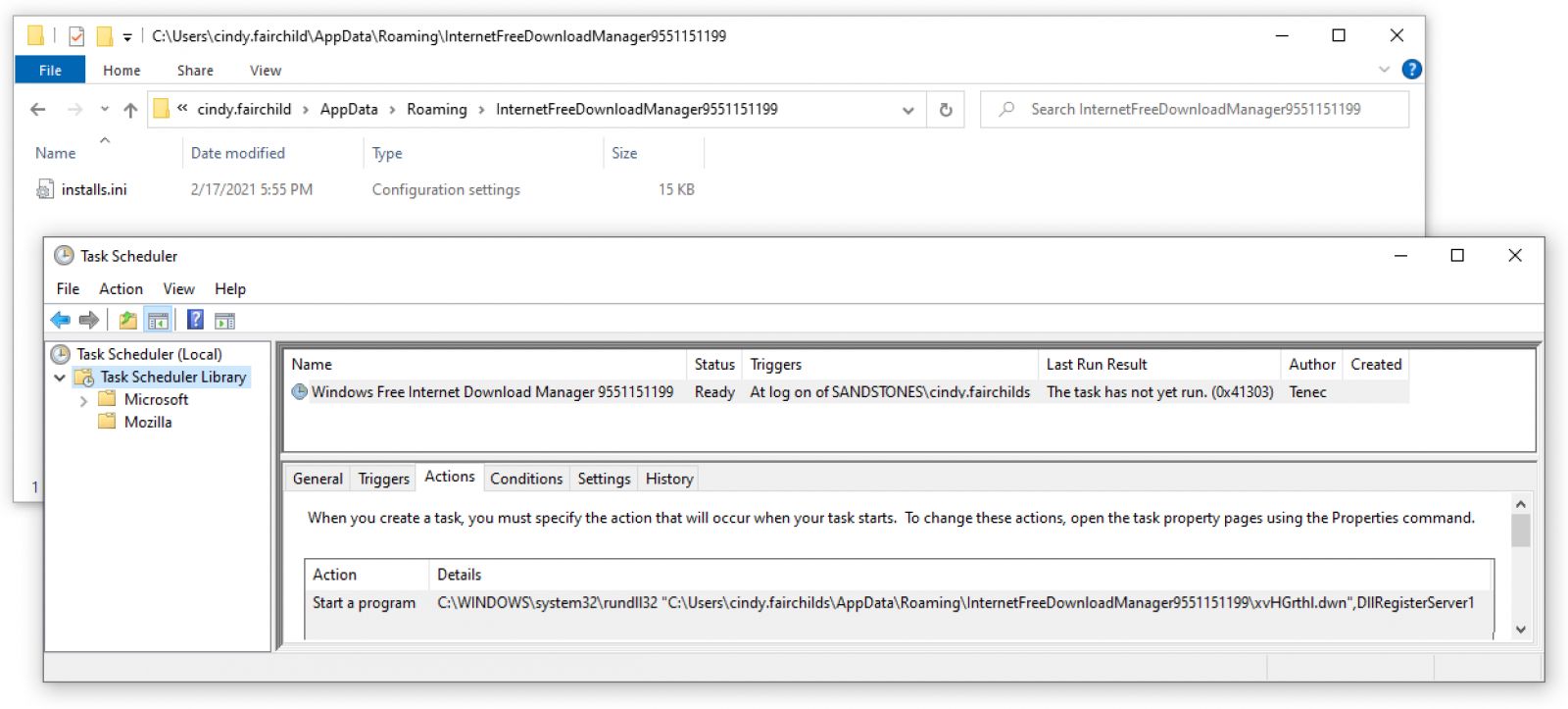
Shown above:  Scheduled task for Trickbot.

In the above image (double-click on it to get a higher-resolution picture), you can see the Trickbot DLL is not where the scheduled task points to.  When I restarted the infected host, it gave me an error saying it couldn’t run the task.  I’ve noticed this during the past several months from Trickbot infections that use a DLL file as the initial binary.  Unfortunately, I don’t know why this happens.

Indicators of Compromise (IOCs)

EXAMPLES OF SUBJECT LINES AND REPLY-TO ADDRESSES:

  • Subject: DocuSign: Equipment # 1332
  • Subject: DocuSign: Equipment # 9448
  • Subject: DocuSign: Equipment # 9722
  • Subject: DocuSign: Equipment # 12169
  • Subject: DocuSign: Equipment # 23863
  • Reply-To: Lease Consultants <cloying@docusign.net>
  • Reply-To: Lease Consultants <dianoetic@docusign.net>
  • Reply-To: Lease Consultants <modicum@docusign.net>
  • Reply-To: Lease Consultants <omidyar@docusign.net>
  • Reply-To: Lease Consultants <rumery@docusign.net>
  • Note: Sending addresses may have been from email accounts that were compromised.

FILE HASHES FROM ATTACHMENTS SUBMITTED TO VIRUSTOTAL:

07d35c57585b6bd3a5e77be4e8c7d97725ad3646694d7b9cc61dbc058006450a  DocuSign_649568847_1582762946.xls
393bc60e292c3e24ab70c459ba1c595daaae68df94a75ebe571d3e75a0fe8109  DocuSign_484590053_1220881832.xls
64392b7c699791e4dddde1a1754d157c284dcc4d54e9cb8974ea661f6443ce86  DocuSign_463828509_1320623172.xls
713a539daad692c8e284718ad73c128128e8257b3c41b233d2f810717df873b7  DocuSign_2026401106_1090792446.xls
99316adbb0514f099d44bf8655486c2332eb5f3f821b80b2c0a6a85b652312e6  DocuSign_649568847_1582762946.xls
9bf4196e8fb7c4ac3be72f79f13697656145ee1cc93bb7c7a31d93ea75bbcae3  DocuSign_1264755469_604175183.xls
9fbbb8b4025b2e46429594b946d2ba74ce381e4c2968966e9a65ffd81791baa1  DocuSign_1283716068_336411873.xls
bc033032b6d2afcea2a07f4b5eb5de3137c9fc83c1302fe28a781137168884eb  DocuSign_1993467225_1309843348.xls
bc47683422d0021b2b27b551d81058213fa4d000c544b617adf1bb7b94d5f4a9  DocuSign_558551337_1625623689.xls
f391892523950617f98dd08c5e1e8ffa58f8985f7527d5ffe735944db72a312f  DocuSign_1237489607_947076939.xls


MALWARE FROM AN INFECTED WINDOWS HOST:

SHA256 hash: bc033032b6d2afcea2a07f4b5eb5de3137c9fc83c1302fe28a781137168884eb

  • File size: 168,960 bytes
  • File name: DocuSign_1993467225_1309843348.xls
  • File description: Excel spreadsheet with macros for Trickbot gtag rob13

SHA256 hash: e1b67bd8b15bcd422fcbc74fa3b691c40c527ffedc951a6bb8e67ca257240d16

  • File size: 698,880 bytes
  • File location: hxxps://destinostumundo[.]com/layout/recruter.php
  • File location: C:Users[username]HGrt.foste
  • File description: Initial Trickbot gtag rob13 binary (DLL file)
  • Run method: rundll32.exe [file name],DllRegisterServer1

SHA256 hash: 24bd33f4ba457d77d796620a2cd4b7a3e38d63e2286fec752d898ab7c5204e4b

  • File size: 864,256 bytes
  • File location: hxxp://195.123.208[.]170/images/control.png
  • File description: Follow-up Trickbot EXE file, gtag tot43

SHA256 hash: f0391039f888fb30566295365420868ac8539075e25a690ac4400a8bb91eb803

  • File size: 864,256 bytes
  • File location: hxxp://195.123.208[.]170/images/scroll.png
  • File description: Follow-up Trickbot EXE file, gtag lib43

TRAFFIC TO RETRIEVE THE INITIAL TRICKBOT BINARY (A DLL FILE):

  • 98.142.109[.]186 port 80 – destinostumundo[.]com – GET /layout/recruter.php
  • 98.142.109[.]186 port 443 (HTTPS) – destinostumundo[.]com – GET /layout/recruter.php

POST-INFECTION TRAFFIC FOR TRICKBOT:

  • 108.170.20[.]72 port 443 – HTTPS traffic
  • 179.191.108[.]58 port 449 – HTTPS traffic
  • port 80 – checkip.amazonaws.com – GET /
  • 177.87.0[.]7 port 447 – HTTPS traffic
  • 103.102.220[.]50 port 443 – 103.102.220[.]50:443 – POST /rob13/[string with host and infection info]/81/
  • 36.95.27[.]243 port 443 – 36.95.27[.]243:443 – POST /rob13/[string with host and infection info]/81/
  • 103.102.220[.]50 port 443 – 103.102.220[.]50:443 – POST /rob13/[string with host and infection info]/83/
  • 36.95.27[.]243 port 443 – 36.95.27[.]243:443 – POST /rob13/[string with host and infection info]/90

TRAFFIC CAUSED BY TRICKBOT’S PROPAGATION MODULES TO RETRIEVE ADDITIONAL TRICKBOT BINARIES (RETURNED EXE FILES):

  • 195.123.208[.]170 port 80 – 195.123.208[.]170 – GET /images/control.png
  • 195.123.208[.]170 port 80 – 195.123.208[.]170 – GET /images/scroll.png

ATTEMPTED TCP CONNECTIONS CAUSED BY THE INFECTED WINDOWS HOST:

  • 45.14.226[.]115 port 443
  • 169.239.45[.]42 port 449
  • 92.242.214[.]203 port 449
  • 94.158.245[.]54 port 443
  • 38.132.99[.]174 port 80

Final words

A pcap of the infection traffic and the associated malware can be found here.


Brad Duncan
brad [at] malware-traffic-analysis.net

(c) SANS Internet Storm Center. https://isc.sans.edu Creative Commons Attribution-Noncommercial 3.0 United States License. Read More

The post Malspam pushing Trickbot gtag rob13, (Wed, Feb 17th) appeared first on Malware Devil.


https://malwaredevil.com/2021/02/17/malspam-pushing-trickbot-gtag-rob13-wed-feb-17th/?utm_source=rss&utm_medium=rss&utm_campaign=malspam-pushing-trickbot-gtag-rob13-wed-feb-17th

Stolen Jones Day Law Firm Files Posted on Dark Web

Jones Day, which represented Trump, said the breach is part of the Accellion attack from December.
Read More

The post Stolen Jones Day Law Firm Files Posted on Dark Web appeared first on Malware Devil.


https://malwaredevil.com/2021/02/17/stolen-jones-day-law-firm-files-posted-on-dark-web/?utm_source=rss&utm_medium=rss&utm_campaign=stolen-jones-day-law-firm-files-posted-on-dark-web

Your Guide to Exchange Online

Learn about the various Exchange Online offerings, how it fits into the Microsoft Office 365 plan, and how Spanning can help you protect it.

The post Your Guide to Exchange Online appeared first on Security Boulevard.

Read More

The post Your Guide to Exchange Online appeared first on Malware Devil.


https://malwaredevil.com/2021/02/17/your-guide-to-exchange-online/?utm_source=rss&utm_medium=rss&utm_campaign=your-guide-to-exchange-online

Windows, Linux Devices Hijacked In Two-Year Cryptojacking Campaign

The WatchDog malware has flown under the radar for two years in what researchers call one of the ‘largest’ Monero cryptojacking attacks ever.
Read More

The post Windows, Linux Devices Hijacked In Two-Year Cryptojacking Campaign appeared first on Malware Devil.


https://malwaredevil.com/2021/02/17/windows-linux-devices-hijacked-in-two-year-cryptojacking-campaign/?utm_source=rss&utm_medium=rss&utm_campaign=windows-linux-devices-hijacked-in-two-year-cryptojacking-campaign

U.S. Indicts North Korean Hackers in Theft of $200 Million

The U.S. Justice Department today unsealed indictments against three men accused of working with the North Korean regime to carry out some of the most damaging cybercrime attacks over the past decade, including the 2014 hack of Sony Pictures, the global WannaCry ransomware contagion of 2017, and the theft of roughly $200 million and attempted theft of more than $1.2 billion from banks and other victims worldwide.
Investigators with the DOJ, U.S. Secret Service and Department of Homeland Security told reporters on Wednesday the trio’s activities involved extortion, phishing, direct attacks on financial institutions and ATM networks, as well as malicious applications that masqueraded as software tools to help people manage their cryptocurrency holdings.

Prosecutors say the hackers were part of an effort to circumvent ongoing international financial sanctions against the North Korean regime. The group is thought to be responsible for the attempted theft of approximately $1.2 billion, although it’s unclear how much of that was actually stolen.

Confirmed thefts attributed to the group include the 2016 hacking of the SWIFT payment system for Bangladesh Bank, which netted thieves $81 million; $6.1 million in a 2018 ATM cash out scheme targeting a Pakistani bank; and a total of $112 million in virtual currencies stolen between 2017 and 2020 from cryptocurrency companies in Slovenia, Indonesia and New York.

“The scope of the criminal conduct by the North Korean hackers was extensive and longrunning, and the range of crimes they have committed is staggering,” said Acting U.S. Attorney Tracy L. Wilkison for the Central District of California. “The conduct detailed in the indictment are the acts of a criminal nation-state that has stopped at nothing to extract revenge and obtain money to prop up its regime.”
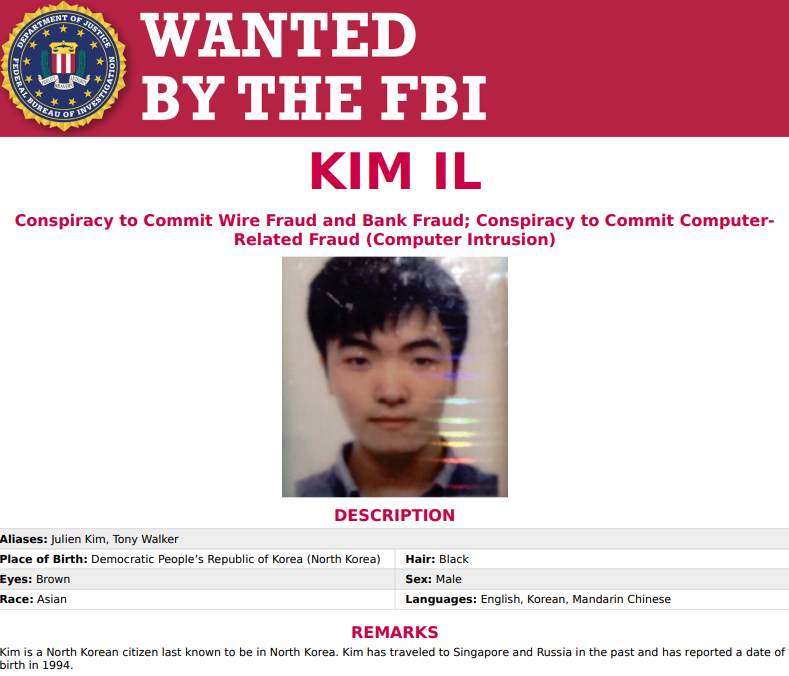
The indictments name Jon Chang Hyok (a.k.a “Alex/Quan Jiang”), Kim Il (a.k.a. “Julien Kim”/”Tony Walker”), and Park Jin Hyok (a.k.a. Pak Jin Hek/Pak Kwang Jin). U.S. prosecutors say the men were members of the Reconnaissance General Bureau (RGB), an intelligence division of the Democratic People’s Republic of Korea (DPRK) that manages the state’s clandestine operations.

The Justice Department says those indicted were members of a DPRK-sponsored cybercrime group variously identified by the security community as the Lazarus Group and Advanced Persistent Threat 38 (APT 38). The government alleges the men reside in North Korea but were frequently stationed by the DPRK in other countries, including China and Russia.

Park was previously charged in 2018 in connection with the WannaCry and Sony Pictures attacks. But today’s indictments expanded the range of crimes attributed to Park and his alleged co-conspirators, including cryptocurrency thefts, phony cryptocurrency investment schemes and apps, and efforts to launder the proceeds of their crimes.

Prosecutors in California also today unsealed an indictment against Ghaleb Alaumary, a 37-year-old from Mississauga, Ontario who pleaded guilty in November 2020 to charges of laundering tens of millions of dollars stolen by the DPRK hackers.

The accused allegedly developed and marketed a series of cryptocurrency applications that were advertised as tools to help people manage their crypto holdings. In reality, prosecutors say, the programs were malware or downloaded malware after the applications were installed.

A joint cyber advisory from the FBI, the Treasury and DHS’s Cybersecurity and Infrastructure Agency (CISA) delves deeper into these backdoored cryptocurrency apps, a family of malware activity referred to as “AppleJeus. “Hidden Cobra” is the collective handle assigned to the hackers behind the AppleJeus malware.

“In most instances, the malicious application—seen on both Windows and Mac operating systems—appears to be from a legitimate cryptocurrency trading company, thus fooling individuals into downloading it as a third-party application from a website that seems legitimate,” the advisory reads. “In addition to infecting victims through legitimate-looking websites, HIDDEN COBRA actors also use phishing, social networking, and social engineering techniques to lure users into downloading the malware.”

The alert notes that these apps have been posing as cryptocurrency trading platforms since 2018, and have been tied to cryptocurrency thefts in more than 30 countries.
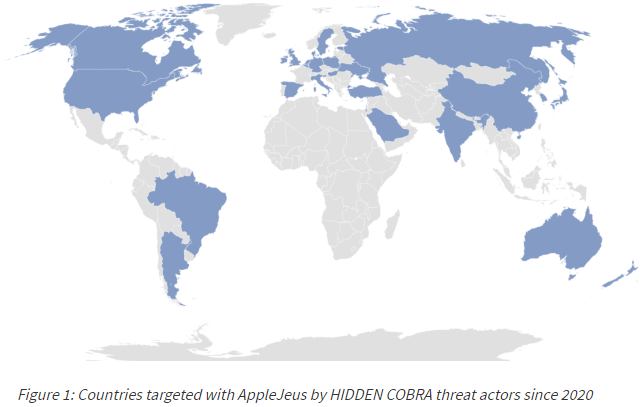
Image: CISA.

For example, the DOJ indictments say these apps were involved in stealing $11.8 million in August 2020 from a financial services company based in New York. Warrants obtained by the government allowed the FBI to seize roughly $1.9 million from two different cryptocurrency exchanges used by the hackers, money that investigators say will be returned to the New York financial services firm.

Other moneymaking and laundering schemes attributed to the North Korean hackers include the development and marketing of an initial coin offering (ICO) in 2017 called Marine Chain Token.

That blockchain-based cryptocurrency offering promised early investors the ability to purchase “fractional ownership in marine shipping vessels,” which the government says was just another way for the North Korean government to “secretly obtain funds from investors, control interests in marine shipping vessels, and evade U.S. sanctions.”

A copy of the indictments is available here (PDF).

Read More

The post U.S. Indicts North Korean Hackers in Theft of $200 Million appeared first on Malware Devil.


https://malwaredevil.com/2021/02/17/u-s-indicts-north-korean-hackers-in-theft-of-200-million/?utm_source=rss&utm_medium=rss&utm_campaign=u-s-indicts-north-korean-hackers-in-theft-of-200-million

Kia Faces $20M DoppelPaymer Ransomware Attack

Kia Motors America this week experienced a nationwide IT outage; now, reports indicate the company was hit with ransomware.

The post Kia Faces $20M DoppelPaymer Ransomware Attack appeared first on Malware Devil.


https://malwaredevil.com/2021/02/17/kia-faces-20m-doppelpaymer-ransomware-attack-2/?utm_source=rss&utm_medium=rss&utm_campaign=kia-faces-20m-doppelpaymer-ransomware-attack-2

Kia Faces $20M DoppelPaymer Ransomware Attack

Register for Dark Reading Newsletters

Subscribe to Newsletters

White Papers

Video

Cartoon Contest

Current Issue

image2021 Top Enterprise IT TrendsWe’ve identified the key trends that are poised to impact the IT landscape in 2021. Find out why they’re important and how they will affect you today!
image

Flash Poll

Building the SOC of the Future
Digital transformation, cloud-focused attacks, and a worldwide pandemic. The past year has changed the way business works and the way security teams operate. There is no going back.
image

Twitter Feed

Dark Reading - Bug Report

Bug Report

Enterprise Vulnerabilities
From DHS/US-CERT’s National Vulnerability Database
CVE-2020-13550
PUBLISHED: 2021-02-17

A local file inclusion vulnerability exists in the installation functionality of Advantech WebAccess/SCADA 9.0.1. A specially crafted application can lead to information disclosure. An attacker can send an authenticated HTTP request to trigger this vulnerability.

CVE-2020-13551
PUBLISHED: 2021-02-17

An exploitable local privilege elevation vulnerability exists in the file system permissions of Advantech WebAccess/SCADA 9.0.1 installation. In privilege escalation via PostgreSQL executable, an attacker can either replace binary or loaded modules to execute code with NT SYSTEM privilege.

CVE-2020-13552
PUBLISHED: 2021-02-17

An exploitable local privilege elevation vulnerability exists in the file system permissions of Advantech WebAccess/SCADA 9.0.1 installation. In privilege escalation via multiple service executables in installation folder of WebAccess, an attacker can either replace binary or loaded modules to execu…

CVE-2020-13553
PUBLISHED: 2021-02-17

An exploitable local privilege elevation vulnerability exists in the file system permissions of Advantech WebAccess/SCADA 9.0.1 installation. In webvrpcs Run Key Privilege Escalation in installation folder of WebAccess, an attacker can either replace binary or loaded modules to execute code with NT …

CVE-2020-13555
PUBLISHED: 2021-02-17

An exploitable local privilege elevation vulnerability exists in the file system permissions of Advantech WebAccess/SCADA 9.0.1 installation. In COM Server Application Privilege Escalation, an attacker can either replace binary or loaded modules to execute code with NT SYSTEM privilege.

The post Kia Faces $20M DoppelPaymer Ransomware Attack appeared first on Malware Devil.


https://malwaredevil.com/2021/02/17/kia-faces-20m-doppelpaymer-ransomware-attack/?utm_source=rss&utm_medium=rss&utm_campaign=kia-faces-20m-doppelpaymer-ransomware-attack

Malicious Life Podcast: Should Law Enforcement Use Facial Recognition? Pt. 2

It seems likely that legislation alone won’t be able to regulate the widespread use of facial recognition. However, placing AI in the hands of law enforcement or the government does have its dangers due to the limitations of the technology itself and the biases of the officers who use it.

The post Malicious Life Podcast: Should Law Enforcement Use Facial Recognition? Pt. 2 appeared first on Security Boulevard.

Read More

The post Malicious Life Podcast: Should Law Enforcement Use Facial Recognition? Pt. 2 appeared first on Malware Devil.


https://malwaredevil.com/2021/02/17/malicious-life-podcast-should-law-enforcement-use-facial-recognition-pt-2/?utm_source=rss&utm_medium=rss&utm_campaign=malicious-life-podcast-should-law-enforcement-use-facial-recognition-pt-2

Barbary Pirates and Russian Cybercrime

In 1801, the United States had a small Navy. Thomas Jefferson deployed almost half that Navy—three frigates and a schooner—to the Barbary C...