Malware Devil

Thursday, March 4, 2021

Okta Acquisition of Auth0 Signals DevSecOps Shift Left

Okta Privilege access management

A pending $6.5 billion acquisition of Auth0 by Okta, announced this week, indicates the potential for a building wave of mergers and acquisitions driven by the rise of DevSecOps. As developers assume more responsibility for security, the influence they exert over technology decisions – once left solely up to cybersecurity teams – is increasing. Auth0..

The post Okta Acquisition of Auth0 Signals DevSecOps Shift Left appeared first on Security Boulevard.

Read More

The post Okta Acquisition of Auth0 Signals DevSecOps Shift Left appeared first on Malware Devil.


https://malwaredevil.com/2021/03/04/okta-acquisition-of-auth0-signals-devsecops-shift-left/?utm_source=rss&utm_medium=rss&utm_campaign=okta-acquisition-of-auth0-signals-devsecops-shift-left

Joy Of Tech® ‘Google Goes All Pro-Privacy!’

via the Comic Noggins of Nitrozac and Snaggy at The Joy of Tech® !

via the Comic Noggins of Nitrozac and Snaggy at The Joy of Tech®!

Permalink

The post Joy Of Tech® ‘Google Goes All Pro-Privacy!’ appeared first on Security Boulevard.

Read More

The post Joy Of Tech® ‘Google Goes All Pro-Privacy!’ appeared first on Malware Devil.


https://malwaredevil.com/2021/03/04/joy-of-tech-google-goes-all-pro-privacy/?utm_source=rss&utm_medium=rss&utm_campaign=joy-of-tech-google-goes-all-pro-privacy

Wednesday, March 3, 2021

Mitigating your Java code security debt

Java code security debt is a major risk, both technically and financially. Here’s what you need to know.

The post Mitigating your Java code security debt appeared first on Intertrust Technologies.

The post Mitigating your Java code security debt appeared first on Security Boulevard.

Read More

The post Mitigating your Java code security debt appeared first on Malware Devil.


https://malwaredevil.com/2021/03/03/mitigating-your-java-code-security-debt/?utm_source=rss&utm_medium=rss&utm_campaign=mitigating-your-java-code-security-debt

Unpatched Bug in WiFi Mouse App Opens PCs to Attack

Wireless mouse-utility lacks proper authentication and opens Windows systems to attack.
Read More

The post Unpatched Bug in WiFi Mouse App Opens PCs to Attack appeared first on Malware Devil.


https://malwaredevil.com/2021/03/03/unpatched-bug-in-wifi-mouse-app-opens-pcs-to-attack/?utm_source=rss&utm_medium=rss&utm_campaign=unpatched-bug-in-wifi-mouse-app-opens-pcs-to-attack

Intel Illustrates Its Focus on Transparency in Security with 2020 Product Security Report

I am not sure if you noticed or not, but 2020 was a strange year. The COVID-19 pandemic completely disrupted the business model for most companies and forced an acceleration in digital transformation—even for companies who weren’t planning on, or prepared for, it. The net result is that there were a variety of repercussions from […]

The post Intel Illustrates Its Focus on Transparency in Security with 2020 Product Security Report appeared first on TechSpective.

The post Intel Illustrates Its Focus on Transparency in Security with 2020 Product Security Report appeared first on Security Boulevard.

Read More

The post Intel Illustrates Its Focus on Transparency in Security with 2020 Product Security Report appeared first on Malware Devil.


https://malwaredevil.com/2021/03/03/intel-illustrates-its-focus-on-transparency-in-security-with-2020-product-security-report/?utm_source=rss&utm_medium=rss&utm_campaign=intel-illustrates-its-focus-on-transparency-in-security-with-2020-product-security-report

CISA to Federal Agencies: Immediately Patch or ‘Disconnect’ Microsoft Exchange Servers

Register for Dark Reading Newsletters

Subscribe to Newsletters

White Papers

Video

Cartoon Contest
Write a Caption, Win an Amazon Gift Card! Click Here
image
Latest Comment: Your new device is too complex. Me stick with iWheel.
image

Current Issue

image2021 Top Enterprise IT TrendsWe’ve identified the key trends that are poised to impact the IT landscape in 2021. Find out why they’re important and how they will affect you today!
image

Flash Poll

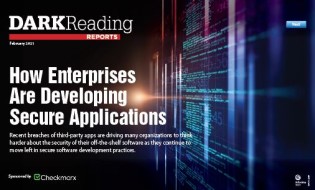
How Enterprises are Developing Secure Applications
Recent breaches of third-party apps are driving many organizations to think harder about the security of their off-the-shelf software as they continue to move left in secure software development practices.
image

Twitter Feed

Dark Reading - Bug Report

Bug Report

Enterprise Vulnerabilities
From DHS/US-CERT’s National Vulnerability Database
CVE-2021-21312
PUBLISHED: 2021-03-03

GLPI is open source software which stands for Gestionnaire Libre de Parc Informatique and it is a Free Asset and IT Management Software package. In GLPI before verison 9.5.4, there is a vulnerability within the document upload function (Home > Management > Documents > Add, or /front/documen…

CVE-2021-21313
PUBLISHED: 2021-03-03

GLPI is open source software which stands for Gestionnaire Libre de Parc Informatique and it is a Free Asset and IT Management Software package. In GLPI before verison 9.5.4, there is a vulnerability in the /ajax/common.tabs.php endpoint, indeed, at least two parameters _target and id are not proper…

CVE-2021-21314
PUBLISHED: 2021-03-03

GLPI is open source software which stands for Gestionnaire Libre de Parc Informatique and it is a Free Asset and IT Management Software package. In GLPI before verison 9.5.4, there is an XSS vulnerability involving a logged in user while updating a ticket.

CVE-2021-27931
PUBLISHED: 2021-03-03

LumisXP (aka Lumis Experience Platform) before 10.0.0 allows unauthenticated blind XXE via an API request to PageControllerXml.jsp. One can send a request crafted with an XXE payload and achieve outcomes such as reading local server files or denial of service.

CVE-2021-27935
PUBLISHED: 2021-03-03

An issue was discovered in AdGuard before 0.105.2. An attacker able to get the user’s cookie is able to bruteforce their password offline, because the hash of the password is stored in the cookie.

The post CISA to Federal Agencies: Immediately Patch or ‘Disconnect’ Microsoft Exchange Servers appeared first on Malware Devil.


https://malwaredevil.com/2021/03/03/cisa-to-federal-agencies-immediately-patch-or-disconnect-microsoft-exchange-servers/?utm_source=rss&utm_medium=rss&utm_campaign=cisa-to-federal-agencies-immediately-patch-or-disconnect-microsoft-exchange-servers

Google Patches Actively-Exploited Flaw in Chrome Browser

A flaw (CVE-2021-21166) in the Audio component of Google Chrome is fixed in a new update being pushed out to Windows, Mac and Linux users.
Read More

The post Google Patches Actively-Exploited Flaw in Chrome Browser appeared first on Malware Devil.


https://malwaredevil.com/2021/03/03/google-patches-actively-exploited-flaw-in-chrome-browser/?utm_source=rss&utm_medium=rss&utm_campaign=google-patches-actively-exploited-flaw-in-chrome-browser

Malaysia Air Downplays Frequent-Flyer Program Data Breach

A third-party IT provider exposed valuable airline data that experts say could be a goldmine for cybercriminals. 
Read More

The post Malaysia Air Downplays Frequent-Flyer Program Data Breach appeared first on Malware Devil.


https://malwaredevil.com/2021/03/03/malaysia-air-downplays-frequent-flyer-program-data-breach/?utm_source=rss&utm_medium=rss&utm_campaign=malaysia-air-downplays-frequent-flyer-program-data-breach

Thycotic & Centrify, Geography, YubiKey, & K7 Antivirus – ESW #218

This week, In the Enterprise Security News Thycotic and Centrify join forces, Netwrix acquires Strongpoint, SentinelOne plans for IPO, Qomplx plans to go public, and funding announcements from Axonius, HYAS, Armorblox and platform9. Attivo Networks Announces Continuous Assessment and Enforcement for AD, cPacket Networks announces cCloud, and more!

Visit https://www.securityweekly.com/esw for all the latest episodes!

Show Notes: https://securityweekly.com/esw218

The post Thycotic & Centrify, Geography, YubiKey, & K7 Antivirus – ESW #218 appeared first on Malware Devil.


https://malwaredevil.com/2021/03/03/thycotic-centrify-geography-yubikey-k7-antivirus-esw-218/?utm_source=rss&utm_medium=rss&utm_campaign=thycotic-centrify-geography-yubikey-k7-antivirus-esw-218

Gender diversity in cybersecurity, the key to getting ahead of hackers?

People will always be the largest attack surface, and with cyber-attacks becoming increasingly more sophisticated, it’s vitally important that professionals…

The post Gender diversity in cybersecurity, the key to getting ahead of hackers? appeared first on Entrust Blog.

The post Gender diversity in cybersecurity, the key to getting ahead of hackers? appeared first on Security Boulevard.

Read More

The post Gender diversity in cybersecurity, the key to getting ahead of hackers? appeared first on Malware Devil.


https://malwaredevil.com/2021/03/03/gender-diversity-in-cybersecurity-the-key-to-getting-ahead-of-hackers/?utm_source=rss&utm_medium=rss&utm_campaign=gender-diversity-in-cybersecurity-the-key-to-getting-ahead-of-hackers

7 Lessons Learned From SMB Cybersecurity Leaders

While I might not be in the IT trenches, over my years in sales I have had the benefit of working alongside IT leaders across multiple industries. I’ve learned first-hand about the problems IT leaders face in their everyday cybersecurity operations.

And what is the biggest takeaway? It’s that at small to medium-sized businesses or really any with a blossoming security program, IT leaders’ cybersecurity problems revolve mainly around a lack of three components: people, process, and technology.

With that in mind, here are seven cybersecurity lessons I’ve learned that stem from gaps in these three key components:

The post 7 Lessons Learned From SMB Cybersecurity Leaders appeared first on Security Boulevard.

Read More

The post 7 Lessons Learned From SMB Cybersecurity Leaders appeared first on Malware Devil.


https://malwaredevil.com/2021/03/03/7-lessons-learned-from-smb-cybersecurity-leaders/?utm_source=rss&utm_medium=rss&utm_campaign=7-lessons-learned-from-smb-cybersecurity-leaders

The New Cybercrime Landscape – Kimberly Sutherland – ESW #218

LexisNexis Risk Solutions recently released its biannual Cybercrime Report covering July 2020 through December 2020, which details how the evolving threat landscape created new opportunities for cybercriminals around the world, particularly as they targeted new online users. Analysis shows that the under 25 age group is most vulnerable to fraud attacks while the oldest age group is second most vulnerable and loses the most money. The stark risk at both ends of the age spectrum emphasizes the importance for companies to protect both new-to-digital and vulnerable customers when transacting online in 2021. The report also provides a full year review which highlights how 2020 saw an overall decline in human-initiated attacks, while bot attacks accelerated.

Press release: https://risk.lexisnexis.com/about-us/press-room/press-release/20200223-biannual-cybercrime-report

The LexisNexis Risk Solutions Cybercrime Report: https://risk.lexisnexis.com/insights-resources/research/cybercrime-report

Visit https://www.securityweekly.com/esw for all the latest episodes!

Show Notes: https://securityweekly.com/esw218

The post The New Cybercrime Landscape – Kimberly Sutherland – ESW #218 appeared first on Malware Devil.


https://malwaredevil.com/2021/03/03/the-new-cybercrime-landscape-kimberly-sutherland-esw-218/?utm_source=rss&utm_medium=rss&utm_campaign=the-new-cybercrime-landscape-kimberly-sutherland-esw-218

Traditional IDS is Dead – Matt Cauthorn, Sri Sundaralingam – ESW #218

Many security teams have accepted their Intrusion Detection Systems (IDS) as little more than a compliance check-off. IDS reliance on bi-modal signatures is brittle, easily evaded by attackers, and often referred to as an alert canon. In this talk, we’ll be discussing what is missing from traditional IDS and how to easily fill the security gaps with NG-IDS capabilities with modern network detection and response (NDR).

This segment is sponsored by ExtraHop Networks.

Visit https://securityweekly.com/extrahop to learn more about them!

Visit https://www.securityweekly.com/esw for all the latest episodes!

Show Notes: https://securityweekly.com/esw218

The post Traditional IDS is Dead – Matt Cauthorn, Sri Sundaralingam – ESW #218 appeared first on Malware Devil.


https://malwaredevil.com/2021/03/03/traditional-ids-is-dead-matt-cauthorn-sri-sundaralingam-esw-218/?utm_source=rss&utm_medium=rss&utm_campaign=traditional-ids-is-dead-matt-cauthorn-sri-sundaralingam-esw-218

Home-Office Photos: A Ripe Cyberattack Vector

Threat actors can use personal information gleaned from images to craft targeted scams, putting personal and corporate data at risk.
Read More

The post Home-Office Photos: A Ripe Cyberattack Vector appeared first on Malware Devil.


https://malwaredevil.com/2021/03/03/home-office-photos-a-ripe-cyberattack-vector/?utm_source=rss&utm_medium=rss&utm_campaign=home-office-photos-a-ripe-cyberattack-vector

RTM Cybergang Adds New Quoter Ransomware to Crime Spree

The Russian-speaking RTM threat group is targeting organizations in an ongoing campaign that leverages a well-known banking trojan, brand new ransomware strain and extortion tactics.
Read More

The post RTM Cybergang Adds New Quoter Ransomware to Crime Spree appeared first on Malware Devil.


https://malwaredevil.com/2021/03/03/rtm-cybergang-adds-new-quoter-ransomware-to-crime-spree/?utm_source=rss&utm_medium=rss&utm_campaign=rtm-cybergang-adds-new-quoter-ransomware-to-crime-spree

Malicious Code Bombs Target Amazon, Lyft, Slack, Zillow

Attackers have weaponized code dependency confusion to target internal apps at tech giants.
Read More

The post Malicious Code Bombs Target Amazon, Lyft, Slack, Zillow appeared first on Malware Devil.


https://malwaredevil.com/2021/03/03/malicious-code-bombs-target-amazon-lyft-slack-zillow/?utm_source=rss&utm_medium=rss&utm_campaign=malicious-code-bombs-target-amazon-lyft-slack-zillow

BSides Calgary 2020 – Milind Bhargava’s ‘Hunting Bad Guys That Use Tor In Real Time’

Our thanks to BSides Calgary and Conference Speakers for publishing their outstanding presentations; which originally appeared at the group’s BSides Calgary 2020 Conference, and on the Organization’s YouTube Channel. Enjoy!

Permalink

The post BSides Calgary 2020 – Milind Bhargava’s ‘Hunting Bad Guys That Use Tor In Real Time’ appeared first on Security Boulevard.

Read More

The post BSides Calgary 2020 – Milind Bhargava’s ‘Hunting Bad Guys That Use Tor In Real Time’ appeared first on Malware Devil.


https://malwaredevil.com/2021/03/03/bsides-calgary-2020-milind-bhargavas-hunting-bad-guys-that-use-tor-in-real-time/?utm_source=rss&utm_medium=rss&utm_campaign=bsides-calgary-2020-milind-bhargavas-hunting-bad-guys-that-use-tor-in-real-time

Spear Phishing: How It Happens & Why You May Be at Risk

When phishing gets hyper-focused, it becomes more convincing. Learn how to spot a spear phishing attack before you “click here.” No matter what technology is available, deception is a critical…

The post Spear Phishing: How It Happens & Why You May Be at Risk appeared first on Hashed Out by The SSL Store™.

The post Spear Phishing: How It Happens & Why You May Be at Risk appeared first on Security Boulevard.

Read More

The post Spear Phishing: How It Happens & Why You May Be at Risk appeared first on Malware Devil.


https://malwaredevil.com/2021/03/03/spear-phishing-how-it-happens-why-you-may-be-at-risk/?utm_source=rss&utm_medium=rss&utm_campaign=spear-phishing-how-it-happens-why-you-may-be-at-risk

21 million free VPN users’ data exposed

Detailed credentials for more than 21 million mobile VPN app users were swiped and advertised for sale online last week, offered by a cyber thief who allegedly stole user data collected by the VPN apps themselves. The data includes email addresses, randomly generated password strings, payment information, and device IDs belonging to users of three VPN apps—SuperVPN, GeckoVPN, and ChatVPN.

The attacks, which have not been confirmed by the VPN developers, represent the most recent privacy broadsides against the VPN industry. Two similar blunders have been revealed to the public since 2019, including one massive data leak that exposed several VPN apps’ empty promises to collect “no logs” of their users’ activity. In that data leak, not only did the VPN providers fail to live up to their words, but they also hoovered up additional data, including users’ email addresses, clear text passwords, IP addresses, home addresses, phone models, and device IDs.

For the average consumer, then, the privacy pitfalls begin to paint an all-too-familiar portrait: Users continue to feel alone when managing their online privacy, even when they rely on tools meant to enhance that privacy.

Cybersecurity researcher Troy Hunt, who wrote about the recent data leak on Twitter, called the entire issue “a mess, and a timely reminder why trust in a VPN provider is so crucial.”

He continued: “This level of logging isn’t what anyone expects when using a service designed to *improve* privacy, not to mention the fact they then leaked all the data.”

The data leak of SuperVPN, GeckoVPN, and ChatVPN

In late February, a user on a popular hacking forum claimed that they’d stolen account information and credentials belonging to the users of three, separate VPNs apps available on the Google Play store for Android: SuperVPN, GeckoVPN, and ChatVPN.

The three apps vary wildly in popularity. According to Google Play’s count, ChatVPN has earned more than 50,000 installs, GeckoVPN has earned more than 10 million installs, and SuperVPN weighs in as one of the most popular free VPN apps for Android today, with more than 100 million installs to its name.

Despite SuperVPN’s popularity, it is also one of the most harshly reviewed VPN apps for Android devices. Last April, a writer for Tom’s Guide found critical vulnerabilities in the app that so worried him that the review’s headline directed current users to: “Delete it now.” And just one month later, a reviewer at TechRadarPro said that SuperVPN had a “worthless privacy policy” that was cobbled together from other companies’ privacy policies and which directly contradicted itself.

Not more than one year later, that privacy policy has again been thrown into the spotlight with a data leak that calls into question just what types of information the app was actually collecting.

According to the thief who pilfered the information from SuperVPN, GeckoVPN, and ChatVPN, the data for sale includes email addresses, usernames, full names, country names, randomly generated password strings, payment-related data, and a user’s “Premium” status and the corresponding expiration date. Following the forum post, the tech outlet CyberNews also discovered that the stolen data included device serial numbers, phone type and manufacturer information, device IDs, and device IMSI numbers.

According to CyberNews, the data was taken from “publicly available databases that were left vulnerable by the VPN providers due to developers leaving default database credentials in use.”

Past VPN errors

The unfortunate truth about the recent VPN app data leak is that this type of data mishap is nothing new.

In 2019, the popular VPN provider NordVPN confirmed to TechCrunch that it suffered a breach the year before. According to TechCrunch:

“NordVPN told TechCrunch that one of its data centers was accessed in March 2018. ‘One of the data centers in Finland we are renting our servers from was accessed with no authorization,’ said NordVPN spokesperson Laura Tyrell.

The attacker gained access to the server—which had been active for about a month—by exploiting an insecure remote management system left by the data center provider; NordVPN said it was unaware that such a system existed.”

Separate from the NordVPN breach, last July, seven VPN providers were found to have left 1.2 terabytes of private user data exposed online, according to a report published by the cybersecurity researchers at vpnMentor. According to the report, the exposed data belonged to as many as 20 million users. The data included email addresses, clear text passwords, IP addresses, home addresses, phone models, device IDs, and Internet activity logs.

The seven VPN providers investigated by vpnMentor were:

  • UFO VPN
  • Fast VPN
  • Free VPN
  • Super VPN
  • Flash VPN
  • Secure VPN
  • Rabbit VPN

The researchers at vpnMentor also explained that there was good reason to believe that the seven apps were all made by the same developer. When analyzing the apps, vpnMentor discovered that all of them shared a common Elasticsearch server, were hosted on the same assets, shared the same, single payment recipient—Dreamfii HK Limited—and that at least three of the VPNs shared similar branding and layouts on their websites.

Finally, the report also highlighted the fact that all seven of the apps claimed to keep “no logs” of user activity. Despite this, vpnMentor said that it “found multiple instances of internet activity logs on [the apps’] shared server.”

The report continued: “We viewed detailed activity logs from each VPN, exposing users’ personal information and browsing activities while using the VPNs and unencrypted plain text passwords.”

So, not only did these apps fail to live up to their own words, but they also collected extra user data that most users did not anticipate. After all, most consumers might rightfully assume that a promise to refrain from collecting some potentially sensitive data would extend to a promise to refrain from collecting other types of data.

But, according to vpnMentor, that wasn’t the case, which is a clear breach of user trust.

Let’s put it another way:

Imagine choosing a video baby monitor that promised to never upload your audio recordings to the cloud, only to find that it wasn’t just sending those recordings to an unsecured server, but it was also snapping photos of your baby and sending those pictures along, too. 

Which VPN to trust?

The trust that you place into your VPN provider is paramount.

Remember, a VPN can help protect your traffic from being viewed by your Internet Service Provider, which could be a major telecom company, or it could be a university or a school. A VPN can also help protect you from government requests for your data. For instance, if you’re doing investigative work in another country with a far more restrictive government, a VPN could help obfuscate your Internet activity from that government, should it take interest in you.

The important thing to note here, though, is that a VPN is merely serving as a substitute for who sees your data. When you use a VPN, it isn’t your ISP or a restrictive government viewing your activity—it’s the VPN itself.

So, how do you find a trustworthy VPN provider who is actually going to protect your online activity? Here are a few guidelines:

  • Read trusted, third-party reviews. Many of the issues in the above apps were spotted by good third-party reviewers. When picking a VPN provider, rely on the words of some trusted outlets, such as Tom’s Guide, TechRadar, and CNET.
  • Ensure that a VPN provider has a customer support contact. Several of the VPN apps investigated by vpnMentor lacked any clear way to contact them. If you’re using a product, you deserve reliable, easy-to-reach customer support.
  • Check the VPN’s privacy policy. As we learned above, a privacy policy is not a guarantee for actual privacy protection, but a company’s approach to a privacy policy can offer insight into the company’s thinking, and how much it cares more about its promises.  
  • Be cautious of free VPNs. As we wrote about last week, free VPNs often come with significant trade-offs, including annoying ads and the surreptitious collection and sale of your data.
  • Consider a VPN made by a company you already trust. More online privacy and cybersecurity companies are offering VPN tools to supplement their current product suite. If you already trust any of those companies—such as Mozilla, Ghostery, ProtonMail, or, yes, Malwarebytes—then there’s good reason to trust their VPN products, too.

It’s a complicated online world out there, but with the right information and the right, forward-looking research, you can stay safe.

The post 21 million free VPN users’ data exposed appeared first on Malwarebytes Labs.

The post 21 million free VPN users’ data exposed appeared first on Malware Devil.


https://malwaredevil.com/2021/03/03/21-million-free-vpn-users-data-exposed-2/?utm_source=rss&utm_medium=rss&utm_campaign=21-million-free-vpn-users-data-exposed-2


21 million free VPN users’ data exposed

Detailed credentials for more than 21 million mobile VPN app users were swiped and advertised for sale online last week, offered by a cyber thief who allegedly stole user data collected by the VPN apps themselves. The data includes email addresses, randomly generated password strings, payment information, and device IDs belonging to users of three VPN apps–SuperVPN, GeckoVPN, and ChatVPN.

The attacks, which have not been confirmed by the VPN developers, represent the most recent privacy broadsides against the VPN industry. Two similar blunders have been revealed to the public since 2019, including one massive data leak that exposed several VPN apps’ empty promises to collect “no logs” of their users’ activity. In that data leak, not only did the VPN providers fail to live up to their words, but they also hoovered up additional data, including users’ email addresses, clear text passwords, IP addresses, home addresses, phone models, and device IDs.

For the average consumer, then, the privacy pitfalls begin to paint an all-too-familiar portrait: Users continue to feel alone when managing their online privacy, even when they rely on tools meant to enhance that privacy.

Cybersecurity researcher Troy Hunt, who wrote about the recent data leak on Twitter, called the entire issue “a mess, and a timely reminder why trust in a VPN provider is so crucial.”

He continued: “This level of logging isn’t what anyone expects when using a service designed to *improve* privacy, not to mention the fact they then leaked all the data.”

The data leak of SuperVPN, GeckoVPN, and ChatVPN

In late February, a user on a popular hacking forum claimed that they’d stolen account information and credentials belonging to the users of three, separate VPNs apps available on the Google Play store for Android: SuperVPN, GeckoVPN, and ChatVPN.

The three apps vary wildly in popularity. According to Google Play’s count, ChatVPN has earned more than 50,000 installs, GeckoVPN has earned more than 10 million installs, and SuperVPN weighs in as one of the most popular free VPN apps for Android today, with more than 100 million installs to its name.

Despite SuperVPN’s popularity, it is also one of the most harshly reviewed VPN apps for Android devices. Last April, a writer for Tom’s Guide found critical vulnerabilities in the app that so worried him that the review’s headline directed current users to: “Delete it now.” And just one month later, a reviewer at TechRadarPro said that SuperVPN had a “worthless privacy policy” that was cobbled together from other companies’ privacy policies and which directly contradicted itself.

Not more than one year later, that privacy policy has again been thrown into the spotlight with a data leak that calls into question just what types of information the app was actually collecting.

According to the thief who pilfered the information from SuperVPN, GeckoVPN, and ChatVPN, the data for sale includes email addresses, usernames, full names, country names, randomly generated password strings, payment-related data, and a user’s “Premium” status and the corresponding expiration date. Following the forum post, the tech outlet CyberNews also discovered that the stolen data included device serial numbers, phone type and manufacturer information, device IDs, and device IMSI numbers.

According to CyberNews, the data was taken from “publicly available databases that were left vulnerable by the VPN providers due to developers leaving default database credentials in use.”

Past VPN errors

The unfortunate truth about the recent VPN app data leak is that this type of data mishap is nothing new.

In 2019, the popular VPN provider NordVPN confirmed to TechCrunch that it suffered a breach the year before. According to TechCrunch:

“NordVPN told TechCrunch that one of its data centers was accessed in March 2018. ‘One of the data centers in Finland we are renting our servers from was accessed with no authorization,’ said NordVPN spokesperson Laura Tyrell.

The attacker gained access to the server–which had been active for about a month–by exploiting an insecure remote management system left by the data center provider; NordVPN said it was unaware that such a system existed.”

Separate from the NordVPN breach, last July, seven VPN providers were found to have left 1.2 terabytes of private user data exposed online, according to a report published by the cybersecurity researchers at vpnMentor. According to the report, the exposed data belonged to as many as 20 million users. The data included email addresses, clear text passwords, IP addresses, home addresses, phone models, device IDs, and Internet activity logs.

The seven VPN providers investigated by vpnMentor were:

  • UFO VPN
  • Fast VPN
  • Free VPN
  • Super VPN
  • Flash VPN
  • Secure VPN
  • Rabbit VPN

The researchers at vpnMentor also explained that there was good reason to believe that the seven apps were all made by the same developer. When analyzing the apps, vpnMentor discovered that all of them shared a common Elasticsearch server, were hosted on the same assets, shared the same, single payment recipient–Dreamfii HK Limited–and that at least three of the VPNs shared similar branding and layouts on their websites.

Finally, the report also highlighted the fact that all seven of the apps claimed to keep “no logs” of user activity. Despite this, vpnMentor said that it “found multiple instances of internet activity logs on [the apps’] shared server.”

The report continued: “We viewed detailed activity logs from each VPN, exposing users’ personal information and browsing activities while using the VPNs and unencrypted plain text passwords.”

So, not only did these apps fail to live up to their own words, but they also collected extra user data that most users did not anticipate. After all, most consumers might rightfully assume that a promise to refrain from collecting some potentially sensitive data would extend to a promise to refrain from collecting other types of data.

But, according to vpnMentor, that wasn’t the case, which is a clear breach of user trust.

Let’s put it another way:

Imagine choosing a video baby monitor that promised to never upload your audio recordings to the cloud, only to find that it wasn’t just sending those recordings to an unsecured server, but it was also snapping photos of your baby and sending those pictures along, too.

Which VPN to trust?

The trust that you place into your VPN provider is paramount.

Remember, a VPN can help protect your traffic from being viewed by your Internet Service Provider, which could be a major telecom company, or it could be a university or a school. A VPN can also help protect you from government requests for your data. For instance, if you’re doing investigative work in another country with a far more restrictive government, a VPN could help obfuscate your Internet activity from that government, should it take interest in you.

The important thing to note here, though, is that a VPN is merely serving as a substitute for who sees your data. When you use a VPN, it isn’t your ISP or a restrictive government viewing your activity–it’s the VPN itself.

So, how do you find a trustworthy VPN provider who is actually going to protect your online activity? Here are a few guidelines:

  • Read trusted, third-party reviews. Many of the issues in the above apps were spotted by good third-party reviewers. When picking a VPN provider, rely on the words of some trusted outlets, such as Tom’s Guide, TechRadar, and CNET.
  • Ensure that a VPN provider has a customer support contact. Several of the VPN apps investigated by vpnMentor lacked any clear way to contact them. If you’re using a product, you deserve reliable, easy-to-reach customer support.
  • Check the VPN’s privacy policy. As we learned above, a privacy policy is not a guarantee for actual privacy protection, but a company’s approach to a privacy policy can offer insight into the company’s thinking, and how much it cares more about its promises.
  • Be cautious of free VPNs. As we wrote about last week, free VPNs often come with significant trade-offs, including annoying ads and the surreptitious collection and sale of your data.
  • Consider a VPN made by a company you already trust. More online privacy and cybersecurity companies are offering VPN tools to supplement their current product suite. If you already trust any of those companies–such as Mozilla, Ghostery, ProtonMail, or, yes, Malwarebytes–then there’s good reason to trust their VPN products, too.

It’s a complicated online world out there, but with the right information and the right, forward-looking research, you can stay safe.

The post 21 million free VPN users’ data exposed appeared first on Malware Devil.


https://malwaredevil.com/2021/03/03/21-million-free-vpn-users-data-exposed/?utm_source=rss&utm_medium=rss&utm_campaign=21-million-free-vpn-users-data-exposed

Barbary Pirates and Russian Cybercrime

In 1801, the United States had a small Navy. Thomas Jefferson deployed almost half that Navy—three frigates and a schooner—to the Barbary C...