Malware Devil

Tuesday, March 9, 2021

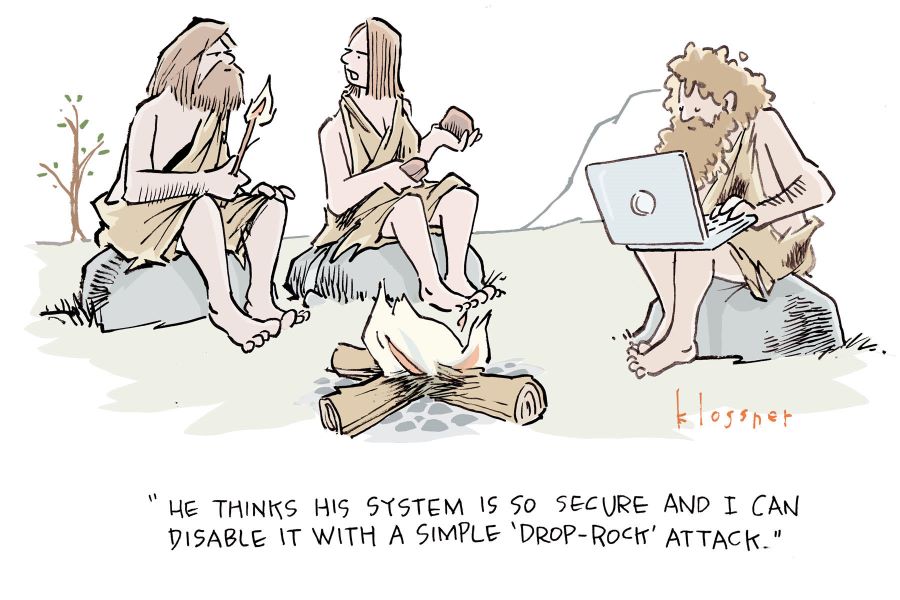
Dark Reading ‘Name That Toon’ Winner: Gather ‘Round the Campfire

Register for Dark Reading Newsletters

Subscribe to Newsletters

White Papers

Video

Cartoon

Current Issue

image2021 Top Enterprise IT TrendsWe’ve identified the key trends that are poised to impact the IT landscape in 2021. Find out why they’re important and how they will affect you today!
image

Flash Poll

How Enterprises are Developing Secure Applications
Recent breaches of third-party apps are driving many organizations to think harder about the security of their off-the-shelf software as they continue to move left in secure software development practices.
image

Twitter Feed

Dark Reading - Bug Report

Bug Report

Enterprise Vulnerabilities
From DHS/US-CERT’s National Vulnerability Database
CVE-2021-21369
PUBLISHED: 2021-03-09

Hyperledger Besu is an open-source, MainNet compatible, Ethereum client written in Java. In Besu before version 1.5.1 there is a denial-of-service vulnerability involving the HTTP JSON-RPC API service. If username and password authentication is enabled for the HTTP JSON-RPC API service, then prior t…

CVE-2021-21176
PUBLISHED: 2021-03-09

Inappropriate implementation in full screen mode in Google Chrome prior to 89.0.4389.72 allowed a remote attacker to spoof the contents of the Omnibox (URL bar) via a crafted HTML page.

CVE-2021-21177
PUBLISHED: 2021-03-09

Insufficient policy enforcement in Autofill in Google Chrome prior to 89.0.4389.72 allowed a remote attacker to obtain potentially sensitive information from process memory via a crafted HTML page.

CVE-2021-21178
PUBLISHED: 2021-03-09

Inappropriate implementation in Compositing in Google Chrome on Linux and Windows prior to 89.0.4389.72 allowed a remote attacker to spoof the contents of the Omnibox (URL bar) via a crafted HTML page.

CVE-2021-21179
PUBLISHED: 2021-03-09

Use after free in Network Internals in Google Chrome on Linux prior to 89.0.4389.72 allowed a remote attacker to potentially exploit heap corruption via a crafted HTML page.

The post Dark Reading ‘Name That Toon’ Winner: Gather ‘Round the Campfire appeared first on Malware Devil.


https://malwaredevil.com/2021/03/09/dark-reading-name-that-toon-winner-gather-round-the-campfire/?utm_source=rss&utm_medium=rss&utm_campaign=dark-reading-name-that-toon-winner-gather-round-the-campfire

PerimeterX Named to Fast Company’s List of the World’s Most Innovative Companies for 2021

Web App Solutions Provider Ranked Among Top 10 Security Companies Worldwide SAN MATEO, Calif., March 9, 2021 – PerimeterX, the leading provider of solutions that protect modern web apps at scale, has been included in Fast Company’s prestigious annual list of the World’s Most Innovative Companies for 2021, and is ranked #7 among the world’s..

The post PerimeterX Named to Fast Company’s List of the World’s Most Innovative Companies for 2021 appeared first on Security Boulevard.

Read More

The post PerimeterX Named to Fast Company’s List of the World’s Most Innovative Companies for 2021 appeared first on Malware Devil.


https://malwaredevil.com/2021/03/09/perimeterx-named-to-fast-companys-list-of-the-worlds-most-innovative-companies-for-2021/?utm_source=rss&utm_medium=rss&utm_campaign=perimeterx-named-to-fast-companys-list-of-the-worlds-most-innovative-companies-for-2021

ICS/OT Regulation, Part 2 – Jim Gilsinn – SCW #64

Industrial Control Systems (ICS) and Operational Technology (OT) have risks and consequences in the real world, such as the health and safety of people, but how those industries handle the potential cybersecurity risks varies greatly depending on the regulation that has been applied. The US Government has declared many different industries as critical infrastructures with different levels of prioritization placed on cybersecurity regulation.

Visit https://www.securityweekly.com/scw for all the latest episodes!

Show Notes: https://securityweekly.com/scw64

The post ICS/OT Regulation, Part 2 – Jim Gilsinn – SCW #64 appeared first on Malware Devil.


https://malwaredevil.com/2021/03/09/ics-ot-regulation-part-2-jim-gilsinn-scw-64/?utm_source=rss&utm_medium=rss&utm_campaign=ics-ot-regulation-part-2-jim-gilsinn-scw-64

ICS/OT Regulation – Jim Gilsinn – SCW #64

Industrial Control Systems (ICS) and Operational Technology (OT) have risks and consequences in the real world, such as the health and safety of people, but how those industries handle the potential cybersecurity risks varies greatly depending on the regulation that has been applied. The US Government has declared many different industries as critical infrastructures with different levels of prioritization placed on cybersecurity regulation.

Visit https://www.securityweekly.com/scw for all the latest episodes!

Show Notes: https://securityweekly.com/scw64

The post ICS/OT Regulation – Jim Gilsinn – SCW #64 appeared first on Malware Devil.


https://malwaredevil.com/2021/03/09/ics-ot-regulation-jim-gilsinn-scw-64/?utm_source=rss&utm_medium=rss&utm_campaign=ics-ot-regulation-jim-gilsinn-scw-64

Automation Paves the Way for Interactive Application Penetration Testing

Adoption of DevOps is increasing the rate of software deployment. A recent survey by DevOps Research and Assessment (DORA) and Google Cloud found that elite DevOps performers—nearly 7,000 of the companies surveyed—have 208 times more frequent software deployments than their peers, reaching an average of 1,460 deployments annually. Impressive, right? Not if those companies do not take the proper security considerations into account throughout the software development life cycle (SDLC).

The post Automation Paves the Way for Interactive Application Penetration Testing appeared first on Security Boulevard.

Read More

The post Automation Paves the Way for Interactive Application Penetration Testing appeared first on Malware Devil.


https://malwaredevil.com/2021/03/09/automation-paves-the-way-for-interactive-application-penetration-testing/?utm_source=rss&utm_medium=rss&utm_campaign=automation-paves-the-way-for-interactive-application-penetration-testing

10 Tips to Strengthen Your Insider Threat Program – Data, Intent and Context [Part 1]

When building an insider threat program, the same 10 building blocks hold true for everyone. Read this blog post to learn how to strengthen your InT program and prevent data exfiltration.

The post 10 Tips to Strengthen Your Insider Threat Program – Data, Intent and Context [Part 1] appeared first on Dtex Systems Inc.

The post 10 Tips to Strengthen Your Insider Threat Program – Data, Intent and Context [Part 1] appeared first on Security Boulevard.

Read More

The post 10 Tips to Strengthen Your Insider Threat Program – Data, Intent and Context [Part 1] appeared first on Malware Devil.


https://malwaredevil.com/2021/03/09/10-tips-to-strengthen-your-insider-threat-program-data-intent-and-context-part-1/?utm_source=rss&utm_medium=rss&utm_campaign=10-tips-to-strengthen-your-insider-threat-program-data-intent-and-context-part-1

Microsoft March 2021 Patch Tuesday, (Tue, Mar 9th)

This month we got patches for 122 vulnerabilities. Of these, 14 are critical, 5 are being exploited and 2 were previously disclosed. 

The highlight for this month goes to the Microsoft Exchange Server vulnerabilities that are being exploited and for which Microsoft has made available the emergency patches on March 2. If you have this software in your environment, especially if the service is exposed to the internet, and did not apply the patches, in addition to apply the patches, it is imperative that you check if your system could have been already compromised. Johannes published a diary summarizing the vulnerabilities and giving advices on how to check for evidence of compromise.

In addition to the 4 Microsoft Exchange Server vulnerabilities, there is a fifth vulnerability being exploited which have been previously disclosed. This is a RCE affecting Microsoft Edge and Internet Explorer 11 (CVE-2021-26411) on multiple Windows versions. According to the vulnerability advisory, to exploit this vulnerability, an attacker would have to convince a user to access a malicious website, like in a phishing scenario. The exploit is publicly disclosed, and exploitations were already detected. 

The highest CVSS score this month (9.90) was given to the Windows Hyper-V Remote Code Execution Vulnerability (CVE-2021-26867). The vulnerability advisory says that any Hyper-V client which is configured to use the Plan 9 file system could be vulnerable. An authenticated attacker who successfully exploited this vulnerability on a Hyper-V client could cause code to execute on the Hyper-V server.

And for the second month in a row, there is a critical RCE vulnerability affecting Windows DNS Server (CVE-2021-26897) with a CVSS of 9.80. According to the advisory, the vulnerability affects any DNS Server – being it a standalone DNS Primary Authoritative Server or a DNS Server integrated with Active Directory. It also informs that to be vulnerable, a DNS server would need to have dynamic updates enabled. 

See my dashboard for a more detailed breakout: https://patchtuesdaydashboard.com

Description
CVE Disclosed Exploited Exploitability (old versions) current version Severity CVSS Base (AVG) CVSS Temporal (AVG)
Application Virtualization Remote Code Execution Vulnerability
%%cve:2021-26890%% No No Less Likely Less Likely Important 7.8 6.8
Azure Sphere Unsigned Code Execution Vulnerability
%%cve:2021-27074%% No No Less Likely Less Likely Critical 6.2 5.6
%%cve:2021-27080%% No No Less Likely Less Likely Critical 9.3 9.3
Azure Virtual Machine Information Disclosure Vulnerability
%%cve:2021-27075%% No No Less Likely Less Likely Important 6.8 6.1
Chromium CVE-2020-27844: Heap buffer overflow in OpenJPEG
%%cve:2020-27844%% No No    
Chromium CVE-2021-21159: Heap buffer overflow in TabStrip
%%cve:2021-21159%% No No    
Chromium CVE-2021-21160: Heap buffer overflow in WebAudio
%%cve:2021-21160%% No No    
Chromium CVE-2021-21161: Heap buffer overflow in TabStrip
%%cve:2021-21161%% No No    
Chromium CVE-2021-21162: Use after free in WebRTC
%%cve:2021-21162%% No No    
Chromium CVE-2021-21163: Insufficient data validation in Reader Mode
%%cve:2021-21163%% No No    
Chromium CVE-2021-21164: Insufficient data validation in Chrome for iOS
%%cve:2021-21164%% No No    
Chromium CVE-2021-21165: Object lifecycle issue in audio
%%cve:2021-21165%% No No    
Chromium CVE-2021-21166: Object lifecycle issue in audio
%%cve:2021-21166%% No No    
Chromium CVE-2021-21167: Use after free in bookmarks
%%cve:2021-21167%% No No    
Chromium CVE-2021-21168: Insufficient policy enforcement in appcache
%%cve:2021-21168%% No No    
Chromium CVE-2021-21169: Out of bounds memory access in V8
%%cve:2021-21169%% No No    
Chromium CVE-2021-21170: Incorrect security UI in Loader
%%cve:2021-21170%% No No    
Chromium CVE-2021-21171: Incorrect security UI in TabStrip and Navigation
%%cve:2021-21171%% No No    
Chromium CVE-2021-21172: Insufficient policy enforcement in File System API
%%cve:2021-21172%% No No    
Chromium CVE-2021-21173: Side-channel information leakage in Network Internals
%%cve:2021-21173%% No No    
Chromium CVE-2021-21174: Inappropriate implementation in Referrer
%%cve:2021-21174%% No No    
Chromium CVE-2021-21175: Inappropriate implementation in Site isolation
%%cve:2021-21175%% No No    
Chromium CVE-2021-21176: Inappropriate implementation in full screen mode
%%cve:2021-21176%% No No    
Chromium CVE-2021-21177: Insufficient policy enforcement in Autofill
%%cve:2021-21177%% No No    
Chromium CVE-2021-21178 : Inappropriate implementation in Compositing
%%cve:2021-21178%% No No    
Chromium CVE-2021-21179: Use after free in Network Internals
%%cve:2021-21179%% No No    
Chromium CVE-2021-21180: Use after free in tab search
%%cve:2021-21180%% No No    
Chromium CVE-2021-21181: Side-channel information leakage in autofill
%%cve:2021-21181%% No No    
Chromium CVE-2021-21182: Insufficient policy enforcement in navigations
%%cve:2021-21182%% No No    
Chromium CVE-2021-21183: Inappropriate implementation in performance APIs
%%cve:2021-21183%% No No    
Chromium CVE-2021-21184: Inappropriate implementation in performance APIs
%%cve:2021-21184%% No No    
Chromium CVE-2021-21185: Insufficient policy enforcement in extensions
%%cve:2021-21185%% No No    
Chromium CVE-2021-21186: Insufficient policy enforcement in QR scanning
%%cve:2021-21186%% No No    
Chromium CVE-2021-21187: Insufficient data validation in URL formatting
%%cve:2021-21187%% No No    
Chromium CVE-2021-21188: Use after free in Blink
%%cve:2021-21188%% No No    
Chromium CVE-2021-21189: Insufficient policy enforcement in payments
%%cve:2021-21189%% No No    
Chromium CVE-2021-21190 : Uninitialized Use in PDFium
%%cve:2021-21190%% No No    
DirectX Elevation of Privilege Vulnerability
%%cve:2021-24095%% No No More Likely More Likely Important 7.0 6.1
Git for Visual Studio Remote Code Execution Vulnerability
%%cve:2021-21300%% No No Less Likely Less Likely Critical 8.8 7.7
HEVC Video Extensions Remote Code Execution Vulnerability
%%cve:2021-24089%% No No Less Likely Less Likely Critical 7.8 6.8
%%cve:2021-24110%% No No Less Likely Less Likely Important 7.8 6.8
%%cve:2021-26902%% No No Less Likely Less Likely Critical 7.8 6.8
%%cve:2021-27047%% No No Less Likely Less Likely Important 7.8 6.8
%%cve:2021-27048%% No No Less Likely Less Likely Important 7.8 6.8
%%cve:2021-27049%% No No Less Likely Less Likely Important 7.8 6.8
%%cve:2021-27050%% No No Less Likely Less Likely Important 7.8 6.8
%%cve:2021-27051%% No No Less Likely Less Likely Important 7.8 6.8
%%cve:2021-27061%% No No Less Likely Less Likely Critical 7.8 6.8
%%cve:2021-27062%% No No Less Likely Less Likely Important 7.8 6.8
Internet Explorer Memory Corruption Vulnerability
%%cve:2021-26411%% Yes Yes Detected Detected Critical 8.8 7.9
Internet Explorer Remote Code Execution Vulnerability
%%cve:2021-27085%% No No Less Likely Less Likely Important 8.8 7.9
Microsoft Excel Remote Code Execution Vulnerability
%%cve:2021-27053%% No No Less Likely Less Likely Important 7.8 6.8
%%cve:2021-27054%% No No Less Likely Less Likely Important 7.8 6.8
Microsoft Exchange Server Remote Code Execution Vulnerability
%%cve:2021-26412%% No No Less Likely Less Likely Critical 9.1 8.2
%%cve:2021-26854%% No No Less Likely Less Likely Important 6.6 5.8
%%cve:2021-26855%% No Yes Detected Detected Critical 9.1 8.4
%%cve:2021-26857%% No Yes More Likely Detected Critical 7.8 7.2
%%cve:2021-26858%% No Yes Detected Detected Important 7.8 7.2
%%cve:2021-27065%% No Yes Detected Detected Critical 7.8 7.2
%%cve:2021-27078%% No No Less Likely Less Likely Important 9.1 8.2
Microsoft Office ClickToRun Remote Code Execution Vulnerability
%%cve:2021-27058%% No No Less Likely Less Likely Important 7.8 6.8
Microsoft Office Remote Code Execution Vulnerability
%%cve:2021-24108%% No No Less Likely Less Likely Important 7.8 6.8
%%cve:2021-27057%% No No Less Likely Less Likely Important 7.8 6.8
%%cve:2021-27059%% No No Less Likely Less Likely Important 7.6 6.6
Microsoft Power BI Information Disclosure Vulnerability
%%cve:2021-26859%% No No Less Likely Less Likely Important 7.7 6.7
Microsoft PowerPoint Remote Code Execution Vulnerability
%%cve:2021-27056%% No No Less Likely Less Likely Important 7.8 6.8
Microsoft SharePoint Server Information Disclosure Vulnerability
%%cve:2021-27052%% No No Less Likely Less Likely Important 5.3 4.8
Microsoft SharePoint Server Remote Code Execution Vulnerability
%%cve:2021-27076%% No No More Likely More Likely Important 8.8 7.7
Microsoft SharePoint Spoofing Vulnerability
%%cve:2021-24104%% No No Less Likely Less Likely Important 4.6 4.2
Microsoft Visio Security Feature Bypass Vulnerability
%%cve:2021-27055%% No No Less Likely Less Likely Important 7.0 6.1
Microsoft Windows Folder Redirection Elevation of Privilege Vulnerability
%%cve:2021-26887%% No No Less Likely Less Likely Important 7.8 6.8
Microsoft Windows Media Foundation Remote Code Execution Vulnerability
%%cve:2021-26881%% No No Less Likely Less Likely Important 7.5 6.5
OpenType Font Parsing Remote Code Execution Vulnerability
%%cve:2021-26876%% No No Less Likely Less Likely Critical 8.8 7.7
Quantum Development Kit for Visual Studio Code Remote Code Execution Vulnerability
%%cve:2021-27082%% No No Important 7.8 6.8
Remote Access API Elevation of Privilege Vulnerability
%%cve:2021-26882%% No No Less Likely Less Likely Important 7.8 6.8
Remote Development Extension for Visual Studio Code Remote Code Execution Vulnerability
%%cve:2021-27083%% No No Less Likely Less Likely Important 7.8 6.8
Storage Spaces Controller Elevation of Privilege Vulnerability
%%cve:2021-26880%% No No Less Likely Less Likely Important 7.8 6.8
User Profile Service Denial of Service Vulnerability
%%cve:2021-26886%% No No Less Likely Less Likely Important 5.5 4.8
Visual Studio Code ESLint Extension Remote Code Execution Vulnerability
%%cve:2021-27081%% No No Less Likely Less Likely Important 7.8 6.8
Visual Studio Code Java Extension Pack Remote Code Execution Vulnerability
%%cve:2021-27084%% No No Less Likely Less Likely Important    
Visual Studio Code Remote Code Execution Vulnerability
%%cve:2021-27060%% No No Less Likely Less Likely Important 7.8 6.8
Windows 10 Update Assistant Elevation of Privilege Vulnerability
%%cve:2021-27070%% No No Less Likely Less Likely Important 7.3 6.4
Windows ActiveX Installer Service Information Disclosure Vulnerability
%%cve:2021-26869%% No No Less Likely Less Likely Important 5.5 4.8
Windows Admin Center Security Feature Bypass Vulnerability
%%cve:2021-27066%% No No Less Likely Less Likely Important 4.3 3.8
Windows App-V Overlay Filter Elevation of Privilege Vulnerability
%%cve:2021-26860%% No No Less Likely Less Likely Important 7.8 6.8
Windows Container Execution Agent Elevation of Privilege Vulnerability
%%cve:2021-26865%% No No Less Likely Less Likely Important 8.8 7.7
%%cve:2021-26891%% No No Less Likely Less Likely Important 7.8 6.8
Windows DNS Server Denial of Service Vulnerability
%%cve:2021-26896%% No No Less Likely Less Likely Important 7.5 6.5
%%cve:2021-27063%% No No Less Likely Less Likely Important 7.5 6.5
Windows DNS Server Remote Code Execution Vulnerability
%%cve:2021-26877%% No No More Likely More Likely Important 9.8 8.5
%%cve:2021-26893%% No No Less Likely Less Likely Important 9.8 8.5
%%cve:2021-26894%% No No Less Likely Less Likely Important 9.8 8.5
%%cve:2021-26895%% No No Less Likely Less Likely Important 9.8 8.5
%%cve:2021-26897%% No No More Likely More Likely Critical 9.8 8.5
Windows Error Reporting Elevation of Privilege Vulnerability
%%cve:2021-24090%% No No Less Likely Less Likely Important 7.8 6.8
Windows Event Tracing Elevation of Privilege Vulnerability
%%cve:2021-26872%% No No Less Likely Less Likely Important 7.8 6.8
%%cve:2021-26898%% No No Less Likely Less Likely Important 7.8 6.8
%%cve:2021-26901%% No No Less Likely Less Likely Important 7.8 6.8
Windows Event Tracing Information Disclosure Vulnerability
%%cve:2021-24107%% No No Less Likely Less Likely Important 5.5 4.8
Windows Extensible Firmware Interface Security Feature Bypass Vulnerability
%%cve:2021-26892%% No No Less Likely Less Likely Important 6.2 5.6
Windows Graphics Component Elevation of Privilege Vulnerability
%%cve:2021-26868%% No No More Likely More Likely Important 7.8 6.8
Windows Graphics Component Remote Code Execution Vulnerability
%%cve:2021-26861%% No No Less Likely Less Likely Important 7.8 6.8
Windows Hyper-V Remote Code Execution Vulnerability
%%cve:2021-26867%% No No Less Likely Less Likely Critical 9.9 8.6
Windows Installer Elevation of Privilege Vulnerability
%%cve:2021-26862%% No No Less Likely Less Likely Important 6.3 5.5
Windows Media Photo Codec Information Disclosure Vulnerability
%%cve:2021-26884%% No No Less Likely Less Likely Important 5.5 4.8
Windows NAT Denial of Service Vulnerability
%%cve:2021-26879%% No No Less Likely Less Likely Important 7.5 6.5
Windows Overlay Filter Elevation of Privilege Vulnerability
%%cve:2021-26874%% No No Less Likely Less Likely Important 7.8 6.8
Windows Print Spooler Elevation of Privilege Vulnerability
%%cve:2021-1640%% No No Less Likely Less Likely Important 7.8 6.8
%%cve:2021-26878%% No No Less Likely Less Likely Important 7.8 6.8
Windows Projected File System Elevation of Privilege Vulnerability
%%cve:2021-26870%% No No Less Likely Less Likely Important 7.8 6.8
Windows UPnP Device Host Elevation of Privilege Vulnerability
%%cve:2021-26899%% No No Less Likely Less Likely Important 7.8 6.8
Windows Update Service Elevation of Privilege Vulnerability
%%cve:2021-26866%% No No Less Likely Less Likely Important 7.1 6.2
Windows Update Stack Elevation of Privilege Vulnerability
%%cve:2021-26889%% No No Less Likely Less Likely Important 7.1 6.2
Windows Update Stack Setup Elevation of Privilege Vulnerability
%%cve:2021-1729%% No No Less Likely Less Likely Important 7.1 6.2
Windows User Profile Service Elevation of Privilege Vulnerability
%%cve:2021-26873%% No No Less Likely Less Likely Important 7.0 6.1
Windows Virtual Registry Provider Elevation of Privilege Vulnerability
%%cve:2021-26864%% No No Less Likely Less Likely Important 8.4 7.3
Windows WalletService Elevation of Privilege Vulnerability
%%cve:2021-26871%% No No Less Likely Less Likely Important 7.8 6.8
%%cve:2021-26885%% No No Less Likely Less Likely Important 7.8 6.8
Windows Win32k Elevation of Privilege Vulnerability
%%cve:2021-27077%% Yes No Less Likely Less Likely Important 7.8 7.0
%%cve:2021-26863%% No No More Likely More Likely Important 7.0 6.1
%%cve:2021-26875%% No No Less Likely Less Likely Important 7.8 6.8
%%cve:2021-26900%% No No Less Likely Less Likely Important 7.8 6.8


Renato Marinho
Morphus Labs| LinkedIn|Twitter

(c) SANS Internet Storm Center. https://isc.sans.edu Creative Commons Attribution-Noncommercial 3.0 United States License. Read More

The post Microsoft March 2021 Patch Tuesday, (Tue, Mar 9th) appeared first on Malware Devil.


https://malwaredevil.com/2021/03/09/microsoft-march-2021-patch-tuesday-tue-mar-9th/?utm_source=rss&utm_medium=rss&utm_campaign=microsoft-march-2021-patch-tuesday-tue-mar-9th

48% of Security Pros Prohibited From Intelligence-Sharing

Register for Dark Reading Newsletters

Subscribe to Newsletters

White Papers

Video

Cartoon Contest
Write a Caption, Win an Amazon Gift Card! Click Here
image
Latest Comment: This comment is waiting for review by our moderators.
image

Current Issue

image2021 Top Enterprise IT TrendsWe’ve identified the key trends that are poised to impact the IT landscape in 2021. Find out why they’re important and how they will affect you today!
image

Flash Poll

How Enterprises are Developing Secure Applications
Recent breaches of third-party apps are driving many organizations to think harder about the security of their off-the-shelf software as they continue to move left in secure software development practices.
image

Twitter Feed

Dark Reading - Bug Report

Bug Report

Enterprise Vulnerabilities
From DHS/US-CERT’s National Vulnerability Database
CVE-2020-35451
PUBLISHED: 2021-03-09

There is a race condition in OozieSharelibCLI in Apache Oozie before version 5.2.1 which allows a malicious attacker to replace the files in Oozie’s sharelib during it’s creation.

CVE-2021-27584
PUBLISHED: 2021-03-09

When a user opens manipulated PhotoShop Document (.PSD) format files received from untrusted sources in SAP 3D Visual Enterprise Viewer version 9, the application crashes and becomes temporarily unavailable to the user until restart of the application.

CVE-2021-27585
PUBLISHED: 2021-03-09

When a user opens manipulated Computer Graphics Metafile (.CGM) format files received from untrusted sources in SAP 3D Visual Enterprise Viewer version 9, the application crashes and becomes temporarily unavailable to the user until restart of the application.

CVE-2021-27586
PUBLISHED: 2021-03-09

When a user opens manipulated Interchange File Format (.IFF) format files received from untrusted sources in SAP 3D Visual Enterprise Viewer version 9, the application crashes and becomes temporarily unavailable to the user until restart of the application.

CVE-2021-27587
PUBLISHED: 2021-03-09

When a user opens manipulated Jupiter Tessellation (.JT) format files received from untrusted sources in SAP 3D Visual Enterprise Viewer version 9, the application crashes and becomes temporarily unavailable to the user until restart of the application.

The post 48% of Security Pros Prohibited From Intelligence-Sharing appeared first on Malware Devil.


https://malwaredevil.com/2021/03/09/48-of-security-pros-prohibited-from-intelligence-sharing/?utm_source=rss&utm_medium=rss&utm_campaign=48-of-security-pros-prohibited-from-intelligence-sharing

Kinsing: The Malware with Two Faces

Lately, we’ve been busy researching the developing field of cloud and container threats. Why focus here? Because, as this technology becomes more popular and continues to evolve, attackers are also evolving their techniques to infiltrate…

The post Kinsing: The Malware with Two Faces appeared first on Security Boulevard.

Read More

The post Kinsing: The Malware with Two Faces appeared first on Malware Devil.


https://malwaredevil.com/2021/03/09/kinsing-the-malware-with-two-faces/?utm_source=rss&utm_medium=rss&utm_campaign=kinsing-the-malware-with-two-faces

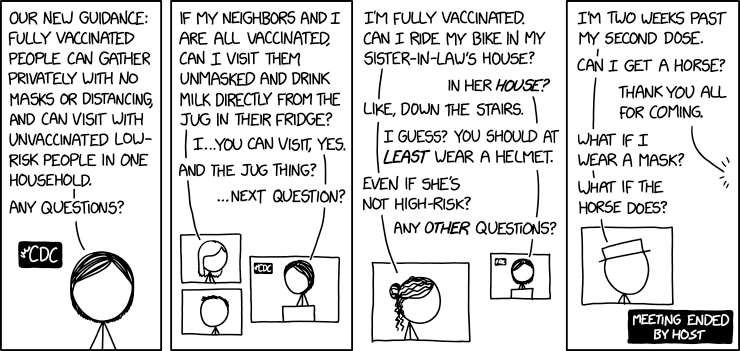
XKCD ‘Vaccine Guidance’

via the comic delivery system monikered Randall Munroe resident at XKCD !

via the comic delivery system monikered Randall Munroe resident at XKCD!

Permalink

The post XKCD ‘Vaccine Guidance’ appeared first on Security Boulevard.

Read More

The post XKCD ‘Vaccine Guidance’ appeared first on Malware Devil.


https://malwaredevil.com/2021/03/09/xkcd-vaccine-guidance/?utm_source=rss&utm_medium=rss&utm_campaign=xkcd-vaccine-guidance

COVID-19 Contact-Tracing Apps Signal Broader Mobile App Security Concerns

The rapid launch of contract-tracing apps to control COVID-19’s spread opened the door to multiple security and privacy vulnerabilities.

The COVID-19 pandemic led to a rapid response to try to contain the virus’ global spread. However, whenever speed is a factor, security and privacy often fall by the wayside. This is especially true with contact-tracing mobile apps, which have been available since spring 2020 yet still lack some of the most basic security protections.

Historically, centralized, government-run data-collection efforts have been abject failures, which seems surprising given the availability of vast computing resources. Even something as seemingly straightforward as government computerization of medical records has succeeded in only a small number of countries. Due to the urgency of the COVID-19 pandemic, governments had to consider noncentralized approaches to contact tracing to both react quickly and achieve the necessary high coverage.

In a sense, contact-tracing mobile apps are an example of a crowdsourced solution to a governance problem, and their success sets an important precedent. Mobile devices will no longer be seen as exclusively communication or leisure platforms. They’ll also be considered whenever public health authorities and other government entities need to gather data from their entire population.

All this data collection should be done far more carefully and securely than it is today, or governments will risk losing their citizens’ trust permanently.

The Role of Trust and Privacy in Contact Tracing
In a single word, trust is essential if contact-tracing apps are to succeed in their purpose, which is to provide a pervasive and accurate capability to warn individual citizens of potential exposure to the virus when going about their day-to-day activities. Distributed contact tracing via mobile apps (as opposed to centralized, manual contact tracing performed by humans) can be effective only if the majority of citizens install and use the apps.

For this to happen, individuals must believe that the app is safe to use and doesn’t expose their personal information, either to the government or to malicious actors who might hack the app. The best way to avoid personal data exposure is for the contact-tracing app not to gather it in the first place.

In May 2020, Apple and Google jointly released the Exposure Notifications API to help governments and other groups build contact-tracing apps. The API’s goal is to provide the core functionality for building apps that notify users of possible exposures while protecting user privacy and security. This was a game-changer for contact tracing using smart devices, and the companies hoped that the majority of the world’s health authorities would adopt the API. Public health experts hoped the attention paid to privacy and security by design would result in a greater likelihood of public trust in this approach to combating the spread of COVID-19.

An analysis of 62 iOS and Android contact-tracing apps in December found that 60% used the API (62% of the Android apps and 58% of the iOS apps). In addition, they found significant security and privacy concerns in the 40% of apps that did not use the official Exposure Notifications API and instead took a do-it-yourself approach to security. Of greatest concern were the contact-tracing apps that used GPS geolocation data.

GPS and Security Concerns: Where Many Countries Went Wrong
The potential privacy implications of using GPS data are of great concern on their own; even worse, many of the apps that use GPS tracking also require people to share their phone number or passport details to use the app.

Some of the analyzed apps harvest device information, which is a clear overreach. Just an IP address and a time stamp are enough for a government to link a person to a device. Harvesting anything more is unnecessary and creates clear privacy risks.

Unfortunately, many examples of overly invasive and poorly secured contact-tracing apps have been found since last spring. These failures eroded public trust in these apps, which reduced the effectiveness of the entire public health response. The earliest apps were rushed to market with many flaws or (like one UK app) failed so badly that they were abandoned before release.

You only get one chance to make a good first impression. Jurisdictions that made multiple attempts to roll out contact-tracing apps most likely faced adoption issues due to the aforementioned lack of trust.

Collect Only Essential Data, and Make Your App Difficult to Compromise
A best practice is to collect only the data that is necessary for the app to function properly. In the case of contact-tracing applications, that means using the Exposure Notifications API instead of GPS data. Beyond that, applying basic security techniques can prevent attackers from gaining unauthorized access to data, tampering with code, creating fake applications, and more. Security incidents are a serious issue that can erode public trust.

Luckily, these issues are easily fixable if mobile app developers and security professionals prioritize security early in the development life cycle. It’s important to empower developers with secure coding skills, take advantage of pen testing and other application security testing measures, and apply code hardening and runtime application self-protection before an application is published (and with each subsequent release). Prioritizing security as much as time-to-market can help prevent incidents, as well as protect both consumers and governments.

Grant Goodes, Chief Scientist at Guardsquare, is a leading expert in cybersecurity technology with uniquely broad and deep experience in all aspects of application security including code and data obfuscation/transformation, whitebox cryptography, static and dynamic code … View Full Bio

Recommended Reading:

Comment |

Email This |

Print |

RSS

More Insights

The post COVID-19 Contact-Tracing Apps Signal Broader Mobile App Security Concerns appeared first on Malware Devil.


https://malwaredevil.com/2021/03/09/covid-19-contact-tracing-apps-signal-broader-mobile-app-security-concerns/?utm_source=rss&utm_medium=rss&utm_campaign=covid-19-contact-tracing-apps-signal-broader-mobile-app-security-concerns

Huge Fallout from Microsoft Incompetence: Let’s Exchange Exchange

Countless organizations using Microsoft Exchange are scrambling to undo the damage caused by hackers. And it’s all Microsoft’s fault.

The post Huge Fallout from Microsoft Incompetence: Let’s Exchange Exchange appeared first on Security Boulevard.

Read More

The post Huge Fallout from Microsoft Incompetence: Let’s Exchange Exchange appeared first on Malware Devil.


https://malwaredevil.com/2021/03/09/huge-fallout-from-microsoft-incompetence-lets-exchange-exchange/?utm_source=rss&utm_medium=rss&utm_campaign=huge-fallout-from-microsoft-incompetence-lets-exchange-exchange

Monday, March 8, 2021

451 Research Shows Security is #1 Challenge to Cloud Adoption

A recent Business Impact Report by 451 Research | S&P Global Market Insights inspects the challenges of

The post 451 Research Shows Security is #1 Challenge to Cloud Adoption appeared first on Security Boulevard.

Read More

The post 451 Research Shows Security is #1 Challenge to Cloud Adoption appeared first on Malware Devil.


https://malwaredevil.com/2021/03/08/451-research-shows-security-is-1-challenge-to-cloud-adoption/?utm_source=rss&utm_medium=rss&utm_campaign=451-research-shows-security-is-1-challenge-to-cloud-adoption

Risky Business (With Less Resources), Or: Know the CISO Job Search – BSW #208

In the leadership and communications section, Risky business: 3 timeless approaches to reduce security risk in 2021, Why Less Can Be More When It Comes to Cybersecurity, CISO job search: What to look (and look out) for, and more!
Visit https://www.securityweekly.com/bsw for all the latest episodes!
Show Notes: https://securityweekly.com/bsw208

The post Risky Business (With Less Resources), Or: Know the CISO Job Search – BSW #208 appeared first on Malware Devil.


https://malwaredevil.com/2021/03/08/risky-business-with-less-resources-or-know-the-ciso-job-search-bsw-208/?utm_source=rss&utm_medium=rss&utm_campaign=risky-business-with-less-resources-or-know-the-ciso-job-search-bsw-208

Security Leadership in Times of Transition – Gerald Beuchelt – BSW #208

In 2020, we interviewed Gerald Beuchelt on Enterprise Security Weekly. At that time, he was the CISO at LogMeIn. Now he’s the CISO at Sprinklr. What’s it like to transition jobs in the middle of a pandemic as the the first CISO of a company? Gerald discusses his transition story and shares his recommendations and lessons learned for other CISOs.
Visit https://www.securityweekly.com/bsw for all the latest episodes!
Show Notes: https://securityweekly.com/bsw208

The post Security Leadership in Times of Transition – Gerald Beuchelt – BSW #208 appeared first on Malware Devil.


https://malwaredevil.com/2021/03/08/security-leadership-in-times-of-transition-gerald-beuchelt-bsw-208/?utm_source=rss&utm_medium=rss&utm_campaign=security-leadership-in-times-of-transition-gerald-beuchelt-bsw-208

Microsoft Exchange Server Attack Escalation Prompts Patching Panic

US government officials weigh in on the attacks and malicious activity, which researchers believe may be the work of multiple groups.

The post Microsoft Exchange Server Attack Escalation Prompts Patching Panic appeared first on Malware Devil.


https://malwaredevil.com/2021/03/08/microsoft-exchange-server-attack-escalation-prompts-patching-panic-2/?utm_source=rss&utm_medium=rss&utm_campaign=microsoft-exchange-server-attack-escalation-prompts-patching-panic-2

Microsoft Exchange Server Attack Escalation Prompts Patching Panic

US government officials weigh in on the attacks and malicious activity, which researchers believe may be the work of multiple groups.

The critical Exchange Server vulnerabilities patched last week by Microsoft are being weaponized in widespread attacks against organizations worldwide. Attacks have escalated over the past two weeks, prompting responses from US government and the security community.

News of the four vulnerabilities emerged on March 2, when Microsoft issued patches for CVE-2021-26855, CVE-2021-26857, CVE-2021-26858, and CVE-2021-27065. These flaws affect Microsoft Exchange Server versions 2013, 2016, and 2019, though the company notes Microsoft Exchange Server 2010 is being updated for Defense in Depth purposes. Exchange Online is not affected.

Microsoft, which learned of these vulnerabilities in early January, initially reported they were being exploited in “limited and targeted attacks” by Hafnium, a group it believes is state-sponsored and operates out of China. Officials said this was the only actor it had seen weaponizing these exploits, which it used to primarily target organizations in the US.

But other security experts say there are likely multiple threat groups behind the wave of malicious activity going after Exchange Servers.

This activity accelerated toward the end of February, when Volexity researchers who found some of the zero-days noticed an increase in instances of remote code execution (RCE). In all cases, attackers were writing Web shells to disk and doing operations to dump credentials, add user accounts, steal copies of Active Directory databases, and move laterally to other systems.

What had previously been “low and slow” activity had quickly escalated into a lot of noise.

“While it started out as targeted espionage campaign, they engaged in reckless and dangerous behavior by scanning/compromising Exchange servers across the entire IPv4 address space with webshells that can now be used by other actors, including ransomware crews,” Dmitri Alperovitch, chairman of the Silverado Policy Accelerator and cofounder of CrowdStrike, said in a tweet.

Intelligence from multiple sources indicates that the malicious activity has grown more widespread since March 2. At least 30,000 organizations in the US have been affected, KrebsOnSecurity reports. Since early March, Kaspersky has detected related attacks on more than 1,200 users, “with this number continually growing.” Most of these targets are in Germany (26.9%), with others in Italy (9%), Austria (5.72%), Switzerland (4.81), and the US (4.73%), researchers report. The European Banking Authority is among organizations affected outside the US.

Katie Nickels, director of intelligence for Red Canary, says they began to see an increase in suspicious Web shell activity targeting Exchange servers on Feb. 28, days before Microsoft’s disclosure of Hafnium activity. Red Canary’s data shows multiple clusters of Web shell activity; for example, Web shells they saw dropped from Feb. 28 through March 3 acted differently from Web shells they saw dropped on March 5.

“Each of these clusters look a bit different, which leads us to assess there may be multiple adversaries exploiting these vulnerabilities,” Nickels says. “One thing we don’t know right now is if these adversaries are cooperating somehow and just using different TTPs, or if they are distinct adversaries who are not coordinating.”

Multiple Attack Groups Likely Involved

Red Canary isn’t the only security firm tracking this activity in “clusters.” In a blog post posted last week, Mandiant researchers explained how they are tracking the attacks in three clusters: UNC 2639, UNC2640, and UNC2643. While Microsoft initially attributed this activity to Hafnium, the rapid acceleration of activity calls into question whether other groups might be responsible.

“Hafnium is definitely not the only actor involved in this activity,” Kaspersky researchers say in an email to Dark Reading, noting there were other attackers using some of these exploits before a patch was released. After March 2, they say, the number of attackers has increased.

With each day since the patches were released, Kaspersky researchers report a higher number of automated attempts of at least one of the flaws (CVE-2021-26855). Their intelligence shows the attacks peaked on March 5 and have since plateaued; however, they note this isn’t unusual.

“This is a typical reaction we see in the wild, especially if a working exploit has also been produced,” they explain. “It’s a sort of race against time between attackers looking to capitalize on the ‘patch gap’ and defenders trying to mitigate the risk.” They note attackers are most likely using various means to set up persistent access, which they can use as they like in the future.

Most of the Web shells Red Canary has observed provide attackers with an initial foothold. However, Nickels notes that fewer attacks conduct significant post-exploitation beyond that foothold. Researchers have seen some activity clusters execute commands to learn more about the environment; others have added scheduled tasks for persistence and beaconed back to command-and-control domains. Microsoft initially reported that Hafnium compressed stolen data and exported mailbox data; however, this is not occurring on every compromised server.

“The challenge of having multiple activity clusters exploiting these vulnerabilities is that each of those could represent different adversaries with different intents,” Nickels says. The fact that much of this activity is noisy and visible to defenders indicates some adversaries don’t care much about hiding their presence. She notes the team is cautious to clearly distinguish clusters rather than attributing all activity to China, which she says is an assessment they cannot make.

In his Twitter thread, Alperovitch says this activity “deserves a significant response from the Biden administration,” especially if damaging ransomware attacks emerge in coming weeks.

White House press secretary Jen Psaki mentioned the activity in a March 5 press briefing, and the Cybersecurity and Infrastructure Security Agency (CISA) issued an alert urging organizations to patch the vulnerabilities “immediately” or disconnect their Microsoft Exchange Servers.

“We are concerned that there are a large number of victims and are working with our partners to understand the scope of this,” Psaki said, later adding that “network owners also need to consider whether they have already been compromised and should immediately take appropriate steps.”

National security advisor Jake Sullivan said in a tweet that officials are closely tracking Microsoft patches for these vulnerabilities as well as watching for potential compromises at US think tanks and defense industrial base entities. He encouraged network owners to patch as soon as possible, as did former CISA director Chris Krebs, who calls this “the real deal” in a tweet.

“If your organization runs an [Outlook Web Access] server exposed to the Internet, assume compromise between 02/26-03/03,” Krebs said.

What Organizations Should Do in Response

The most obvious advice is to apply patches for these critical flaws, which will protect targets from potential compromise. But as Nickels points out, installing patches won’t tell you if you’ve already been a target – let alone remediate an active attack.

“If security teams can gather visibility into process lineage and command line parameters associated with the Windows IIS worker process, then they may be able to hunt or build detection for this and other Exchange web shell activity,” she says. Microsoft, Volexity, and other companies have shared information that can help businesses check for compromise.

Should they discover an attack, IT and security teams are advised to run a “full and thorough” incident response process, Kaspersky researchers say.

Most of the businesses that rely on Exchange server are late mainstream organizations, small- to medium-sized businesses, and some large enterprises that use on-premise Exchange for automated email systems, says Gartner research vice president Peter Firstbrook. Those who are still on-premise because they lack budget and time to migrate are most at risk, he notes.

“Risk-based patching is critical,” Firstbrook says, adding that “full exposure of corporate email is a big risk to most organizations, so this should have been a priority.” The key is knowing which flaws are high risk and being able to prioritize them, which requires a strong vulnerability and patch management program – something often lacking in small companies with slim IT budgets.

As with other older enterprise software, patching Exchange server can be a difficult process, especially if the business is behind on updates. For this reason, Microsoft has provided mitigations for those that can’t patch quickly. Officials note these mitigations do not provide full protection, nor do they provide remediation if an Exchange server has already been compromised. CISA has also issued an alert for the alternative mitigations.

Microsoft responded to request for comment stating it’s working with CISA, other government agencies, and security companies to continue providing guidance and mitigation steps.

“The best protection is to apply updates as soon as possible across all impacted systems,” a spokesperson says, noting that affected businesses should contact Microsoft’s support teams for additional help and resources.

Kelly Sheridan is the Staff Editor at Dark Reading, where she focuses on cybersecurity news and analysis. She is a business technology journalist who previously reported for InformationWeek, where she covered Microsoft, and Insurance & Technology, where she covered financial … View Full Bio

Recommended Reading:

Comment |

Email This |

Print |

RSS

More Insights

The post Microsoft Exchange Server Attack Escalation Prompts Patching Panic appeared first on Malware Devil.


https://malwaredevil.com/2021/03/08/microsoft-exchange-server-attack-escalation-prompts-patching-panic/?utm_source=rss&utm_medium=rss&utm_campaign=microsoft-exchange-server-attack-escalation-prompts-patching-panic

Barbary Pirates and Russian Cybercrime

In 1801, the United States had a small Navy. Thomas Jefferson deployed almost half that Navy—three frigates and a schooner—to the Barbary C...