Malware Devil

Saturday, March 13, 2021

ELF sections stats

If you follow my blog you may know that I have dedicated a lot of time building a very comprehensive list of PE Sections, Today I realized that I never looked at ELF section the same way. With this post I took a first stab at it. The below are nothing but quick & dirty stats from a reasonably sized sampleset of ELF files:

47165 .shstrtab
44289 .bss
33390 .comment
31664 .strtab
31651 .symtab
23516 .data
20756 .got
12634 .debug_aranges
12628 .debug_line
12628 .debug_info
12628 .debug_abbrev
12181 .debug_frame
11408 .sbss
10339 .mdebug.abi32
9359 .ARM.attributes
8239 .jcr
6703 .dynamic
6547 .rodata
6432 .debug_str
6386 .ctors
6343 .dtors
6035 .debug_pubnames
5846 .debug_ranges
5834 .debug_loc
5101 .fini_array
4915 .data.rel.ro
4858 .pdr
4133 .eh_frame
3056 .fini
2919 .text
2877 .plt
2515 .init
2444 .sdata
1858 .got.plt
1778 .note
1542 .init_array
1335 .stabstr
1335 .stab
1140 .rel.plt
1003 __libc_freeres_ptrs
862 .tbss
839 .tdata
820 .note.gnu.gold-version
812 .gcc_except_table
791 __libc_thread_subfreeres
739 .ARM.exidx
484 .ARM.extab
423 .data.rel.ro.local
414 .eh_frame_hdr
283 __libc_atexit
245 __libc_subfreeres
239 .note.ABI-tag
172 .preinit_array
140 .note.stapsdt
138 .stapsdt.base
117 .bmp
114 .mips
113 .compiler
110 .dynstr
96 .rld_map
76 .gnu.attributes
75 .noptrbss
73 .context
71 .note.go.buildid
49 .rel.dyn
45 .gnu_debuglink
38 .gnu.prelink_undo
36 .debug_pubtypes
33 .gnu_extab
30 .stab.indexstr
30 .stab.index
29 .note.GNU-stack
29 .engine
20 .xt.prop
19 .xtensa.info
19 .xt.lit
19 .debug_gdb_scripts
19 .bep
18 .rel.gnu.linkonce.this_module
18 .gnu.warning.llseek
17 .interp
17 .gnu.linkonce.this_module
16 .rodata.str1.1
15 .gnu.conflict
14 .rel.debug_aranges
14 .rel.data
13 .rel__ex_table
13 .rel.debug_pubnames
13 .redata
13 .jgd
12 __ex_table
12 .rodata.str1.4
12 .rel.eh_frame
12 .dynbss
11 __versions
11 .rel.rodata
11 .modinfo
10 __mcount_loc
10 .rel__mcount_loc
10 .rel.debug_line
10 .data1
8 __ksymtab
8 .plt.got
8 .exception_ranges
8 .ex_shared
8 .debug_macinfo
8 .data.rel.local
7 COFF
7 .mdebug
6 .rodata1
6 .rel.text
6 .rel.fixup
6 .rel.debug_info
6 .MIPS.stubs
5 __param
5 PROGRAM
5 IBC_2.0
5 ABI
5 .xzrodata
5 .rel__param
5 .rel.debug_loc
5 .rel.debug_frame
4 .note.android.ident
4 .got2
4 .gnu.version_r
4 .cpp_finidata
4 .arm_vfe_header
3 Input file:
3 .upx.1
3 .smp_locks
3 .rel.smp_locks
3 .rdata
3 .ident
2 text_env
2 ta
2 odata
2 elink
2 __verbose
2 __ksymtab_strings
2 ___ksymtab_gpl+fb_mode_option
2 ___ksymtab_gpl+fb_destroy_modelist
2 ___ksymtab+vesa_modes
2 ___ksymtab+fb_videomode_to_var
2 ___ksymtab+fb_var_to_videomode
2 ___ksymtab+fb_mode_is_equal
2 ___ksymtab+fb_match_mode
2 ___ksymtab+fb_find_nearest_mode
2 ___ksymtab+fb_find_mode_cvt
2 ___ksymtab+fb_find_mode
2 ___ksymtab+fb_find_best_mode
2 ___ksymtab+fb_find_best_display
2 Import
2 C_2.0
2 .vmp
2 .tptext
2 .tm_clone_table
2 .rodata.cst4
2 .rela.plt
2 .rel__verbose
2 .rel___ksymtab_gpl+fb_mode_option
2 .rel___ksymtab_gpl+fb_destroy_modelist
2 .rel___ksymtab+vesa_modes
2 .rel___ksymtab+fb_videomode_to_var
2 .rel___ksymtab+fb_var_to_videomode
2 .rel___ksymtab+fb_mode_is_equal
2 .rel___ksymtab+fb_match_mode
2 .rel___ksymtab+fb_find_nearest_mode
2 .rel___ksymtab+fb_find_mode_cvt
2 .rel___ksymtab+fb_find_mode
2 .rel___ksymtab+fb_find_best_mode
2 .rel___ksymtab+fb_find_best_display
2 .rel.debug_pubtypes
2 .null
2 .msym
2 .fixup
2 .conststring
2 .constdata
2 .compact_rel
2 .comment.SUSE.OPTs
2 .PPC.EMB.apuinfo

Read More

The post ELF sections stats appeared first on Malware Devil.


https://malwaredevil.com/2021/03/13/elf-sections-stats-2/?utm_source=rss&utm_medium=rss&utm_campaign=elf-sections-stats-2

ELF sections stats

If you follow my blog you may know that I have dedicated a lot of time building a very comprehensive list of PE Sections, Today I realized that I never […]
Read More

The post ELF sections stats appeared first on Malware Devil.


https://malwaredevil.com/2021/03/13/elf-sections-stats/?utm_source=rss&utm_medium=rss&utm_campaign=elf-sections-stats

Latest Windows 10 Release Ditches Unpopular 3D Objects Folder

Recently Microsoft made a change that few people will care about or even notice.

On the off chance that you’re one of the minority of people who use the 3D Objects folder, you should know that as of Windows 10 release 1703, the 3d Objects folder will no longer be given special treatment by File Explorer.

Again, only a tiny minority of users actually make regular use of the 3d Viewer App that’s built into Windows 10, so this change isn’t going to impact very many people. However, if that’s your go-to app when it comes to viewing and manipulating 3D objects, then be aware that it won’t get a prominent place on File Explorer’s sidebar when you open it. You’ll have to either create a shortcut or click your way manually to the folder.

Initially, Microsoft’s reason for including the folder in File Explorer’s shortlist was that they envisioned millions of people downloading and manipulating 3D objects from the web. Not nearly that number of people do so, and the ones that do typically rely on some other, third-party program to view and manipulate their models. There are a number of excellent choices out there, and all of them are superior to the bare bones capabilities offered by the Windows App.

Basically, you could consider the Windows 3D Viewer App to be the 3D world’s version of Paint. It will allow you to view and manipulate a 3D object in basic ways, but you’ll quickly run into its limitations. If you work with 3D objects on a regular basis, you’ve probably already gained a good deal of familiarity with some other program that has more features on offer.

In any case, most people regard it as a generally good move. It’s one less folder to clutter up the workspace, and the search phrase “How do I get rid of the 3D Objects folder in File Explorer” is one of the more commonly searched terms in the Windows Support database. Given that, Kudos to Microsoft for making this modest change. Sounds like they finally got the message.

Used with permission from Article Aggregator

Read More

The post Latest Windows 10 Release Ditches Unpopular 3D Objects Folder appeared first on Malware Devil.


https://malwaredevil.com/2021/03/13/latest-windows-10-release-ditches-unpopular-3d-objects-folder/?utm_source=rss&utm_medium=rss&utm_campaign=latest-windows-10-release-ditches-unpopular-3d-objects-folder

Phishing Attacks that Defeat 2FA Every Time

Protected with 2FA? Think Again. Two-factor authentication (2FA) is certainly a best practice for corporate security, but cybercriminals are also quite good at defeating it, often without a user’s knowledge. However 2FA is not a panacea and just like cyber awareness training, it is just one part of a total protection program. Assessing the risk […]

The post Phishing Attacks that Defeat 2FA Every Time first appeared on SlashNext.

The post Phishing Attacks that Defeat 2FA Every Time appeared first on Security Boulevard.

Read More

The post Phishing Attacks that Defeat 2FA Every Time appeared first on Malware Devil.


https://malwaredevil.com/2021/03/13/phishing-attacks-that-defeat-2fa-every-time/?utm_source=rss&utm_medium=rss&utm_campaign=phishing-attacks-that-defeat-2fa-every-time

BSides Huntsville 2021 – Fernando Tomilson’s ‘The Invisible War: A Look At The Ransomware Battle’

Many thanks to BSides Huntsville 2021 for publishing their tremendous conference videos on the organization’s YouTube channel; one of the best BSides for this year, don’t miss this 10-video infosec event.

Permalink

The post BSides Huntsville 2021 – Fernando Tomilson’s ‘The Invisible War: A Look At The Ransomware Battle’ appeared first on Security Boulevard.

Read More

The post BSides Huntsville 2021 – Fernando Tomilson’s ‘The Invisible War: A Look At The Ransomware Battle’ appeared first on Malware Devil.


https://malwaredevil.com/2021/03/13/bsides-huntsville-2021-fernando-tomilsons-the-invisible-war-a-look-at-the-ransomware-battle/?utm_source=rss&utm_medium=rss&utm_campaign=bsides-huntsville-2021-fernando-tomilsons-the-invisible-war-a-look-at-the-ransomware-battle

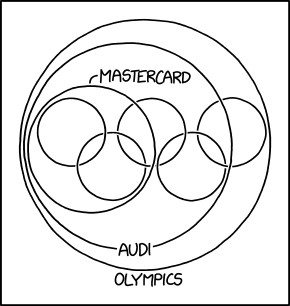
XKCD ‘Circles’

via the comic delivery system monikered Randall Munroe resident at XKCD !

via the comic delivery system monikered Randall Munroe resident at XKCD!

Permalink

The post XKCD ‘Circles’ appeared first on Security Boulevard.

Read More

The post XKCD ‘Circles’ appeared first on Malware Devil.


https://malwaredevil.com/2021/03/13/xkcd-circles/?utm_source=rss&utm_medium=rss&utm_campaign=xkcd-circles

Retrieve Process Run-time Architecture on Apple Silicon Macs On The Command Line with `archinfo`

Apple M1/Apple Silicon/arm64 macOS can run x86_64 programs via Rosetta and most M1 systems currently (~March 2021) very likely run a mix of x86_64 and arm64 processes. Activity Monitor can show the architecture: but command line tools such as ps and top do not due to Apple hiding the details of the proper sysctl() incantations… Continue reading

The post Retrieve Process Run-time Architecture on Apple Silicon Macs On The Command Line with `archinfo` appeared first on Security Boulevard.

Read More

The post Retrieve Process Run-time Architecture on Apple Silicon Macs On The Command Line with `archinfo` appeared first on Malware Devil.


https://malwaredevil.com/2021/03/13/retrieve-process-run-time-architecture-on-apple-silicon-macs-on-the-command-line-with-archinfo/?utm_source=rss&utm_medium=rss&utm_campaign=retrieve-process-run-time-architecture-on-apple-silicon-macs-on-the-command-line-with-archinfo

Friday, March 12, 2021

Friday Squid Blogging: On SQUIDS

A good tutorial:

But we can go beyond the polarization of electrons and really leverage the electron waviness. By interleaving thin layers of superconducting and normal materials, we can make the quantum electronic equivalents of transistors and diodes such as Superconducting Tunnel Junctions (SJTs) and Superconducting Quantum Interference Devices (affectionately known as SQUIDs). These devices take full advantage of the wave-like nature of electrons and can be used as building blocks for all sorts of novel electronics.

Because of the superconducting requirement, they need to be kept very cold, but quantum electronics have already revolutionized precision measurement. The most visible application has been in measuring the Cosmic Microwave Background (CMB). Observations of the CMB have shown that we live in an expanding Universe, determined the age of our Universe, and identified the fraction of it composed of dark matter and dark energy. Measurements of the CMB have transformed our understanding of the Universe we live in. These measurements have been largely enabled by SQUIDs and related superconducting electronics in their microwave cameras. …

The post Friday Squid Blogging: On SQUIDS appeared first on Security Boulevard.

Read More

The post Friday Squid Blogging: On SQUIDS appeared first on Malware Devil.


https://malwaredevil.com/2021/03/12/friday-squid-blogging-on-squids/?utm_source=rss&utm_medium=rss&utm_campaign=friday-squid-blogging-on-squids

Critical Security Hole Can Knock Smart Meters Offline

Unpatched Schneider Electric PowerLogic ION/PM smart meters are open to dangerous attacks.
Read More

The post Critical Security Hole Can Knock Smart Meters Offline appeared first on Malware Devil.


https://malwaredevil.com/2021/03/12/critical-security-hole-can-knock-smart-meters-offline/?utm_source=rss&utm_medium=rss&utm_campaign=critical-security-hole-can-knock-smart-meters-offline

Microsoft Exchange Server Attacks: 9 Lessons for Defenders

Experts share their guidance for organizations running on-premise Exchange servers in the wake of rapidly spreading attacks.
Previous

1 of 9

Next

(Image: Phonlamaiphoto -- stock.adobe.com)

(Image: Phonlamaiphoto — stock.adobe.com)

The disclosure of four critical zero-day vulnerabilities in Microsoft Exchange Server jolted the information security community last week, and a rapid increase in attack activity has only exacerbated concerns.

Attacks exploiting the flaws were first spotted in January. They initially were limited and targeted, seemingly for espionage: the adversaries primarily targeted specific email accounts. Microsoft attributed the activity to a group it calls Hafnium, believed to operate out of China.

Then during the last weekend of February, researchers noticed a significant uptick in remote code execution. Attackers were writing Web shells to disk and launching operations to dump credentials, add user accounts, steal copies of Active Directory databases, and move laterally to other systems. The surge in activity – curious for an advanced Chinese attack group – pushed up the timeline of patches.

Microsoft deployed its fixes only a few days later, and the activity has continued to escalate. Check Point research reports hundreds of exploit attempts against organizations around the world, with the number of exploitation attempts doubling every two to three hours in the 24 hours ending March 11. Turkey is the most attacked country, followed by the US and Italy.

Researchers have also found there is far more than one attack group exploiting these flaws. Security firms including FireEye and Red Canary are tracking the attack activity in clusters, and researchers with ESET report at least ten APT group are already using the vulnerabilities. Some, they say, began exploiting the flaws before Microsoft’s patches were released. According to a Wall Street Journal report, Microsoft is investigating whether one of its partners leaked information about the vulns before they were revealed publicly.

New information about attackers scanning for, and exploiting, these vulnerabilities has emerged nearly every day since they were disclosed. Microsoft most recently reported a new ransomware threat is targeting Exchange servers that have already been compromised.

Here, we dig into the information defenders need to know about protecting their organizations from this rapidly evolving threat: why they should be concerned, the challenges with patching, and how to hunt for signs of compromise. Read on to learn more.

Kelly Sheridan is the Staff Editor at Dark Reading, where she focuses on cybersecurity news and analysis. She is a business technology journalist who previously reported for InformationWeek, where she covered Microsoft, and Insurance & Technology, where she covered financial … View Full Bio

Recommended Reading:

Previous

1 of 9

Next

Comment |

Email This |

Print |

RSS

More Insights

The post Microsoft Exchange Server Attacks: 9 Lessons for Defenders appeared first on Malware Devil.


https://malwaredevil.com/2021/03/12/microsoft-exchange-server-attacks-9-lessons-for-defenders/?utm_source=rss&utm_medium=rss&utm_campaign=microsoft-exchange-server-attacks-9-lessons-for-defenders

Contemplating the Coffee Supply Chain: A Horror Story

On the bean-to-cup journey, dangers await around every corner. Here, well-caffeinated security experts warn the coffee industry about the threats.

(Image: Okea via Adobe Stock)

(Image: Okea via Adobe Stock)

A supply chain is only as strong as its weakest link. That we know.

“But what gets less consideration is that each step in the process, every link, also has a supply chain, and all of it expands one’s attackable surface,” says Adam Levin, a cybersecurity expert and author who founded the recently acquired company Cyberscout.

Put another way, supply chain security issues spread far beyond the intended path in transporting things from Point A to Point B.

Look no further than the coveted coffee supply chain and the panic a disruption would cause all those involved – especially those who rely on that fresh cup (or two, or three … ) to kickstart and get through their days.

Relax. This is merely a hypothetical.

Just as coffee comes in many customizable variations – we all have our personal favorites – so do supply chain issues. While threats are common to many global supply chains, the coffee supply chain faces “a fundamental challenge,” says Jake Olcott, vice president of government affairs at BitSight.

“The coffee grower, manufacturer, and retailer are all individually responsible for their own security yet collectively dependent on each other and the larger system to operate efficiently and securely,” he says.

Let’s not forget the end user – the coffee drinker – who is part of the supply chain, adds Gary Golomb, chief scientist and co-founder at Awake Security.

“As I sit here drinking my Irish Coffee, it strikes me that we should clarify what part of the coffee analogy is the end user enterprise and which part is the supply chain,” he explains. “Is the coffee shop the end user enterprise? No. They are the [reseller], capable of taking [commercial off-the-shelf software] and skillfully combining them into more useful solutions, like a mocha, for instance. Therefore, it’s the coffee drinkers who are the end user enterprises, and everything that comes before them – well, us – is the supply chain.”

Spilling the Beans on Coffee Growers
So what if some truly vicious attacker came after coffee? Someone with no scruples at all, wanting to scorch the whole supply chain like a pot sitting on the burner too long?

Coffee growers would be the first ones to go.

“Most risks can be found deeper down in the supply chain – in this case, coffee growers,” says Nir Kshetri, a professor at the University of North Carolina-Greensboro, a research fellow at Kobe University, and author of four books on cybersecurity. “[Growers] are rapidly digitizing due to pressures to do so from Western retailers and other companies. However, IoT and other digital systems that coffee growers and other players in developing countries tend to use are not that safe. They use the cheapest devices, tend to use pirated software in the devices, and lack cybersecurity orientation.”

With limited funds and limited IT resources, coffee growers may be the weakest link, he says.

Roasting the Roasters
You can trust the coffee roasters, though. Or can you?

Many roasters are solidifying their security postures via transparency in their own supply chains. In fact, a group of well-known coffee roasters including Onyx Coffee Lab and Counter Culture signed a transparency pledge and openly share information such as FOB price and volume purchased, says Asser Christensen, founder of The Coffee Chronicler, a website dedicated to the world of Specialty Coffee.

“Most of these brands will also list the different components of their blends openly. So, in theory, you could purchase the same green beans and re-create the blend yourself,” he says. “Of course, this is entirely different from multinational coffee companies such as Nestle and Starbucks.”

Transparency looks to be a common approach for roasters, though it can also pose a security problem. Take, for example, a boutique coffee roaster, explains Rob McDonald, Virtru’s executive vice president of platform. That roaster likely has many commercial agreements in place, including with growers, shipping providers, its packaging manufacturer, an e-commerce platform, and regional chains of coffee and gift shops that stock its product.

“That roaster sends and receives data to and from all these partners and more, in addition to managing the payroll and operations of its small staff,” he says. “If that boutique roaster’s e-commerce platform is compromised in a way that grants access to the roaster’s other connected systems, all its data — plus the data of the aforementioned partners — is now in jeopardy. Those who have entrusted their data to the roaster, including individual consumers and enterprises alike, can suffer consequences.”

Manufacturing Coffee Mayhem
Espresso machine manufacturers haven’t got a chance. And they could take you down with them.

“Espresso machine makers are at high risk of getting roasted by ransomware,” says Ara Aslanian, a cybersecurity expert adviser to L.A Cyber Lab and CEO of Inverselogic, an IT services company.

Dan Frey, senior product manager at ExtraHop, agrees.

“Ransomware is ideal for disrupting operational technology heavily used in manufacturing and supply chain logistics,” he says. “These devices rarely contain sensitive information, and they typically don’t have high-levels of access to sensitive network resources. But if a cybercriminal can lock them down, they can functionally shutter operations until the systems are reformatted or the encryption keys are obtained, costing an organization far more than the ransom dollars requested.”

However, other concerning trends are also evolving fast.

“Another alarming concern is that the ransomware itself may only be a decoy for a larger attack,” Frey says. “If espresso machine manufacturers aren’t concerned about this yet, it’s only a matter of time.”

Unfortunately, manufacturers can also open the doors for attackers in other entities in the supply chain.

“Manufacturers make good targets for hackers because, as they build more IoT technologies into their supply chains to track components and increase efficiency, they create more vulnerabilities,” Aslanian says. “Attackers who hacked Target a few years ago got into the company’s network through its HVAC system.”

Leading smart coffee maker brands like Keurig or Braun, for example, have reason to worry about vulnerabilities built into their smart coffee makers. These popular Internet of Things (IoT) devices can brew great coffee and a pot full of trouble for some poor coffee lover at home, a company with a break room and proprietary secrets, a diner full of customer credit card payments, or the Starbucks that covers every street corner in the land.

“This is where the coffee supply chain meets the software supply chain. Any technology embedded in a device that connects to another over the internet can ultimately be exploited to gain access to network resources,” says Karen Crowley, senior product manager at ExtraHop. “For devices like smart coffee makers, where security hasn’t always been a major consideration, vulnerabilities like Ripple20, where the Treck TCP/IP stack embedded in millions of devices, could allow attackers to compromise smart devices from manufacturing to healthcare. This should serve as a wake-up call.”

These same devices also pose threats to others in the supply chain in unsuspected and unassuming ways. These same coffee makers inhabit spaces and connect to networks at manufacturers, bean growers, roasters, restaurants, and coffee shops.

“The firmware isn’t usually very sophisticated – a small chip with code written to provide certain functionalities,” says Ritesh Chaturbedi, chief operations officer at Systemax. “Due to the unsophistication and connection to the Internet and [artificial intelligence], there’s a huge risk attached. A hacker can write a code or AI to pretend as if it’s a benign Siri or Alexa and get access to the IoT device.”

The Retailers’ Brew-a-ha
Maybe your coffee makes it safely to the cup. You breathe a sigh of relief. But don’t relax yet.

(Continued on next page)

A prolific writer and analyst, Pam Baker’s published work appears in many leading publications. She’s also the author of several books, the most recent of which is “Data Divination: Big Data Strategies.” Baker is also a popular speaker at technology conferences and a member … View Full Bio

Previous

1 of 2

Next

Recommended Reading:

Comment |

Email This |

Print |

RSS

More Insights

The post Contemplating the Coffee Supply Chain: A Horror Story appeared first on Malware Devil.


https://malwaredevil.com/2021/03/12/contemplating-the-coffee-supply-chain-a-horror-story/?utm_source=rss&utm_medium=rss&utm_campaign=contemplating-the-coffee-supply-chain-a-horror-story

Exchange Week 2 – Ransomware Joins The Fray

Following exposure and publication of a major remote execution vulnerability like Exchange’s ProxyLogon (CVE-2021-26855), we expect other threat actors to join the race against system administrators trying to patch their systems. Initial reporting showed the threat actor dubbed HAFNIUM were quietly exploiting these vulnerabilities since at least January 2021. Following the release of patches and responsible…

The post Exchange Week 2 – Ransomware Joins The Fray appeared first on Infocyte.

The post Exchange Week 2 – Ransomware Joins The Fray appeared first on Security Boulevard.

Read More

The post Exchange Week 2 – Ransomware Joins The Fray appeared first on Malware Devil.


https://malwaredevil.com/2021/03/12/exchange-week-2-ransomware-joins-the-fray/?utm_source=rss&utm_medium=rss&utm_campaign=exchange-week-2-ransomware-joins-the-fray

International Women’s Day: Celebrate Women and Their Achievements Everyday

On the occasion of this week’s International Women’s Day, read on what our rockstars from the marketing department—Vanita Pandey, Chief Marketing Officer, and Lizzie Clitheroe, Head of Product Marketing—have to say on Women’s Day celebrations, gender parity, and women in marketing Q1. What does the International Women’s Day mean to you? Vanita: Women constitute 50% […]

The post International Women’s Day: Celebrate Women and Their Achievements Everyday appeared first on Security Boulevard.

Read More

The post International Women’s Day: Celebrate Women and Their Achievements Everyday appeared first on Malware Devil.


https://malwaredevil.com/2021/03/12/international-womens-day-celebrate-women-and-their-achievements-everyday/?utm_source=rss&utm_medium=rss&utm_campaign=international-womens-day-celebrate-women-and-their-achievements-everyday

REvil Group Claims Slew of Ransomware Attacks

The threat group behind the Sodinokibi ransomware claimed to have recently compromised nine organizations.
Read More

The post REvil Group Claims Slew of Ransomware Attacks appeared first on Malware Devil.


https://malwaredevil.com/2021/03/12/revil-group-claims-slew-of-ransomware-attacks/?utm_source=rss&utm_medium=rss&utm_campaign=revil-group-claims-slew-of-ransomware-attacks

Europol Credits Sweeping Arrests to Cracked Sky ECC Comms  

Sky ECC claims that cops cracked a fake version of the app being passed off by disgruntled reseller.
Read More

The post Europol Credits Sweeping Arrests to Cracked Sky ECC Comms   appeared first on Malware Devil.


https://malwaredevil.com/2021/03/12/europol-credits-sweeping-arrests-to-cracked-sky-ecc-comms/?utm_source=rss&utm_medium=rss&utm_campaign=europol-credits-sweeping-arrests-to-cracked-sky-ecc-comms

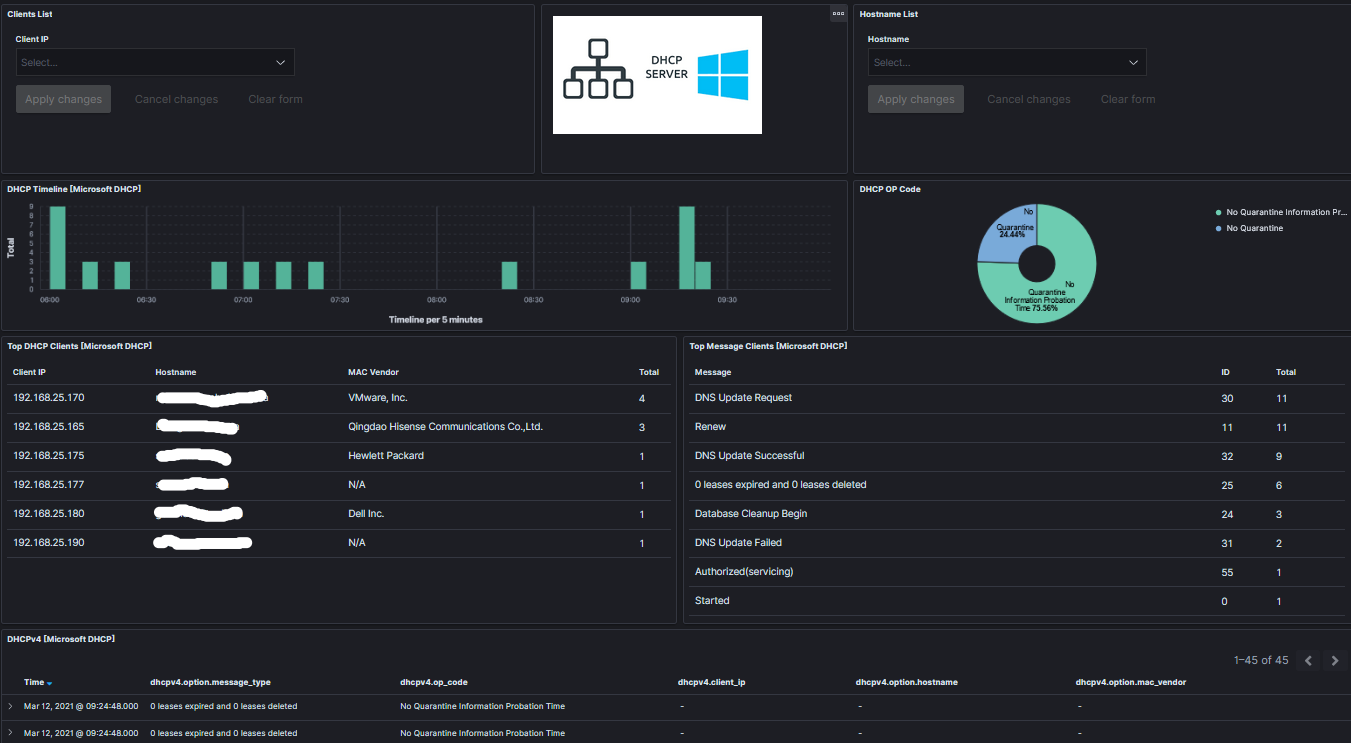
Microsoft DHCP Logs Shipped to ELK, (Fri, Mar 12th)

This parser takes the logs from a Windows 2012R2 server (C:WindowsSystem32dhcp) and parses them into usable metatada which can be monitored via a dashboard. The logs have been mapped using ECS in the same format as the packetbeat meta here [1].

→ First step is to load the Microsoft DHCP templates [3][4] via Kibana Dev Tools to create the microsoft.dhcp Index Management and Index Lifecycle Policy. Follow the instructions at the top of each of template.

→ Second step is to install Logstash (if not already done) and add to Logstash [2] configuration file (i.e. /etc/logstash/conf.d/logstash-filter-dhcp.conf).

The configuration file contains a Logstash filter use to compare the host MAC address OUI against a local list (in this configuration it is: oui.yml). Get OUI list from the web and convert it into a yml list saved in the /opt directory.

– In Linux, using wget, download the file:

  • wget http://standards-oui.ieee.org/oui/oui.txt

– Create the list in the /opt directory and run the following command to create the OUI file (this regex will delete tabs, spaces and @ ):

  • # cat /opt/oui.txt | grep ‘base 16’ |sed -e ‘s/([[:xdigit:]]{6}).*(base 16)tt(.*)r/”1″: 2/gi’ | tr -d ‘@’ > /opt/oui.yml

Start the Logstash service and verify under Stack Mangement → Index Management for an indice similar to microsoft.dhcp-2021.03.12-000001 created.

→ Third step is to install filebeat on the Windows server, configured as a service and change the filebeat.yml configuration to only contain the following information. Change the IP address in this file to the IP address of the logstash service:

# This filebeat shipper is used with
# for Microsoft DHCP logs

# 9 Jan 2021
# Version: 1.0

filebeat.inputs:

# Filebeat input for Microsoft DHCP logs

– type: log
  paths:
    – “C:/Windows/System32/dhcp/DhcpSrvLog-*.log”
  include_lines: [“^[0-9]{2},”]
  fields_under_root: true

#==================== Queued Event ====================
#queue.mem:
#  events: 4096
#  flush.min_events: 512
#  flush.timeout: 5s

#queue.disk:
#  path: “/op/filebeat/diskqueue”
#  max_size: 10GB

#==================== Output Event ====================
output.logstash:
  hosts: [“192.168.2.23:5044”]

At this point, the logs should start going to ELK. From the Windows server, verify the connection has been established by running at the command line: netstat -an | findstr 5044

In the Elasticsearch server, under Stack Management -> Index Management, lock for an new instance with microsoft.dhcp-* (something like this: microsoft.dhcp-2021.03.12-000001) should start showing new metadata has been received.

→ Last step is to load the dashboard [5] to Elasticsearch under Stack Management -> Saved Objects and Import the file Microsoft_DHCP_7.11_v1.ndjson, this will load the new dashboard and the Index Pattern.

The dashboard should have this look and feel:

The DHCP log format being parsed:

ID,Date,Time,Description,IP Address,Host Name,MAC Address,User Name, TransactionID, QResult,Probationtime, CorrelationID,Dhcid,VendorClass(Hex),VendorClass(ASCII),UserClass(Hex),UserClass(ASCII),RelayAgentInformation,DnsRegError.

Since DHCP is a protocol that do not need any authentication from the client, any clients within the network can obtain a lease for an IP. It is good housekeeping to monitor and be on the lookout for strange hostnames and unknown or unidentified vendor MAC addresses, to monitor what is accessing the network.

[1] https://www.elastic.co/guide/en/beats/packetbeat/master/exported-fields-dhcpv4.html
[2] https://handlers.sans.edu/gbruneau/elk/logstash-filter-dhcp.conf
[3] https://handlers.sans.edu/gbruneau/elk/Windows_DHCP_ilm_policy.txt
[4] https://handlers.sans.edu/gbruneau/elk/Windows_DHCP_template.txt
[5] https://handlers.sans.edu/gbruneau/elk/Microsoft_DHCP_7.11_v1.ndjson
[6] https://isc.sans.edu/forums/diary/Secure+Communication+using+TLS+in+Elasticsearch/26902/
[7] https://www.elastic.co/guide/en/ecs/1.8/ecs-field-reference.html
[8] https://handlers.sans.edu/gbruneau/elastic.htm

———–
Guy Bruneau IPSS Inc.
My Handler Page
Twitter: GuyBruneau
gbruneau at isc dot sans dot edu

(c) SANS Internet Storm Center. https://isc.sans.edu Creative Commons Attribution-Noncommercial 3.0 United States License. Read More

The post Microsoft DHCP Logs Shipped to ELK, (Fri, Mar 12th) appeared first on Malware Devil.


https://malwaredevil.com/2021/03/12/microsoft-dhcp-logs-shipped-to-elk-fri-mar-12th/?utm_source=rss&utm_medium=rss&utm_campaign=microsoft-dhcp-logs-shipped-to-elk-fri-mar-12th

Can a Programming Language Reduce Vulnerabilities?

Rust offers a safer programming language, but adoption is still a problem despite recent signs of increasing popularity.

When Microsoft wanted to rewrite a security-critical network processing agent to eliminate memory-safety vulnerabilities causing recurring headaches for the Microsoft Security Response Center (MSRC), the company tasked an intern and told him to rewrite the code in Rust.

Rust, a programming language that has claimed the title of “most loved” among developers for five years in a row, could change the vulnerability landscape by practically eliminating certain types of memory-safety errors. The language’s claim to fame is that it provides the speed and control of C and C++, while delivering security and safety guarantees of other languages, such as Go and Python. Nearly 70% of the vulnerabilities that the MSRC processes are classified as memory-safety issues, so eliminating the class of vulnerabilities is critical.

Discussing his newly found preference for Rust, Alexander Clarke, the MSRC software intern, stated in a blog post that, while it may be easier to write a program that will compile in C++, the resulting program is more likely to have errors and vulnerabilities.

“The [Rust] compiler’s error messages are justly famous for how useful they are,” he says. “Through the error messages, Rust enforces safe programming concepts by telling you exactly why the code isn’t correct, while providing possible suggestions on how to fix it.”

More than a decade after Mozilla adopted and began rewriting code for its Firefox browser using Rust, the language may be ready to take off. While adoption continues to be anemic — only 5.1% of developers use the Rust language, according to the “StackOverflow 2020 Developer Survey” — a number of large companies have committed to using Rust in specific development projects.

The Mozilla Foundation shipped code developed using the language in its Firefox browser starting in 2016. In 2019, Microsoft stated its intention to adopt Rust more widely for writing system software in Windows. And in February, Mozilla spun off the project to be managed by the new Rust Foundation, with founding sponsors Microsoft, Google, Amazon, and Huawei.

Why the increasingly popularity? It’s not just about speed and security, at least not for developers, says Ashley Williams, interim executive director of Rust Foundation.

“My joke answer is that we have an animal mascot,” she laughs. “In reality, when people talk about loving Rust, there is the language and the compiler, but also the notion that the community should be welcoming and the package management should be first-class. There are all these values that people appreciate.”

For companies, the decision boils down to the capabilities Rust does not allow. When the language is properly used, the compiler alerts on — and refuses to compile — certain coding patterns that lead to buffer overflows, use-after-free vulnerabilities, double-free memory issues, and null-pointer deferences.

“You make a blood pact with the compiler,” says Williams. “You write your code in a specific way so the compiler knows your code is correct.”

For Microsoft, the errors that Rust can prevent account for the majority of vulnerabilities for which the company assigns Common Vulnerability and Exposures (CVE) identifiers. Using the programming language to build its core system components can help reduce a major source of vulnerabilities, said Ryan Levick, principal cloud developer advocate at Microsoft, in a blog post.

“We believe Rust changes the game when it comes to writing safe systems software,” he said. “Rust provides the performance and control needed to write low-level systems, while empowering software developers to write robust, secure programs.”

Yet programming languages promising extra security have not always done so.

In January 1996, Sun Microsystems announced Java 1.0. The language boasted portable code — as in “write once, run anywhere” — but Sun also touted a number of security attributes, such as automated memory management — that is, “garbage collection” — as well as type safety and the ability to isolate applets from modifying system resources.

Fast forward to today. With adoption at about 40%, Java is the fifth most-used language — behind JavaScript, HTML/CSS, SQL, and Python, according to the StackOverflow survey. However, Java programs accounted for 15% of the more than 6,000 vulnerabilities found in open source components in 2019, behind C, which accounted for 30%, and PHP, which accounted for 27%, according to “The 2020 State of Open Source Security” report published by software security firm WhiteSource.

Java shows that developers, in the name of efficiency, often will not use security features and instead continue to create insecure code.

Rust is more opinionated in its approach than Java, but the language will likely not avoid the potential to have security undermined by developers. While Rust provides memory safety, it also allows a way around it — the “UNSAFE” keyword. Using the keyword is a way for a developer to override the compiler and prevent the compiler from checking a block of code — ostensibly because the developer asserts the code is safe.

Many Rust enthusiasts — “Rustaceans,” as they are called — argue that overusage of the keyword undermines the Rust model. While the debate is nuanced, Williams understands the point.

“There are people who use the UNSAFE block in a way that is unsafe,” she says. “If you put something in the unsafe block, the compiler won’t check it, and if you are wrong then you could introduce a memory error.”

Yet, she points out, even if using the capability to only override the compiler correctly, vulnerabilities will likely creep into developers’ programs, and — because security researchers and hackers tend to find the problems that developer leave behind — those vulnerabilities will be found. Case in point: The Rust-focused security site RustSec lists more than 250 vulnerabilities in the Rust packages — or “crates” — and the language.

“The vulnerability landscape is not an absolute one, so there are always new vulnerability areas,” says Williams. “Some languages can be safer than others, but … there is no such thing as a fully secure system, especially if your target language has a lot of hackers looking at it.”

Veteran technology journalist of more than 20 years. Former research engineer. Written for more than two dozen publications, including CNET News.com, Dark Reading, MIT’s Technology Review, Popular Science, and Wired News. Five awards for journalism, including Best Deadline … View Full Bio

Recommended Reading:

Comment |

Email This |

Print |

RSS

More Insights

The post Can a Programming Language Reduce Vulnerabilities? appeared first on Malware Devil.


https://malwaredevil.com/2021/03/12/can-a-programming-language-reduce-vulnerabilities/?utm_source=rss&utm_medium=rss&utm_campaign=can-a-programming-language-reduce-vulnerabilities

Ransomware is targeting vulnerable Microsoft Exchange servers

The Microsoft Exchange attacks using the ProxyLogon vulnerability, and previously associated with the dropping of malicious web shells, are taking on a ransomware twist. Until now, the name of the game has been compromise and data exfiltration, with a bit of cryptomining on the side.

To summarise: In ten days we’ve gone from “limited and targeted attacks” by a nation-state actor, to countless attacks by a number of groups against anyone with a vulnerable server. And in the space of a week the severity has escalated from unused web shells to ransomware. Depending on how the uptake in patching goes, this could well evolve again.

The danger of this pivot to ransomware is the sheer number of potential targets. Needless to say, it is essential that you install the Exchange updates required to keep your systems safe from harm.

The scale of the problem

Internet intelligence group Shadowserver has attempted to quantify the problem of exposed Exchange servers by scanning the Internet looking for vulnerable machines.

It has made two startling conclusions. The first is that as many as 68,500 servers may have been compromised by the so-called Hafnium threat actor before Microsoft released patches for its Exchange zero-days.

The total dataset distributed includes over 68500 distinct IP addresses. Of these IP addresses, there is high certainty that 8911 IP addresses were compromised. However, the remaining IP addresses included in the report are also very likely compromised too, since they were targeted with the OWA 0-day exploit before Microsoft publicly released patches for Exchange.

The groups second insight, is that at the time of its most recent scan, three days ago, 64,088 unique IP addresses were assessed as “still having exposed Microsoft Exchange Server vulnerabilities“. According to the group, the USA has by far the largest population of vulnerable servers, with almost 17,500.

The group’s research partner, the Dutch Institute for Vulnerability Disclosure, reported separately that nearly 20% of the 250,000 servers it scanned were vulnerable.

Which ever way you slice it, there are still a lot of vulnerable Exchange servers out there, and history suggests it will take a considerable time to patch them all.

With that out of the way: what, exactly, is the ransomware angle to this latest round of ProxyLogon attacks?

Introducing DearCry ransomware

Bad actors are now using Exchange exploits to gain entry to networks, before manually running DearCry ransomware.

This is an indicator of how easy Exchange exploitation is becoming. For years, targeted ransomware attacks have been synonymous with brute-force attacks on RDP ports. It’s such a common tactic, it’s easy to forget that criminals were simply using the easiest method of entry available.

The ransomware, first reported by BleepingComputer, has been dubbed “DearCry“. This is because it uses “DEARCRY!” as a file marker inside every encrypted file.

Malwarebytes and Microsoft have both independently confirmed that ProxyLogon is the entry vector for DearCry.

At the time of writing, it seems there is no way to decrypt the files without payment. As ever, prevention is better than cure, but if you are attacked successfully you’ll wish you’d secured your off-site backups and put a disaster recovery plan in place.

Once encryption takes place, the inevitable ransom note is deployed.

With backups and plans to restore them in place, victims can choose to ignore the attackers and carry on as normal. However, it is possible copies of the compromised files remain in the hands of the ransomware authors. This is how you get leaks further down the line.

According to the Bleeping Computer, a demand for $16,000 was made to one victim for the safe decryption of their files. There isn’t enough information available at this stage to determine if $16,000 is the going rate for DearCry attacks, or if there’s some variance to the amounts requested.

What’s certain is that other ransomware gangs will happily charge vastly greater sums, and if Exchange exploitation proves easier than RDP access, they will use it.

It’s time to update

If you haven’t already patched your systems, please do so right away and search your systems for signs of compromise.

Malwarebytes detects web shells planted on comprised Exchange servers as Backdoor.Hafnium. When the ransomware was still unknown, DearCry attacks would have been detected proactively as Malware.Ransom.Agent.Generic.

We’ll update the timeline in our first article on this topic as more developments and fresh information comes to light.

The post Ransomware is targeting vulnerable Microsoft Exchange servers appeared first on Malware Devil.


https://malwaredevil.com/2021/03/12/ransomware-is-targeting-vulnerable-microsoft-exchange-servers-3/?utm_source=rss&utm_medium=rss&utm_campaign=ransomware-is-targeting-vulnerable-microsoft-exchange-servers-3

Ransomware is targeting vulnerable Microsoft Exchange servers

The Microsoft Exchange attacks using the ProxyLogon vulnerability, and previously associated with the dropping of malicious web shells, are taking on a ransomware twist. Until now, the name of the game has been compromise and data exfiltration, with a bit of cryptomining on the side.

To summarise: In ten days we’ve gone from “limited and targeted attacks” by a nation-state actor, to countless attacks by a number of groups against anyone with a vulnerable server. And in the space of a week the severity has escalated from unused web shells to ransomware. Depending on how the uptake in patching goes, this could well evolve again.

The danger of this pivot to ransomware is the sheer number of potential targets. Needless to say, it is essential that you install the Exchange updates required to keep your systems safe from harm.

The scale of the problem

Internet intelligence group Shadowserver has attempted to quantify the problem of exposed Exchange servers by scanning the Internet looking for vulnerable machines.

It has made two startling conclusions. The first is that as many as 68,500 servers may have been compromised by the so-called Hafnium threat actor before Microsoft released patches for its Exchange zero-days.

The total dataset distributed includes over 68500 distinct IP addresses. Of these IP addresses, there is high certainty that 8911 IP addresses were compromised. However, the remaining IP addresses included in the report are also very likely compromised too, since they were targeted with the OWA 0-day exploit before Microsoft publicly released patches for Exchange.

The groups second insight, is that at the time of its most recent scan, three days ago, 64,088 unique IP addresses were assessed as “still having exposed Microsoft Exchange Server vulnerabilities“. According to the group, the USA has by far the largest population of vulnerable servers, with almost 17,500.

The group’s research partner, the Dutch Institute for Vulnerability Disclosure, reported separately that nearly 20% of the 250,000 servers it scanned were vulnerable.

Which ever way you slice it, there are still a lot of vulnerable Exchange servers out there, and history suggests it will take a considerable time to patch them all.

With that out of the way: what, exactly, is the ransomware angle to this latest round of ProxyLogon attacks?

Introducing DearCry ransomware

Bad actors are now using Exchange exploits to gain entry to networks, before manually running DearCry ransomware.

This is an indicator of how easy Exchange exploitation is becoming. For years, targeted ransomware attacks have been synonymous with brute-force attacks on RDP ports. It’s such a common tactic, it’s easy to forget that criminals were simply using the easiest method of entry available.

The ransomware, first reported by BleepingComputer, has been dubbed “DearCry“. This is because it uses “DEARCRY!” as a file marker inside every encrypted file.

Malwarebytes and Microsoft have both independently confirmed that ProxyLogon is the entry vector for DearCry.

At the time of writing, it seems there is no way to decrypt the files without payment. As ever, prevention is better than cure, but if you are attacked successfully you’ll wish you’d secured your off-site backups and put a disaster recovery plan in place.

Once encryption takes place, the inevitable ransom note is deployed.

With backups and plans to restore them in place, victims can choose to ignore the attackers and carry on as normal. However, it is possible copies of the compromised files remain in the hands of the ransomware authors. This is how you get leaks further down the line.

According to the Bleeping Computer, a demand for $16,000 was made to one victim for the safe decryption of their files. There isn’t enough information available at this stage to determine if $16,000 is the going rate for DearCry attacks, or if there’s some variance to the amounts requested.

What’s certain is that other ransomware gangs will happily charge vastly greater sums, and if Exchange exploitation proves easier than RDP access, they will use it.

It’s time to update

If you haven’t already patched your systems, please do so right away and search your systems for signs of compromise.

Malwarebytes detects web shells planted on comprised Exchange servers as Backdoor.Hafnium. When the ransomware was still unknown, DearCry attacks would have been detected proactively as Ransom.FileCryptor. From today, detections will be appear as Ransom.DearCry.

We’ll update the timeline in our first article on this topic as more developments and fresh information comes to light.

The post Ransomware is targeting vulnerable Microsoft Exchange servers appeared first on Malware Devil.


https://malwaredevil.com/2021/03/12/ransomware-is-targeting-vulnerable-microsoft-exchange-servers-2/?utm_source=rss&utm_medium=rss&utm_campaign=ransomware-is-targeting-vulnerable-microsoft-exchange-servers-2

Ransomware is targeting vulnerable Microsoft Exchange servers

The Microsoft Exchange attacks using the ProxyLogon vulnerability, and previously associated with the dropping of malicious web shells, are taking on a ransomware twist. Until now, the name of the game has been compromise and data exfiltration, with a bit of cryptomining on the side.

To summarise: In ten days we’ve gone from “limited and targeted attacks” by a nation-state actor, to countless attacks by a number of groups against anyone with a vulnerable server. And in the space of a week the severity has escalated from unused web shells to ransomware. Depending on how the uptake in patching goes, this could well evolve again.

The danger of this pivot to ransomware is the sheer number of potential targets. Needless to say, it is essential that you install the Exchange updates required to keep your systems safe from harm.

The scale of the problem

Internet intelligence group Shadowserver has attempted to quantify the problem of exposed Exchange servers by scanning the Internet looking for vulnerable machines.

It has made two startling conclusions. The first is that as many as 68,500 servers may have been compromised by the so-called Hafnium threat actor before Microsoft released patches for its Exchange zero-days.

The total dataset distributed includes over 68500 distinct IP addresses. Of these IP addresses, there is high certainty that 8911 IP addresses were compromised. However, the remaining IP addresses included in the report are also very likely compromised too, since they were targeted with the OWA 0-day exploit before Microsoft publicly released patches for Exchange.

The groups second insight, is that at the time of its most recent scan, three days ago, 64,088 unique IP addresses were assessed as “still having exposed Microsoft Exchange Server vulnerabilities“. According to the group, the USA has by far the largest population of vulnerable servers, with almost 17,500.

The group’s research partner, the Dutch Institute for Vulnerability Disclosure, reported separately that nearly 20% of the 250,000 servers it scanned were vulnerable.

Which ever way you slice it, there are still a lot of vulnerable Exchange servers out there, and history suggests it will take a considerable time to patch them all.

With that out of the way: what, exactly, is the ransomware angle to this latest round of ProxyLogon attacks?

Introducing DearCry ransomware

Bad actors are now using Exchange exploits to gain entry to networks, before manually running DearCry ransomware.

This is an indicator of how easy Exchange exploitation is becoming. For years, targeted ransomware attacks have been synonymous with brute-force attacks on RDP ports. It’s such a common tactic, it’s easy to forget that criminals were simply using the easiest method of entry available.

The ransomware, first reported by BleepingComputer, has been dubbed “DearCry”. This is because it uses “DEARCRY!” as a file marker inside every encrypted file.

Malwarebytes and Microsoft have both independently confirmed that ProxyLogon is the entry vector for DearCry.

At the time of writing, it seems there is no way to decrypt the files without payment. As ever, prevention is better than cure, but if you are attacked successfully you’ll wish you’d secured your off-site backups and put a disaster recovery plan in place.

Once encryption takes place, the inevitable ransom note is deployed.

With backups and plans to restore them in place, victims can choose to ignore the attackers and carry on as normal. However, it is possible copies of the compromised files remain in the hands of the ransomware authors. This is how you get leaks further down the line.

According to the Bleeping Computer, a demand for $16,000 was made to one victim for the safe decryption of their files. There isn’t enough information available at this stage to determine if $16,000 is the going rate for DearCry attacks, or if there’s some variance to the amounts requested.

What’s certain is that other ransomware gangs will happily charge vastly greater sums, and if Exchange exploitation proves easier than RDP access, they will use it.

It’s time to update

If you haven’t already patched your systems, please do so right away and search your systems for signs of compromise.

Malwarebytes detects web shells planted on comprised Exchange servers as Backdoor.Hafnium. When the ransomware was still unknown, DearCry attacks would have been detected proactively as Ransom.FileCryptor. From today, detections will be appear as Ransom.DearCry.

We’ll update the timeline in our first article on this topic as more developments and fresh information comes to light.

The post Ransomware is targeting vulnerable Microsoft Exchange servers appeared first on Malwarebytes Labs.

The post Ransomware is targeting vulnerable Microsoft Exchange servers appeared first on Malware Devil.


https://malwaredevil.com/2021/03/12/ransomware-is-targeting-vulnerable-microsoft-exchange-servers/?utm_source=rss&utm_medium=rss&utm_campaign=ransomware-is-targeting-vulnerable-microsoft-exchange-servers

Barbary Pirates and Russian Cybercrime

In 1801, the United States had a small Navy. Thomas Jefferson deployed almost half that Navy—three frigates and a schooner—to the Barbary C...