
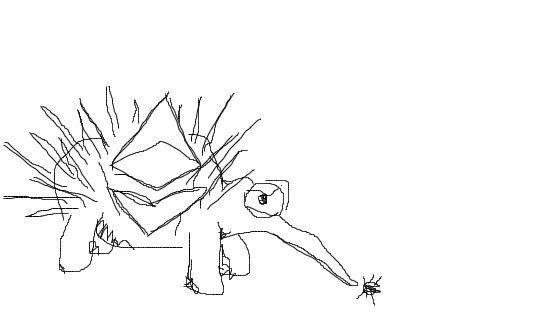
Echidna is a weird creature that eats bugs and is highly electrosensitive (with apologies to Jacob Stanley)
More seriously, Echidna is a Haskell program designed for fuzzing/property-based testing of Ethereum smarts contracts. It uses sophisticated grammar-based fuzzing campaigns based on a contract ABI to falsify user-defined predicates or Solidity assertions. We designed Echidna with modularity in mind, so it can be easily extended to include new mutations or test specific contracts in specific cases.
Features
Generates inputs tailored to your actual code
Optional corpus collection, mutation and coverage guidance to find deeper bugs
Powered by Slither to extract useful information before the fuzzing campaign
Source code integration to identify which lines are covered after the fuzzing campaign
Curses-based retro UI, text-only or JSON output
Automatic testcase minimization for quick triage
Seamless integration into the development workflow
Maximum gas usage reporting of the fuzzing campaign
Support for a complex contract initialization with Etheno and Truffle
.. and a beautiful high-resolution handcrafted logo.
Screenshot
Usage
Executing the test runner
The core Echidna functionality is an executable called echidna-test. echidna-test takes a contract and a list of invariants (properties that should always remain true) as input. For each invariant, it generates random sequences of calls to the contract and checks if the invariant holds. If it can find some way to falsify the invariant, it prints the call sequence that does so. If it can’t, you have some assurance the contract is safe.
Writing invariants
Invariants are expressed as Solidity functions with names that begin with echidna_, have no arguments, and return a boolean. For example, if you have some balance variable that should never go below 20, you can write an extra function in your contract like this one:
return(balance >= 20);
}
To check these invariants, run:
An example contract with tests can be found examples/solidity/basic/flags.sol. To run it, you should execute:
Echidna should find a a call sequence that falisfies echidna_sometimesfalse and should be unable to find a falsifying input for echidna_alwaystrue.
Collecting and visualizing coverage
After finishing a campaign, Echidna can save a coverage maximizing corpus in a special directory specified with the corpusDir config option. This directory will contain two entries: (1) a directory named coverage with JSON files that can be replayed by Echidna and (2) a plain-text file named covered.txt, a copy of the source code with coverage annotations.
If you run examples/solidity/basic/flags.sol example, Echidna will save a few files serialized transactions in the coverage directory and a covered.$(date +%s).txt file with the following lines:
* | if (val % 100 == 0)
* | flag0 = false;
}
*r | function set1(int val) public returns (bool){
* | if (val % 10 == 0 && !flag0)
* | flag1 = false;
}
Our tool signals each execution trace in the corpus with the following “line marker”:
* if an execution ended with a STOP
r if an execution ended with a REVERT
o if an execution ended with an out-of-gas error
e if an execution ended with any other error (zero division, assertion failure, etc)
Crash course on Echidna
Our Building Secure Smart Contracts repository contains a crash course on Echidna, including examples, lessons and exercises. You should start here.
Support for smart contract build systems
Echidna can test contracts compiled with different smart contract build systems, including Truffle, Embark and even Vyper, using crytic-compile. For instance, we can uncover an integer overflow in the Metacoin Truffle box using a contract with Echidna properties to test:
$ echidna-test . –contract TEST
…
echidna_convert: failed!

Call sequence:
mint(57896044618658097711785492504343953926634992332820282019728792003956564819968)
Echidna supports two modes of testing complex contracts. Firstly, one can describe an initialization procedure with Truffle and Etheno and use that as the base state for Echidna. Secondly, echidna can call into any contract with a known ABI by passing in the corresponding solidity source in the CLI. Use multi-abi: true in your config to turn this on.
Configuration options
Echidna’s CLI can be used to choose the contract to test and load a configuration file.
The configuration file allows users to choose EVM and test generation parameters. An example of a complete and annotated config file with the default options can be found at examples/solidity/basic/default.yaml. More detailed documentation on the configuration options is available in our wiki.
Echidna supports three different output drivers. There is the default text driver, a json driver, and a none driver, which should suppress all stdout output. The JSON driver reports the overall campaign as follows.
“success“ : bool,
“error“ : string?,
“tests“ : [Test],
“seed“ : number,
“coverage“ : Coverage,
“gas_info“ : [GasInfo]
}
Test = {
“contract“ : string,
“name“ : string,
“status“ : string,
“error“ : string?,
“testType“ : string,
“transactions“ : [Transaction]?
}
Transaction = {
“contract“ : string,
“function“ : string,
“arguments“ : [string]?,
“gas“ : number,
“gasprice“ : number
}
Coverage is a dict describing certain coverage increasing calls. Each GasInfo entry is a tuple that describes how maximal gas usage was achieved, and also not too important. These interfaces are subject to change to be slightly more user friendly at a later date. testType will either be property or assertion, and status always takes on either fuzzing, shrinking, solved, passed, or error.
Limitations and known issues
EVM emulation and testing is hard. Echidna has a number of limitations in the latest release. Some of these are inherited from hevm while some are results from design/performance decisions or simply bugs in our code. We list them here including their corresponding issue and the status (“wont fix”, “in review”, “fixed”). Issues that are “fixed” are expected to be included in the next Echidna release.
Description
Issue
Status
Debug information can be insufficient
#656
in review for 2.0
Vyper support is limited
#652
wont fix
Limited library support for testing
#651
wont fix
If the contract is not properly linked, Echidna will crash
#514
in review
Assertions are not detected in internal transactions
#601
in review for 2.0
Assertions are not detected in solc 0.8.x
#669
in review for 2.0
Value generation can fail in multi-abi mode, since the function hash is not precise enough
#579
in review for 2.0
Installation
Precompiled binaries
Before starting, make sure Slither is installed (pip3 install slither-analyzer –user). If you want to quickly test Echidna in Linux or MacOS, we provide statically linked Linux binaries built on Ubuntu and mostly static MacOS binaries on our releases page. You can also grab the same type of binaries from our CI pipeline, just click the commit to find binaries for Linux or MacOS.
Docker container
If you prefer to use a pre-built Docker container, log into Github on your local docker client and check out our docker package, which are also auto-built via Github Actions. Otherwise, if you want to install the latest released version of Echidna, we recommend using docker:
Then, run it via:
Building using Stack
If you’d prefer to build from source, use Stack. stack install should build and compile echidna-test in ~/.local/bin. You will need to link against libreadline and libsecp256k1 (built with recovery enabled), which should be installed with the package manager of your choosing. You also need to install the latest release of libff. Refer to our CI tests for guidance.
Some Linux distributions do not ship static libraries for certain things that Haskell needs, e.g. Arch Linux, which will cause stack build to fail with linking errors because we use the -static flag. Removing these from package.yaml should get everything to build if you are not looking for a static build.
If you’re getting errors building related to linking, try tinkering with –extra-include-dirs and –extra-lib-dirs.
Building using Nix
Nix users can install the lastest Echidna with:
It is possible to develop Echidna with Cabal inside nix-shell. Nix will automatically install all the dependencies required for development including crytic-compile and solc. A quick way to get GHCi with Echidna ready for work:
$ cd echidna
$ nix-shell
[nix-shell]$ cabal new-repl
Running the test suite:
Getting help
Feel free to stop by our #ethereum slack channel in Empire Hacking for help using or extending Echidna.
Get started by reviewing these simple Echidna invariants
Review the Solidity examples directory for more extensive Echidna use cases
Considering emailing the Echidna development team directly for more detailed questions
License
Echidna is licensed and distributed under the AGPLv3 license.
Projects using Echidna
This is a partial list of smart contracts projects that use Echidna for testing:
Uniswap-v3
Balancer
MakerDAO vest
Optimism DAI Bridge
WETH10
Yield
Convexity Protocol
Aragon Staking
Centre Token
Tokencard
Minimalist USD Stablecoin
Trophies
Security Issues
The following lists security vulnerabilities that were found by Echidna. If you found a security vulnerability using our tool, please submit a PR with the relevant information.
Project
Vulnerability
Date
0x Protocol
If an order cannot be filled, then it cannot be canceled
Oct 2019
0x Protocol
If an order can be partially filled with zero, then it can be partially filled with one token
Oct 2019
0x Protocol
The cobbdouglas function does not revert when valid input parameters are used
Oct 2019
Balancer Core
An attacker cannot steal assets from a public pool
Jan 2020
Balancer Core
An attacker cannot generate free pool tokens with joinPool
Jan 2020
Balancer Core
Calling joinPool-exitPool does not lead to free pool tokens
Jan 2020
Balancer Core
Calling exitswapExternAmountOut does not lead to free assets
Jan 2020
Yield Protocol
Arithmetic computation for buying and selling tokens is imprecise
Aug 2020
Origin Dollar
Users are allowed to transfer more tokens that they have
Nov 2020
Origin Dollar
User balances can be larger than total supply
Nov 2020
Liquity Dollar
Closing troves require to hold the full amount of LUSD minted
Dec 2020
Liquity Dollar
Troves can be improperly removed
Dec 2020
Liquity Dollar
Initial redeem can revert unexpectedly
Dec 2020
Liquity Dollar
Redeem without redemptions might still return success
Dec 2020
Research Examples
We can also use Echidna to reproduce a number of research examples from smart contract fuzzing papers to show how quickly it can find the solution:
Source
Code
Using automatic analysis tools with MakerDAO contracts
SimpleDSChief
Integer precision bug in Sigma Prime
VerifyFunWithNumbers
Learning to Fuzz from Symbolic Execution with Application to Smart Contracts
Crowdsale
Harvey: A Greybox Fuzzer for Smart Contracts
Foo, Baz
All these can be solved, from a few seconds to one or two minutes on a laptop computer.
Publications
Trail of Bits
Echidna: effective, usable, and fast fuzzing for smart contracts, Gustavo Grieco, Will Song, Artur Cygan, Josselin Feist, Alex Groce – ISSTA ’20
echidna-parade: A Tool for Diverse Multicore Smart Contract Fuzzing, Alex Groce, Gustavo Grieco – ISSTA ’21
If you are using Echidna on an academic work, consider applying to the Crytic $10k Research Prize.
Original repository: https://github.com/crytic/echidna
The post Echidna – Ethereum smart contract fuzzer appeared first on Hakin9 – IT Security Magazine.
The post Echidna – Ethereum smart contract fuzzer appeared first on Malware Devil.
https://malwaredevil.com/2021/07/13/echidna-ethereum-smart-contract-fuzzer/?utm_source=rss&utm_medium=rss&utm_campaign=echidna-ethereum-smart-contract-fuzzer



No comments:
Post a Comment